Author: David Le Moal

  • Should You Visit VA’s or NC’s Great Dismal Swamp

    Should You Visit VA’s or NC’s Great Dismal Swamp

    Once upon a time, the Great Dismal Swamp used to be 1.28 million acres. Over time the swamp shrank due to deforestation and agricultural development, and now the swamp is a third of its original size. Today, Virginia and North Carolina split the remaining portions of the Great Dismal Swamp. The federal government administers the Virginia side as a National Wildlife Refuge (NWR), while the state government administers the North Carolina side as a State Park. Keep reading to see how the two Great Dismal Swamp Parks compare and which one I preferred.

    4–6 minutes

    History of the Great Dismal Swamp

    Sign saying Reflection Pier, with text and picture showing how the Great Dismal Swamp shrank over time.
    Historic and Current Range of the Dismal Swamp

    Before the in-depth analysis of the two parks, we should look at their shared histories. The early settlers disparaged the swamps and did not explore the Great Dismal Swamp until the 18th century. The Dismal Swamp Canal, built by enslaved labor, is the oldest artificial waterway in the country. Many self-emancipated African Americas developed settlements deep within the swamps called maroon colonies. These maroons survived in the hot, buggy, densely forested land confident that no one would discover them. Later on, the Great Dismal Swamp became a center of illicit moonshine production during Prohibition.

    Great Dismal Swamp NWR, Virginia

    Interior Ditch Gravel Road leading to Lake Drummond
    This is What You’ll Be Driving On For Most of the Great Dismal Swamp NWR

    The Great Dismal Swamp National Wildlife Refuge is massive, taking up much of the remaining Swamp. I only went to one section of the Park (Interior Ditch); besides trails, there’s a small pavilion discussing the Underground Railroad. I only scratched the surface of what you could see in the Park.

    Path Leading To Underground Railroad Pavilion at Great Dismal Swamp NWR.
    Underground Railroad Pavilion at Great Dismal Swamp NWR.

    Lake Drummond, one of only two natural lakes in Virginia, is the highlight of the Great Dismal Swamp NWR. The waters of Lake Drummond are so black that on windless days it becomes a mirror. But even with choppy waters, the sight of trees growing in the vast expanse of blackness creates an otherworldly experience.

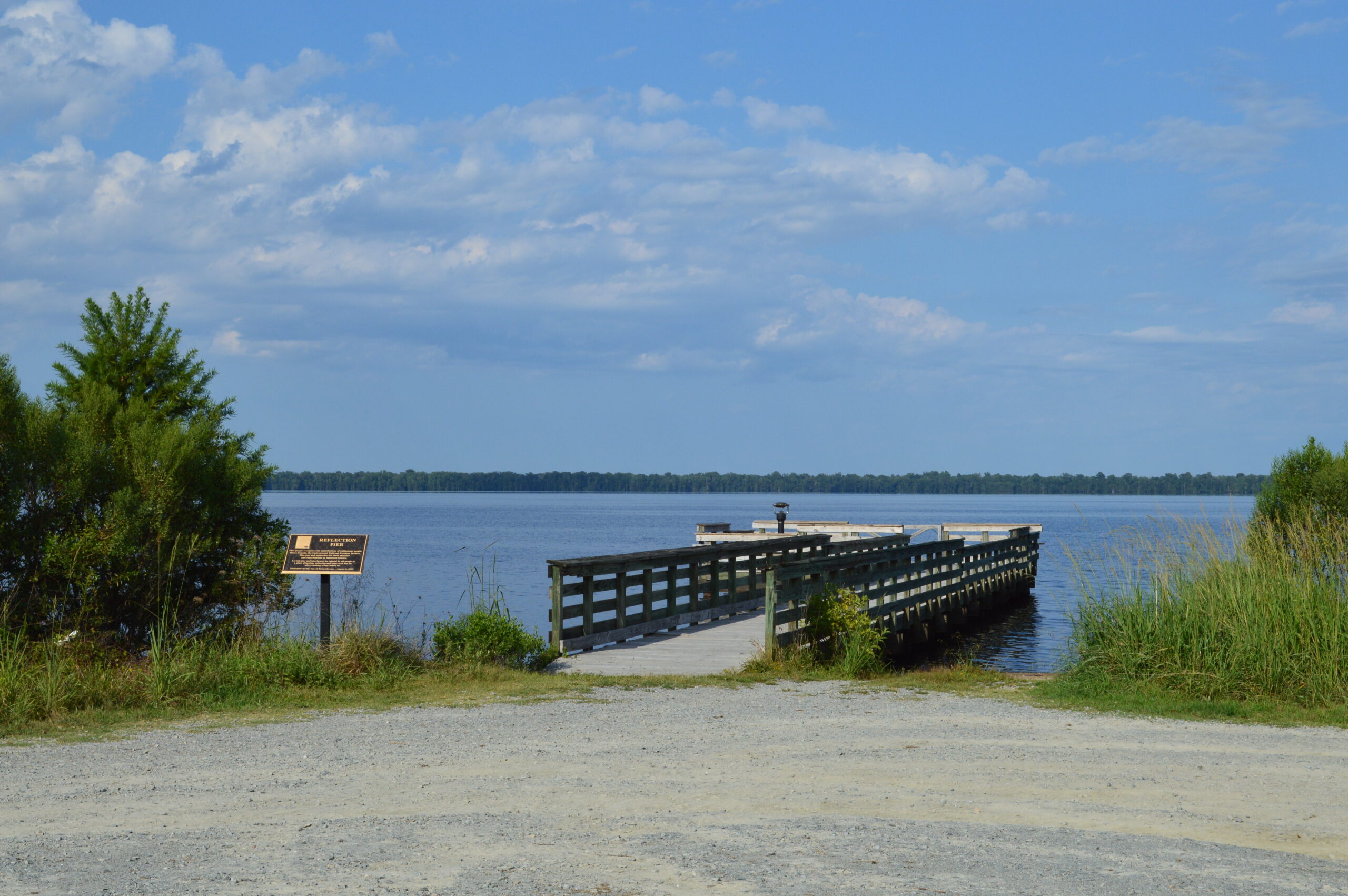
    Lake Drummond with Reflection Pier on left.
    Reflection of Bald Cyprus on Lake Drummond.
    Lake Drummond at Great Dismal Swamp NWR.
    Plants on Lake Drummond, Great Dismal Swamp NWR.
    Plants growing around Interior Ditch Road.
    Plants growing around Interior Ditch Road.
    Plants completely covering footbridge, Great Dismal Swamp NWR.
    Plants growing in Swamp.
    Plants around reflective water of swamp.
    Plants around reflective water of swamp.
    Close up of plants around reflective water of swamp.
    Forest, Road, and Ditch at the Great Dismal Swamp NWR.

    Dismal Swamp State Park, North Carolina

    The Dismal Swamp State Park takes up a smaller portion of the remaining Swamp. The North Carolina State Parks main attraction (besides the Canal) is the Swamp Boardwalk, which lets visitors immerse themselves deep into the woods. The rest of the Park consists of trails in more conventional woods, but a replica flat-bottomed boat and moonshine distillery can be found.

    Reflection of Dismal Swamp State Park Visitor Center on Canal.
    Dismal Swamp Canal with Trees and Walkway.
    Reflection of Trees in Dismal Swamp Canal.
    Foliage with Dismal Swamp Canal in Background.
    Foliage with Dismal Swamp Canal in Background.
    Entrance to Swamp Boardwalk, Dismal Swamp State Park.
    Trees in Swamp Boardwalk, Dismal Swamp State Park.
    Foliage with reflective pond in Background.
    Replica Moonshine Distillery, Dismal Swamp State Park.
    Replica Moonshine Distillery
    Unknown Imploded Metal Drum in Forest.
    Unknown Metal Drum
    Replica Flat-Bottomed Boat, Dismal Swamp State Park.
    Replica Flat Bottomed Boat
    Replica Flat-Bottomed Boat, Dismal Swamp State Park.
    Replica Flat Bottomed Boat
    Plymouth Gasoline Locomotive outside Dismal Swamp State Park.
    A Locomotive Used For Hauling Timber

    The Dismal Swamp State Parks closes at 5:30 in the summer and they mean it. When I returned to the entrance at around 5:10, they had closed the gate allowing cars to go through the drawbridge. I noticed that by 5:27 the gates to the parking lot were already locked and the drawbridge pulled up for boats traversing the canal. Luckily, next door to the park is a North Carolina Visitor Center, where you can use the restroom and grab a drink from the vending machine.

    Historical Village at the Dismal Swamp

    Historical Village at the Dismal Swamp.

    The Historical Village at the Dismal Swamp is located in Chesapeake Virginia. The Historical Village acts a visitor center, with a small exhibit about the history and nature of the Great Dismal Swamp. Although geographically near Lake Drummond, the Historical Village is actually a closer drive to North Carolina’s State Park than to Virginia’s NWR. The Historical Village was brand new when I went there, so if you don’t see it on Google Maps, type this address instead: 5221 Glencoe Street Chesapeake, VA 23322.

    Replica of Maroon House with Visitor Center in Background.
    Covered Walkway Memorizing Underground Railroad at the Historical Village at the Dismal Swamp.
    Bridge Reflected on Pond at Historical Village at the Dismal Swamp.
    Plants in reflective pond at Historical Village at the Dismal Swamp.
    Waterlilies on Dismal Swamp Canal with reflection of trees.
    Ruins of Superintendent's House on the Dismal Swamp Canal.
    Cornland School at the Historical Village at the Dismal Swamp.

    Located at the Historical Village is the Cornland School, a one room schoolhouse built in 1902. It served as the school for the African American students of the area. The school had no electricity or running water, and the teacher was expected to make lunch for the students. The schoolhouse fell into disuse after the early 1950s, but was saved and restored to its original appearance.

    Which Park Do I Recommend?

    I much prefer the Great Dismal Swamp NWR in Virginia due primarily to Lake Drummond’s rare beauty. By contrast, the Dismal Swamp State Park in North Carolina lack any truly unique features would draw me back to the Park. Nevertheless, both parks had their pros and cons, which I will list below.

    Go to Great Dismal Swamp NWR if…

    • Visiting from Hampton Roads.
    • Have (or need) more time to explore.
    • Want to see more nature.

    Go to Dismal Swamp State Park if…

    • Visiting from the Outer Banks
    • Have limited time.
    • Want to see more history.

    You could compare the two some more with my companion video about the two Great Dismal Swamp Parks. If you enjoyed it, please like and subscribe, and let me know if you like the video color corrected or if I should try to give my videos a more natural look.

    BONUS: Great Dismal Swamp NWR in 2018

    I previously went to the Great Dismal Swamp NWR back in 2018 and took some photos. Enjoy these never-before-seen images of the Park. You can see the mirror-like reflections of Lake Drummond more clearly in these images.

    First Lake Drummond…

    Lake Drummond with Trees and Reflection of Clouds.
    Reflection of Reflection Pier at Lake Drummond.
    Reflection of Trees and Clouds on Lake Drummond.
    Reflection of Tree and Clouds in Lake Drummond.
    Grass growing in Lake Drummond surrounded by reflection of Clouds.
    Reflection of Clouds on Lake Drummond.
    Ripples on Lake Drummond.
    Reflection of Sunlight in Clouds in Lake Drummond.

    Now the wooded swamp…

    Tall grass growing in Dismal Swamp Ditch.
    Ditch and Trees at the Great Dismal Swamp NWR.
    Forest and Brackish Water in the Great Dismal Swamp.
    Foliage and Brackish Water at Great Dismal Swamp.
    Brackish Canal at Great Dismal Swamp NWR.
    Trees growing in Brackish Water.
    Close up of Brackish Water.

    And finally some animals…

    Lizard on boardwalk in Great Dismal  Swamp Forest.
    Two Butterflies on a Gravel Road, Interior Ditch.
  • Best Things to Do In and Near Colonial Beach

    Best Things to Do In and Near Colonial Beach

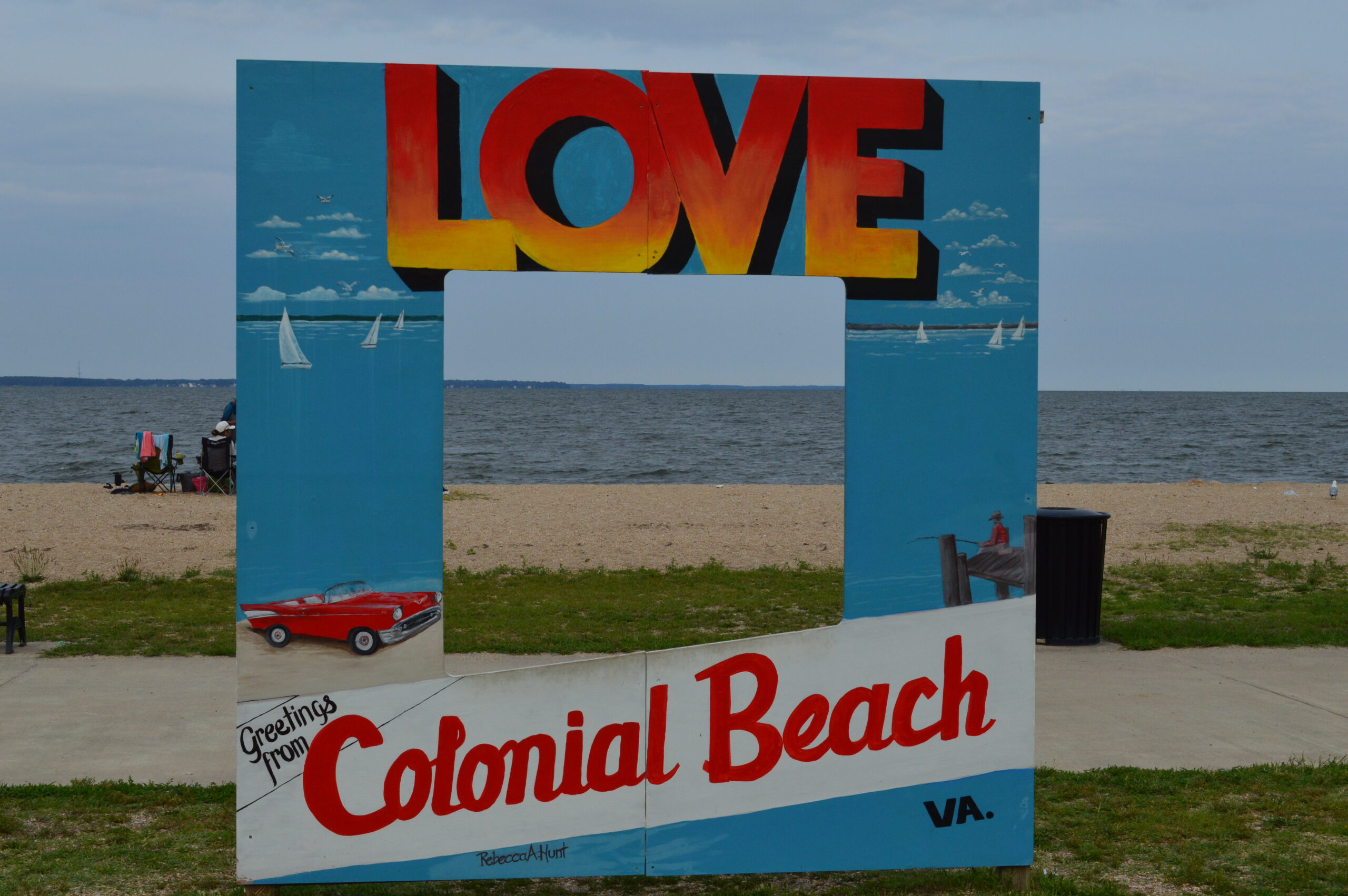
    Originally, I went to the Northern Neck peninsula in the Tidewater region of Virginia to see three historic sites; my plans did not include visiting Colonial Beach. However, I had to pivot topics because I severely underestimated how much time I would need to visit all three historic houses. Instead, this blog post talks about my opinion of Colonial Beach and what to do in the greater Westmoreland County area. Keep reading to watch my YouTube video about Colonial Beach and the nearby historic homes.

    4–6 minutes

    Colonial Beach

    Despite living in Virginia for most of my life, I knew little about Colonial Beach except that it retained much of its historical nature. Colonial Beach consists of three parts. The first part is the beach, which resembles a miniature Virginia Beach minus the skyscrapers. The second part is the unimpressive main street called Washington Avenue literally a block away from the beach. The quiet and peaceful beach cottages make up the third part of Colonial Beach. The highlight of this area is seeing the (privately-owned) Alexander Graham Bell summer house.

    View of a Boardwalk with Railing of Pavilion in Foreground in Colonial Beach.
    Trail next to beach in Colonial Beach.
    Downtown Colonial Beach.
    Downtown Colonial Beach with leaves in foreground.
    Parabola and tables next to building in Colonial Beach.
    Pavilion with Sunflowers in Foreground in Colonial Beach.
    Business in Colonial Beach with plants in foreground.
    Alexander Graham Bell Summer Home in Colonial Beach.
    Alexander Graham Bell Summer Home
    Orchid Thai Cuisine in Colonial Beach.

    For dining in the Westmoreland County, your only two options are eating in Colonial Beach or Montross, the county seat. If you do eat in Colonial Beach, plan for an earlier dinner, as many of the places that weren’t already closed by 6:00 close between 8:00 and 9:00. I picked Orchid Thai Cuisine because it was the first place from my quick perusal of Google Maps to still be open when I arrived at 5:30. Orchid Thai Cuisine was pretty popular and served good Thai food.

    Historic Homes in Westmoreland County

    The James Monroe Birthplace & Boyhood Home

    James Monroe Birthplace and Boyhood Home.

    The James Monroe Birthplace & Boyhood Home is a replica of the long-gone original home. The tour guide described the reconstructed house as being 95% accurate. Originally, the front door would have faced Monroe Creek, but the replica house’s front door faces the road. I learned that the Monroe’s were a middle-class family, and would not have entertained much. Nevertheless, James Monroe’s father had some political clout as he signed the Leedstown Resolutions alongside the Washingtons and Lees. There is also a park and trail associated with the site, but I could not explore it because I needed to head to the next historic house.

    Trail at the James Monroe Birthplace and Boyhood Home.

    Before you go: The James Monroe Birthplace and Boyhood Home house itself is only open on weekends between April and October. The accompanying park is open all year-round during daylight hours.

    Stratford Hall Historic Preserve

    Stratford Hall Historic Preserve.

    Stratford Hall is the third place I’ve been to associated with the Lee family this year after the Lee-Fendall House and Sully Historic Site. As fitting of the Lee’s status, Stratford Hall is a grand mansion with luxurious interiors. It’s also an odd structure because while it appears to be a two-story house, the second floor is actually the first floor, and the first floor is actually an above-ground basement. Stratford Hall was the highlight of this trip.

    Stratford Hall with Brick wall and trees.
    Stratford Hall at a great distance.
    Cabin of former enslaved person at Stratford Hall.
    Close up of down on Cabin.
    Interior of Cabin with set table and window.

    While at Stratford Hall, I learned some interesting things. First, the Lees were so rich that they were one of the few places in the colonies that served chocolate. Despite being the elite of Virginia society and having hundreds of enslaved workers, the Lee children were still expected to do chores to run the plantation. I also learned that plantation overseers were usually under contract for a year, and that there was frequent turnover. One interesting human touch is that Robert E. Lee would dig up prehistoric sharks’ teeth from the nearby beach as a child.

    Brick wall opening with trees in background.
    Garden at Stratford Hall.
    Close up of statue with crape myrtle in background.
    Path in gardens leading to Lees tomb.
    Cliff of Westmoreland State Park.
    Beach at Stratford Hall with wooden dividers.

    Before you go: Stratford Hall only does audio tours, but you have five options with different focuses. I did the basic information one, which gives a comprehensive overview of the house and the people who lived and worked there. I suppose you could spend the day going through all five audio tours. The only downside is they did not perfectly explain where I was to go next. There were several times where I would be listening to the tour in the wrong room. On a different topic, there are some cabins for rent on the property.

    Table with screen depicting Lees playing cards and discussing revolt against Stamp Act.

    Other Places in Westmoreland County

    The most famous historic house in Westmoreland County is the George Washington Birthplace National Monument. I went there as a little kid and remember it fondly, but perhaps I should make another visit sometime soon. Westmoreland State Park is for nature-lovers and located next to Stratford Hall. Menokin, while in Richmond County, is close enough that you could visit on the same day. However, this is the place I ended up missing, so either plan better or make it a separate trip.

    Conclusion

    Overall, I would recommend Colonial Beach only if you just want to spend a day on the beach. Those who hate the beach or want a place with more pizazz could probably skip Colonial Beach itself. Colonial Beach could also be used as a stopping ground to explore the Northern Neck area. Stratford Hall is a must-see destination, while the James Monroe Birthplace and Boyhood Home is for presidential homes completionists like myself. You could also use Westmoreland County to explore nearby Fredericksburg or go further down in the Northern Neck to see the River Realm area, such as Warsaw & Tappahannock.

    Below is the companion YouTube video about exploring Colonial Beach and museums of Westmoreland County. If you enjoyed the video, please like and subscribe for more.

  • Best Historical Things To Do in New Bern

    Best Historical Things To Do in New Bern

    New Bern was founded in 1710, making it the second oldest city in North Carolina. Thus, New Bern has many historical things to do and see. This blog post about visiting New Bern completes the first bucket list item from my About page. Keep reading to watch the accompanying YouTube video.

    3–4 minutes

    Downtown New Bern

    After finishing the attractions listed below, I walked around New Bern’s charming downtown. The mascot of the city is the bear as bern is the old Germanic word for bear. As such, there are many fiberglass sculptures of bears throughout the city with all sorts of crazy designs. New Bern has pockets of green space throughout the downtown which adds a nice balance to the historic buildings. New Bern proved to be teeming with activity and life on a Friday night, most notably with a Footloose on the Neuse concert.

    First the historic downtown…

    Downtown New Bern North Carolina.
    Downtown New Bern North Carolina.
    Closeup of buildings in downtown New Bern with sign in foreground.
    Downtown New Bern North Carolina with awning in foreground.
    Downtown New Bern North Carolina.
    Scaffolding shield with downtown New Bern in background.
    Closeup of brick building in New Bern.
    New Bern Civic Theatre and Tree.
    Church building and tree.
    New Bern Academy.

    Now the parks/nature…

    Park with Downtown New Bern in background.
    Park with Downtown New Bern in background.
    Downtown New Bern with Spanish Moss in Foreground.
    Downtown New Bern with replica outside church in foreground.
    Old Church and trees with Swan water fountain in foreground.
    Pier and wetlands in New Bern.
    Close up of Crape Myrtle and Spanish Moss.

    And finally two of the bear sculptures…

    Fiberglass bear sculpture decorated like a farmer.
    Fiberglass bear sculpture decorated like a taxi.

    Tryon Palace

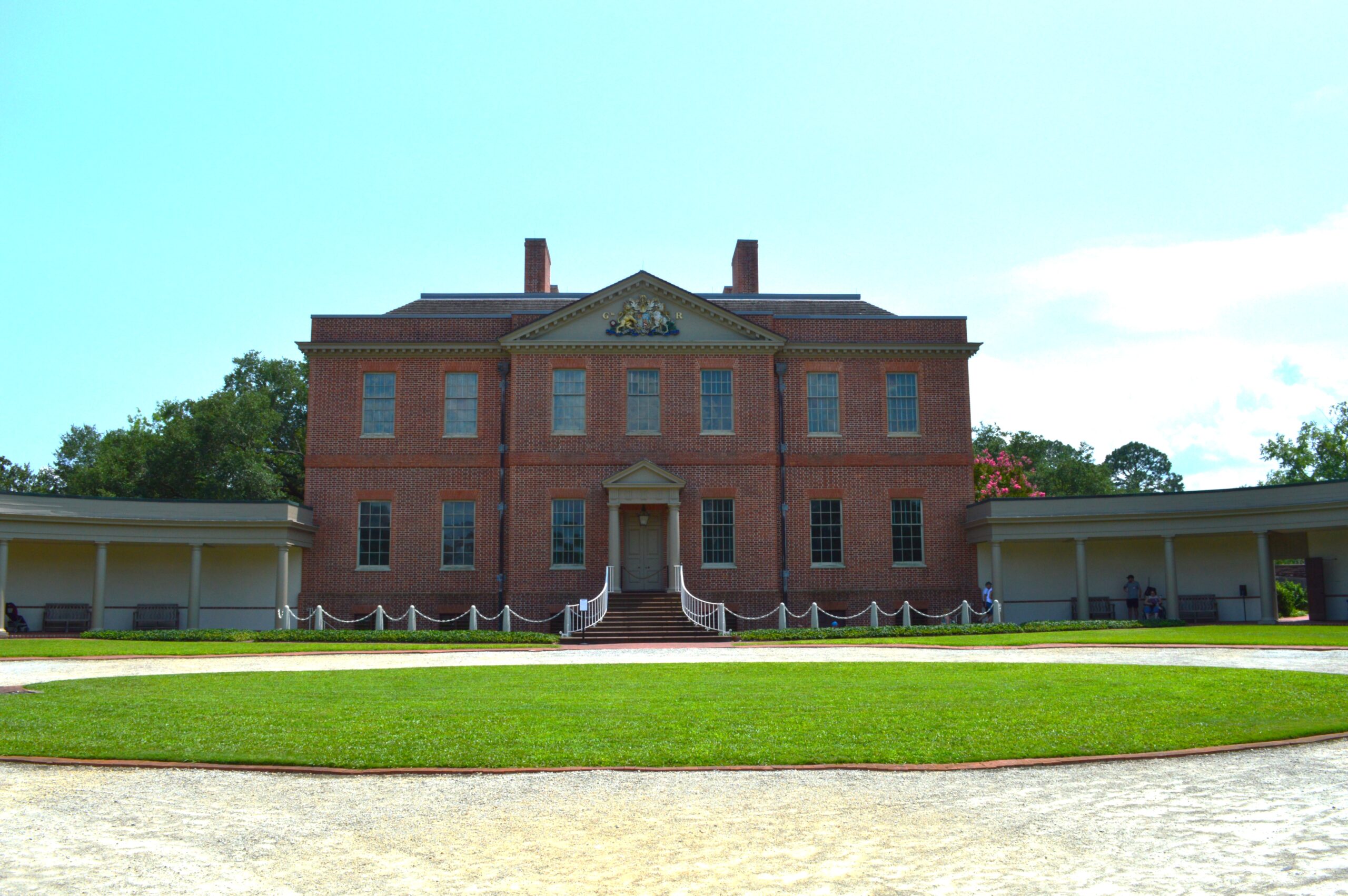
    My main reason for putting New Bern on my bucket list was to see Tryon Palace, and it did not disappoint. The Palace was built by and named after William Tryon, the Royal Governor of North Carolina. William Tryon turned New Bern from a small town to the capital of North Carolina in the early 1770s. Tryon Palace’s heyday only lasted a short time, as the town lost its status as a capital city in the early 1790s. In 1798, Tryon Palace burned down, and for many years the plot of land was subdivided into housing. Nevertheless, the foundations survived the fire, and after a complete reconstruction of the building and grounds, Tryon Places opened to the public in 1959.

    Crape Myrtle with Tyron Palace in background.
    Tryon Palace Gardens with side buildings in background.
    Walled garden on Tyron Palce with iron wrought gate.
    Walled garden at Tyron Palace with water fountain and plants.
    Walled garden at Tyron Palace with hedge maze and statues.
    Small pavilion at Tyron Palace.
    North Carolina History Center.

    A few steps away from Tryon Palace is the North Carolina History Center, which oftentimes felt more like a general history of the 19th century rather than a specific history of coastal North Carolina. However, I did learn that there were several failed attempts by the Spanish to colonize North Carolina. I also learned that turpentine comes from a tree. One unique exhibit was on the history of Pepsi, which is not something one normally finds in a local history museum. Which leads me to…

    Birthplace of Pepsi Cola

    Birthplace of Pepsi Cola in Downtown New Bern.

    The Birthplace of Pepsi Cola is nothing like the World of Coca-Cola in Atlanta, or even the Dr. Pepper Museum in Waco as my sister described it. Instead, it’s a gift shop and soda fountain that offers a couple of Pepsi products and popcorn. Unless you’re a big Pepsi fanatic, I only recommend coming here to grab a snack and beat the heat.

    Conclusion

    Overall, I enjoyed my time in New Bern, even if did not become one of my favorite small towns. I think one day is enough to explore all New Bern has to offer. However, you could use New Bern as a launching point to explore more of North Carolina, such as the Croatan National Forest located next door. For other away trips, I recommend visiting Edenton, Manteo, and the Outer Banks. And if you want to see Virginia’s colonial capital, Williamsburg is a nearly 4-hour drive away.

    Below is my companion video about exploring New Bern and Tryon Palace. If you enjoyed the video, please like and subscribe.

    Restaurants

    Savage's Wood Burning Pizza restaurant in New Bern.

    There are quite a few restaurants in downtown New Bern. However, if you wanted to eat somewhere close to Tryon Palace, I suggest Savage’s Wood Burning Pizza, which is a six-minute walk to the North Carolina History Center. The restaurant not only serves pizza, but also pasta and subs.

  • How To Maximize Your Time In Chantilly Virginia

    How To Maximize Your Time In Chantilly Virginia

    At first glance, Chantilly VA might be written off as one of the many boring residential cities in the Northern Virginia (NOVA) area. However, there are several attractions here that make Chantilly worth a second look. Chantilly also makes a convenient starting point to explore cities such as Alexandria, Leesburg/Waterford, or even Washington D.C.

    3–5 minutes

    Sully Historic Site

    Sign saying Sully Historic Site. Located in Chantilly VA.

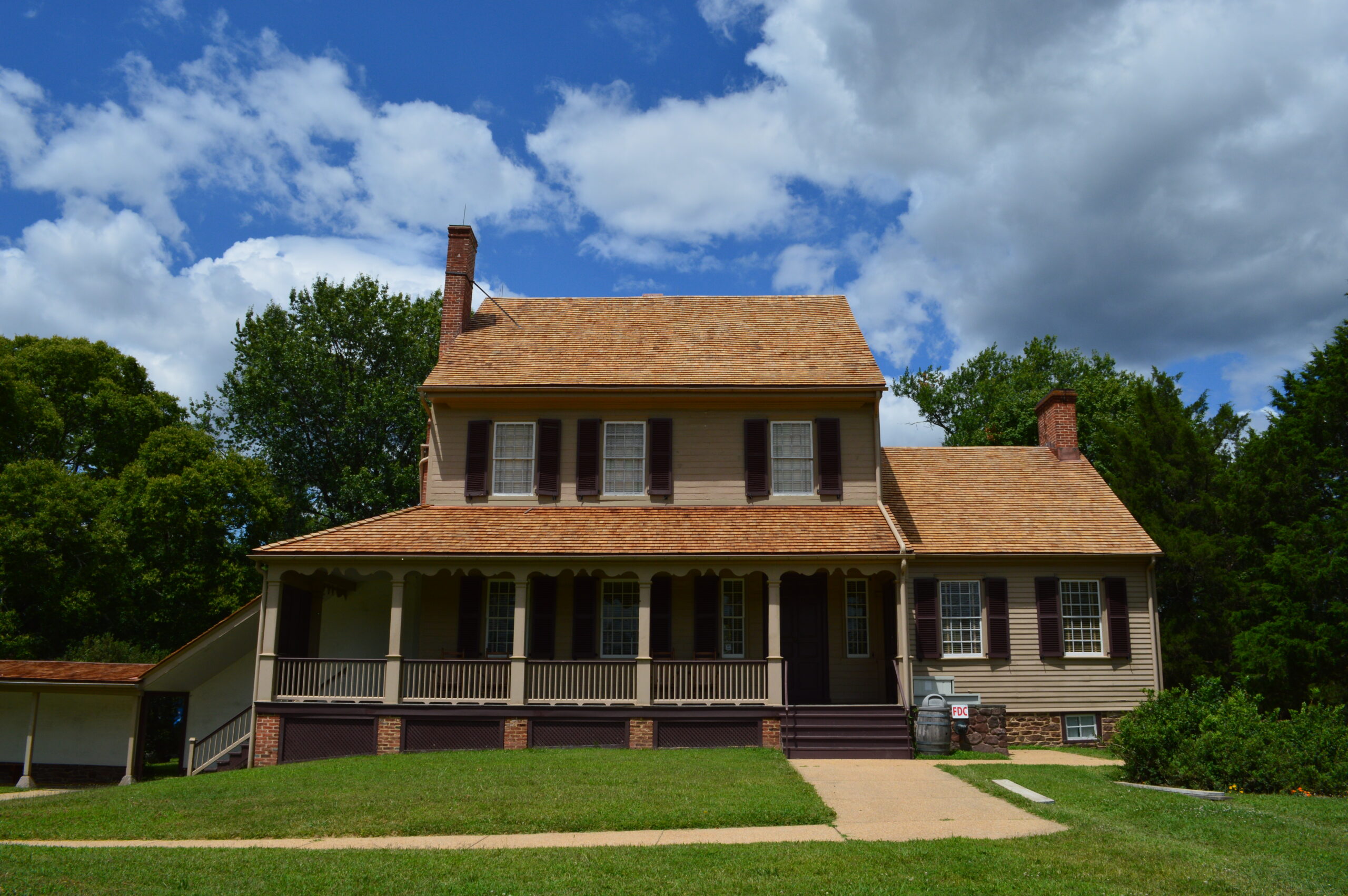
    Sully Historic Site, an old plantation house, was built by Richard Bland Lee, the younger brother of Henry “Light-Horse Harry” Lee and uncle to Robert E. Lee. Richard Bland Lee was a prominent politician in the Early Republic, so his brother Theoderick often ran the day-to-day operations. Richard Bland Lee fell into debt and eventually sold the house to a relative of his.

    Wall with Window at Sully Historic Site connecting Kitchen to walkway.

    Sully had left the Lee Family ownership by the time of the Civil War. The new owners of the house supported the Union; when the War began, the men of the family fled to nearby Alexandria to avoid capture. At some point, J.E.B. Stuart used the house as headquarters. When he and his troops departed, he placed wounded Union prisoners under the owners’ care.

    Reconstructed Slave Quarter at Sully Historic Site.

    Sully went through a series of owners throughout the years. In 1958, the Federal Aviation Administration bought the house in order to knock it down for the new Dulles Airport. After some protest, legislation was passed to save some of the property from demolition.

    Interior of reconstructed slave quarter at Sully Historic Site.

    Here are some interesting things I learned at Sully Historic Site. I learned that the people who worked at the laundry rendered beef and pork fat, rather than the kitchen staff. In one of the rooms, the Museum commissioned a portrait of one of the enslaved workers using the description of him from his fugitive slave ad.

    Garden at Sully Historic Site.

    Keep in mind that Sully Historic Site is only open from Thursdays through Sundays. The grounds are open from 11-4 and the tours are at 11:30 a.m., 1:00 p.m. and 2:30 p.m.

    Garden at Sully Historic Site.

    Other Things To Do in Chantilly

    Steven F. Udvar-Hazy Center-This Museum serves as an annex to the National Air and Space Museum in Washington D.C., housing many unique planes such as the Space Shuttle Discovery, the Enola Gay, and the Gemini VII Space Capsule. If you are big on planes this is a must visit, but if you’re not it can be very Dulles.

    Ox Hill Battlefield Park-I went to this historic park on a previous trip to NOVA. This Park preserves some of the land where the Battle of Chantilly was fought; while small, there are some signs informing visitors about the history of that Battle.

    Parks- There are several small nature parks located in and around Chantilly. Full disclosure I have not been to any of them, but from pictures they look like nice urban oases. In order of closest to furthest from Sully Historic Site: Frying Pan Farm Park, Flatlick Stream Valley Park, Ellanor C. Lawrence Park, & Club Run Stream Valley Park.

    Manassas National Battlefield Park-A bit further away from Chantilly is Manassas and the Manassas National Battlefield Park. This historic park commemorates the two Battle of Bull Runs, otherwise known as the Battles of Manassas. As shown in a video from my old channel, the town of Manassas is also worth a visit.

    Conclusion

    I hope this blog post allows people to give Chantilly a second chance. I enjoyed visiting Sully Historic Site and would have loved to spend more time exploring the other things to do in Chantilly. Chantilly also makes a great starting point for exploring the greater NOVA area. So next time one is looking for a fun day out, consider Chantilly.

    Below is my companion YouTube video specifically about visiting Sully Historic Site. Please like and subscribe if you enjoyed, or offer suggestions on how I can improve.

    Restaurants

    Dolan Uyghur Restaurant in Chantilly VA.

    There are many restaurants in Chantilly. I went to the Dolan Uyghur Restaurant on my Chantilly trip. Uyghur cuisine is a mix of Chinese and Middle Eastern flavors. I recommend the Royal Laghman noodles and the Big Plate Chicken. For dessert, check out the nearby Rice Culture, which serves taiyaki and unique soft serve flavors.

    If you want more dining options, try some restaurants in the greater NOVA area, such as those listed on my Alexandria blog post. In order from closest to furthest from Sully Historic Site are: Malaysian Kopitiam, Swadi Pakistani Kitchen, Marufuji Japanese Market, Hawk & Griffin, Fettoosh, and El Pike Bolivian Restobar.

  • One More Thing to Do in Alexandria

    One More Thing to Do in Alexandria

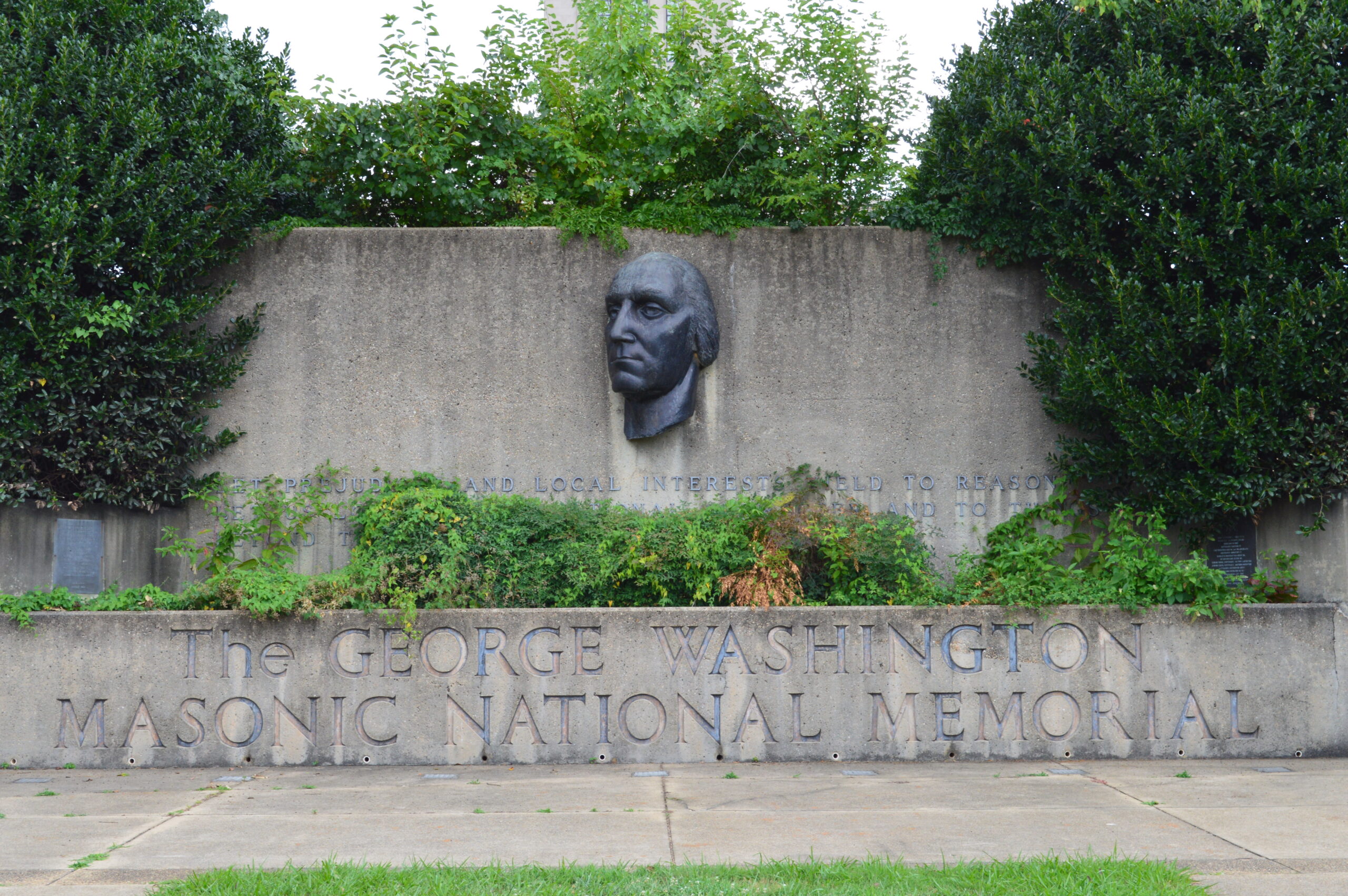
    Several blog posts ago I mentioned that I did not complete everything there is to do in Alexandria. Recently, I returned to the Northern Virginia (NOVA) area to visit The George Washington Masonic National Memorial. This article serves a companion pieces to my Alexandria blog post. Keep reading till the end to watch my YouTube video about the Masonic Memorial.

    3–5 minutes

    The Masonic Memorial Tour

    The George Washington Masonic Memorial.

    The guided tour goes through some of the rooms of the massive obelisk. The tour begins in the Grand Hall, a massive room with 40-foot columns, two massive murals of George Washington in patriotic scenes, and a giant statue of George Washington at the far end of the Hall. Our tour guide then directed visitors to the Replica Lodge Room, which replicates Alexandria’s original Masonic meeting room. Here I learned the origins of Freemasonry, which begin in the 1600s. The term originates from the mason guilds that would grant the honorary position of “free mason” to prominent men of the community.

    The George Washington Masonic Memorial, with Freemason Logo.

    The tour makes its way up the building, stopping at two exhibit rooms. The first room talks about all the different Freemason orders. It turns out that there are many different orders including the Shriners. The next room is a two-story room with one floor devoted to the life of George Washington and the other floor talking about the history of the building. Before reaching the observation deck, you stop at the Knight Templar Chapel, the only order of Freemasonry where you must be a Christian.

    Tower of The George Washington Masonic Memorial.

    Then visitors are sent to the observation deck mentioned below. Finally, the tour goes all the way down to the first floor, where you are greeted with a gift shop. The gift shop lacked much of interest, but it’s funny that a secret organization has a gift shop. Besides the gift shop, one can glance inside a giant banquet room and look at a small exhibit about historic Masonic buildings.

    Outside Columns and Portico Ceiling of The George Washington Masonic Memorial.

    The Observation Deck

    The observation deck is 300 feet above the ground floor, as well as being on top of a hill. There are panoramic views of Alexandria and the surrounding areas. Unfortunately, the D.C. area is too far away to get great shots, and the modern office buildings completely swamp views of historic downtown Alexandria. Still, I highly recommend The George Washington Masonic Masonic Memorial just for the observation deck.

    Looking Below at Freemason Logo and Alexandria.
    Panoramic View of Alexandria.
    Panoramic View of Alexandria's suburbs.
    Panoramic View of Alexandria with Washington D.C. in Background.

    Interesting Facts About The Building

    Here are some facts about the building. First the entire building stands 333 feet tall. President Calvin Coolidge (not a Freemason) laid the building’s cornerstone in 1923. However, construction took so long that the interiors were not completed until the 1970s.

    Panoramic View of Alexandria from steps of The George Washington Masonic Memorial.

    The elevators that visitors go on to tour the building are worth a mention. As the building narrows as it gets to the top, the elevators go up in a 7.5-degree angle. The strangely shaped elevators are as a mix between a rounded square and a triangle and missing a corner. The tour guide revealed this was a purely ascetic choice, as the architect wanted to incorporate Art Deco into an otherwise Greco-Roman building.

    How You Visit The Masonic Memorial

    Here are some practical tips on visiting The George Washington Masonic National Memorial. The Memorial is open from Thursdays-Mondays, with guided tours at 9:30 a.m., 11:00 a.m., 12:30, p.m., 2:00 p.m., & 3:30 p.m. that last about an hour. You may take pictures inside the building, but no use of flash photography. You cannot film inside the building, but they were fine with me filming on the observation deck provided I did not record anyone.

    Conclusion

    I did not know that the Masonic Memorial was open to the public as a museum until recently. I enjoyed learning about the Freemasons at the Masonic Memorial as it’s a world I know nothing about. The observation deck also makes the Masonic Memorial a unique must-see destination.

    Here is my companion YouTube video about The George Washington Masonic National Memorial. This is the first time I’ve tried color grading one of my videos, so let me know if you like it or not.

    Restaurants

    Dolan Uyghur Restaurant in Chantilly.
    This Is The Chantilly Location

    The George Washington Masonic National Memorial is about 13 minutes away from Old Town Alexandria with its many attractions and restaurants; I recommend Mia’s Italian Kitchen on King Street. I also recommend Dolan Uyghur Restaurant for Uyghur cuisine (a mix of Chinese and Middle Eastern flavors); the closest location is 17 minutes away in Arlington. Read the restaurants recommendations linked above if you want more dining options that are further away.

  • How to Maximize Your Trip to Winchester Virginia

    How to Maximize Your Trip to Winchester Virginia

    4–6 minutes

    On my final full day in Northern Virginia, I actually left the NOVA area to travel to Winchester VA. Although Winchester is not considered part of NOVA, it is relatively nearby as the town was an hour away from my hotel. It was a beautiful drive to Winchester as the landscape changed from flat, urbanized land to rural mountains. This is part three of my NOVA trip, following Alexandria and Leesburg/Waterford and finishing with Chantilly.

    Old Town Winchester

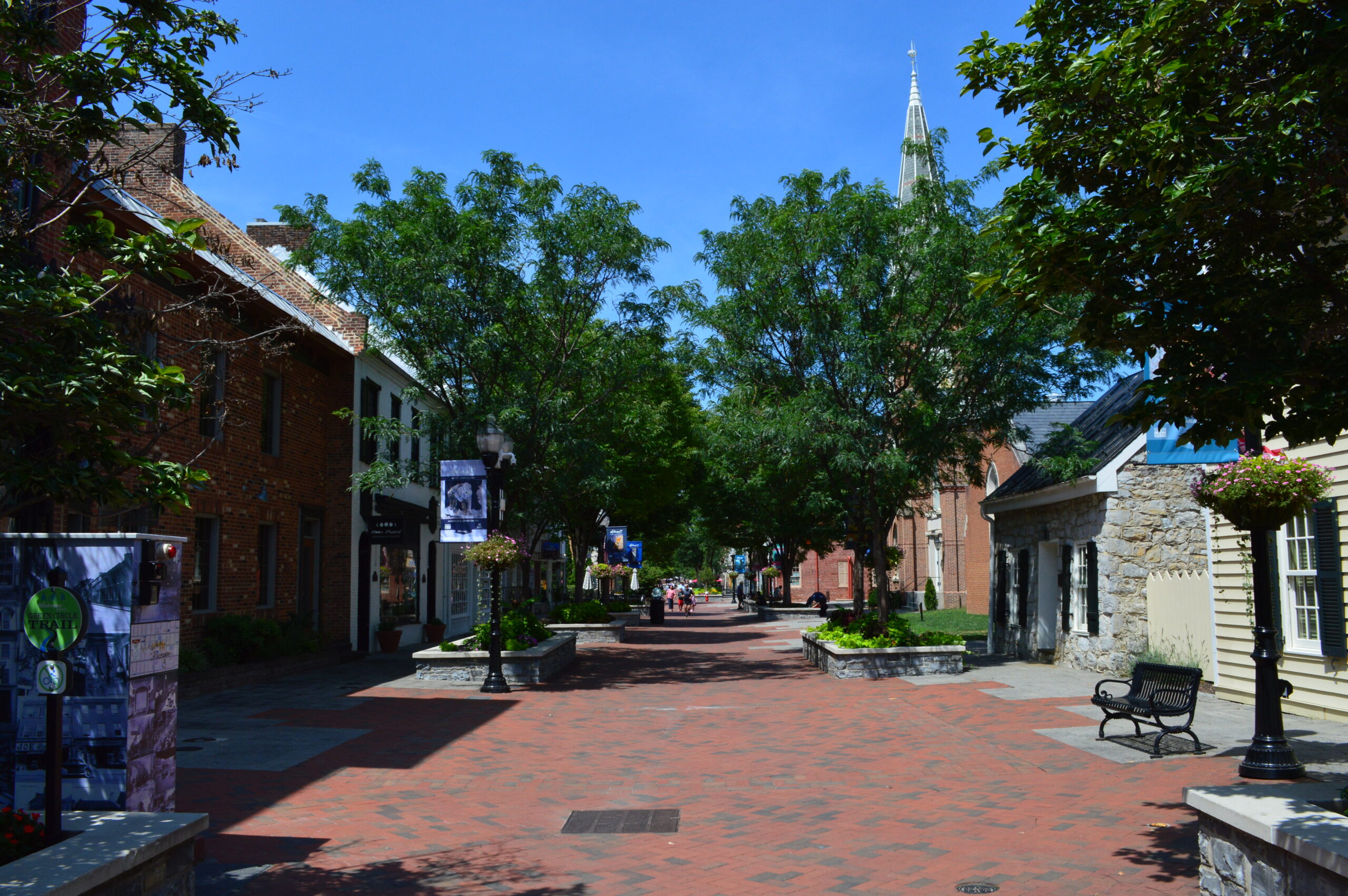
    Winchester is the most unique small town I’ve been to because the main thoroughfare has no road going through it. Instead, Old Town Winchester is an entirely pedestrian friendly walking mall that retains the original buildings. It was nice to film a charming small town without having cars and trucks constantly driving by. The rest of Downtown Winchester is more conventional with roads, but it still retains its historic nature.

    Old Town Winchester Virginia.
    Old Town Winchester Virginia.
    Old Town Winchester Virginia.
    Old Town Winchester Virginia.
    Old Town Winchester Virginia.
    Close up of Building in Old Town Winchester Virginia.
    Old Town Winchester Virginia.
    Old Town Winchester Virginia.
    Old Town Winchester Virginia.
    Buildings in Downtown Winchester VA.
    Kimberly Store in Winchester VA.
    This Building Served As Headquarters For A Union General

    There are plenty of restaurants in Winchester. I went to Benny Meloto’s Pizza which if I’m being honest was not that great of a pizza. However, it was cheap, quick, and filling (since a single slice can fit on two paper plates), so it’s an option for those who want to maximize their time in Winchester.

    Places to See in Winchester

    The Shenandoah Valley Civil War Museum.

    Located in the heart of Old Town Winchester is The Shenandoah Valley Civil War Museum, located in what was the third courthouse of Frederick County. The downstairs section talks about the courthouse’s history while the upstairs exhibit talks about the Civil War in the Shenandoah Valley. The design of the second courthouse was so controversial that part of the county broke apart and formed its own county. The Judge presiding over the John Brown trial was came from this court. Winchester changed hands 72 times during the Civil War, the most of any place in America. Graffiti from both Confederate and Union troops remains visible today. The building remained a courthouse until 1984.

    George Washington Office Museum.

    Near Old Town Winchester is the George Washington Office Museum, which delves into George Washington’s early years as a surveyor, as well as recounts Winchester’s early years. I did not know that George Washington became a burgess (member of the legislative body) for Frederick County in 1758. After George Washington left, a family lived in the office until 1908 when the city bought the property.

    Handley Regional Library.

    Also near Old Town Winchester is the Handley Regional Library. This grandiose building is still a working library, but they offer tours twice a month. Look up to marvel at the stained-glass dome.

    Sign Advertising Tours of Handley Library.
    Interior Picture of Handley Library.
    Stained-Glass Dome in Handley Library.
    Stonewall Jackson Headquarters Museum.

    A bit further away is the Stonewall Jackson Headquarters. Jackson originally headquartered at a hotel, but moved to this building when invited by Lewis T. Moore, the second owner of the house. The two men originally met during John Brown’s trial and execution. The tour guide recounted how the women of Winchester hated the Union so much that they grabbed guns and shot at Union troops. The actress Mary Tyler Moore is a descendant of Lewis T. Moore. Also, the visitor entrance seen above was not the original entrance to the house.

    Sign Saying Patsy Cline Memorial Park.

    A 15-minute walk from Old Town Winchester is the Patsy Cline Historic House and Patsy Cline Memorial Park. While I did not go to the Museum, I highly recommend visiting the Park to appreciate the unique landscaping. I recommend walking to both places, since they are located in an old suburb with minimal parking.

    Metal Statue with Old Suburb In Background.
    Mental Statue with Cutout of Patsy Cline in Background.
    Pedestrian Bridge at Patsy Cline Memorial Park.
    Pedestrian Bridge at Patsy Cline Memorial Park.
    Museum of the Shenandoah Valley.

    A several minutes’ drive from downtown Winchester is the Museum of the Shenandoah Valley. This museum is a bit odd, since it is a mix of a history and art museum, with displays of quilts and miniature houses. I noticed that the Shenandoah Valley history section had several historic kitchens on display. The Museum is built around the Glen Burnie estate, which remained in the family’s hands throughout the years; the last owner of the house was gay, which probably the first time I’ve ever been to a museum with some LGBT history.

    Glen Burnie Mansion at Museum of the Shenandoah Valley.
    The Glen Burnie Mansion, Which The Museum Was Built Around
    Plants and Metal Mesh with Silo in Backgorund.
    Kinetic Art inside Silo.
    Blue Wall with Cutout with Trees in Background.
    Interior of Pavilion with Fountain in Background.
    Interior of Chinese Pavilion with Chinese Garden in Background.
    Chinese Garden with Ornamental Footbridge in Foreground.
    Close up of Small Waterfall.
    Parabola and Trees.
    Small Elf Building with Trees in Background.
    Long Branch Historic House and Farm.

    About a 24-minute drive away from downtown Winchester is the Long Branch Historic House & Farm. The original builder of the mansion died in the War of 1812, and thus never lived in the house. After the Civil War, the widowed wife of the new owner lost the house, but ended up buying back the house and land in auction. The last private owner of the house owned successful racehorses, and modified the mansion to what it is today.

    Field with Cows with Tree Branch in Foreground.
    Tiny Garden with Field in Background.
    Barn Building with Mountains in Background.
    Flowers with Lake in Background.
    Lake with Mountains in Background.
    Lake with Weeping Willow in Foreground.
    Lake with Bench in Foreground.

    Conclusion

    Those looking for a charming small town with plenty to do should look no further than Winchester, VA. You should spend at least two days exploring Winchester and the surrounding area, because I did not visit the Patsy Cline Historic House, Abram’s Delight, or explore the nearby Sky Meadows State Park. Winchester is definitely worth a stop if one is in the Washington D.C./NOVA area, and is close to both Harpers Ferry or Shenandoah National Park.

    Some important information: The Museum of the Shenandoah Valley is closed on Monday, while the Patsy Cline Historic House is closed on Tuesday. When arriving at Long Branch Historic House & Farm, ignore what Waze says and turn right to the north entrance. Once you arrive, the visitor entrance is neither the front or back door, but in a small wing to the left (in orientation of the picture above). Once you arrive, let someone know that you’re a visitor and you would like a tour of the house, as they may be in the back.

    Below is my companion YouTube video entitled Best Things to Do in Winchester Virginia. Please subscribe if you liked the video.

  • Discovering Beautiful Leesburg and Waterford

    Discovering Beautiful Leesburg and Waterford

    3–5 minutes

    The first thing that comes when thinking of Northern Virginia (NOVA) are major cities and endless suburban sprawl. However, at the furthest corner of NOVA are two small towns, Leesburg & Waterford, which retain their picturesque historic charms yet remain under the radar. These two towns are about 11 minutes apart, making them a perfect destination to spend a day or two. This blog post about Leesburg and Waterford is the second of a four-part series on my recent trip exploring NOVA following Alexandria and followed by Winchester and Chantilly.

    Exploring Downtown Leesburg

    After finishing the museums listed below, I walked around Leesburg’s charming downtown. Unlike other small towns, Leesburg’s commercial district surrounds a block rather than stretching out on the main street. A few blocks away is Market Station, a collection of shops and restaurants surrounding an old historic mill.

    First Downtown Leesburg…

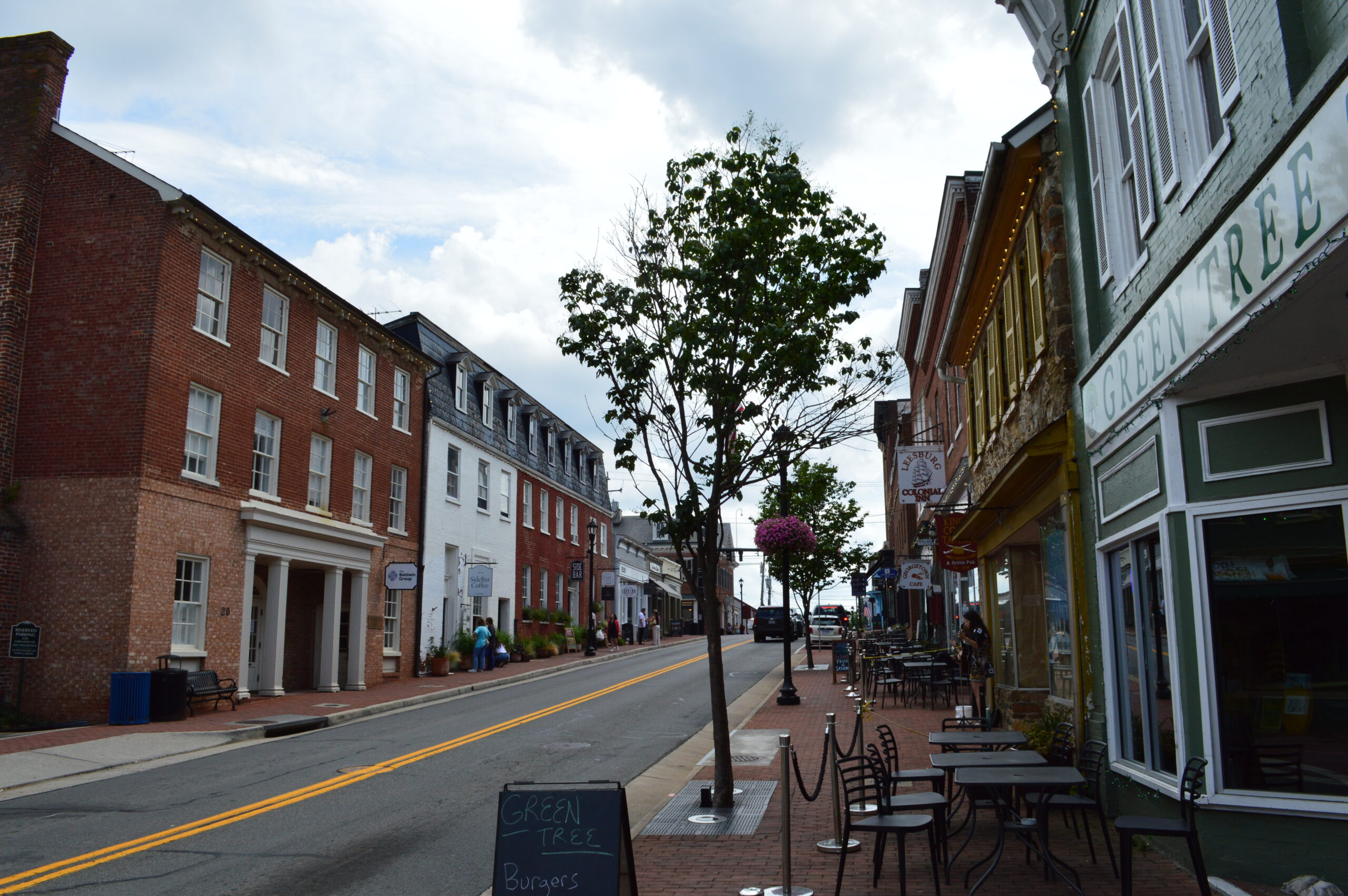
    Downtown Leesburg Virginia.
    Downtown Leesburg Virginia.
    Downtown Leesburg Virginia.
    Downtown Leesburg Virginia.
    Downtown Leesburg Virginia.
    Close up of Downtown Leesburg Virginia.
    Close up of Downtown Leesburg Virginia.
    Shop in Leesburg with doorway in foreground.
    Park in Leesburg with Log Cabin in background.

    Now Market Station…

    Market Station in Leesburg VA.
    Tuscarora Mills in Market Station in Leesburg VA.
    Plaza at Market Station in Leesburg VA.
    Columns in Market Station in Leesburg VA.

    While I never got the opportunity to eat in Leesburg, I did make a fun stop at a store. Sunflower Shack sells old fashioned sweet treats and home decor items. Although I could not buy any chocolates because it was such a hot day, I did buy four sodas. The sales clerk kindly wrapped up the sodas when I told them I was from out of town; the sodas managed to survive the trip home in perfect condition.

    Sunflower Shack store in Leesburg VA.

    Museums of Leesburg

    Sign that says Oatlands land-scholarship-history Welcome.

    Oatlands Historic House and Gardens was built by George Carter, the son of Robert Carter III, whose house I saw in Williamsburg. George Carter fought his father’s decision to manumit (legally free) his slaves. The tour heavily focus on the lives of the enslaved people and what happened to them after emancipation. The tours also talked about the Eustis family, the second family who lived in the house. Oatlands also has a beautiful walled garden just steps from the mansion.

    Oatlands Historic House near Leesburg.
    Entrance to Walled Garden at Oatlands.
    Walled Garden at Oatlands.
    Pond with Aquatic plants with Statue in background at Oatlands.
    Walled section of garden with flowers in foreground.
    Sign that says George C. Marshall's Dodona Manor Home and Garden.

    Dodona Manor was built in 1803, but is most associated with George C. Marshall, whose second wife bought the house in 1941. The second wife had a brief career as a Shakespearean actress in Britain, but her Kentucky accent held her back. The tour guide noted the modesty of George C. Marshall as his bedroom was small and spartan. One interesting thing on display was a television set, which is not something one normally finds in a historic house.

    Dodona Manor in Leesburg VA.

    Exploring Waterford

    On the final day of the trip, I decided to make a detour to visit Waterford, which I only discovered from watching this video last year. Waterford turned out to be a unique experience because (minus all the passing cars) the town completely retains its colonial look. Waterford’s main street is incredibly tiny and, with the exception the mill, church, post office, and corner store, has only houses rather than the standard storefronts. Waterford’s history is also interesting because it was founded by Quakers. Why Waterford remains under the radar is a complete mystery to me.

    Buildings in Waterford Virginia.
    Buildings in Waterford Virginia's Main Street.
    Buildings in Waterford Virginia's Main Street.
    Buildings in Waterford Virginia's Main Street.
    Buildings in Waterford Virginia's Main Street.
    Buildings in Waterford Virginia's Main Street with Support Beams in foreground.
    Buildings in Waterford Virginia's Main Street with greenery and American Flag in foreground.
    Back of Buildings in Waterford Virginia's surrounded by greenery.
    Old Mill in Waterford with John Wesley Church in Background.
    The Old Mill Dating From the Early 19th Century
    Rusted Water Wheel Surrounded by Greenery.
    Rusted Water Wheel, Now Detached From the Mill
    Entrance to Phillips Farms Trail in Waterford VA with two signs.
    Beginning of Trail Leading to Catocin Creek

    Conclusion

    Overall, I highly recommend visiting Leesburg and Waterford as a day trip, or perhaps a two-day trip as I did not include Morven Park, which is another place I highly recommend. One could spend several hours wandering through both Oatlands and Morven Park’s gardens. The two small towns are conveniently located a little over an hour away from Washington D.C., as well as being relatively near Harpers Ferry and Antietam National Battlefield.

    Here are some helpful tips. While Oatlands grounds are open every day, guided tours of the house are only available from Thursdays through Sundays at 11:00, 1:00 and 3:00. Oatlands is not located in Leesburg, instead being 14-minute drive away. George C. Marshall’s Dodona Manor located several blocks away from downtown Leesburg, and is only open on Friday through Sunday. Keep in mind that the entrance to Dodona Manor is on Edwards Ferry Road, not E Market Street; also, they have a tiny parking lot, so those with time and the ability to walk could park downtown and take an 11-minute walk to the house. Waterford is most known for the Waterford Fair, which happens in early October.

    Below is my companion YouTube video about Leesburg and Waterford. If you enjoyed the video, please like and subscribe.

    Restaurants in the Greater NOVA Area

    There are plenty places to eat in Leesburg (not so much Waterford), either in the downtown area, Market Station, or the strip malls at the edge of town. If you want more dining options, try some restaurants in the greater NOVA area, such as those listed on my Alexandria blog post. In order from closest to furthest to Leesburg: Swadi Pakistani Kitchen, Rice Culture (Chantilly location), Malaysian Kopitiam, Marufuji Japanese Market, Hawk & Griffin, Fettosh, and El Pike Bolivian Restobar. There are also two Roy Rogers fast food restaurants located within Leesburg.

  • Best Things to Do in Alexandria

    Best Things to Do in Alexandria

    I always wanted to see Alexandria and experience the beautiful historic old town. The hour-long glimpse of Alexandria I got several years before only served to whet my appetite for more. Finally, I got extra days off work, so I decided to explore more of what Travel & Leisure calls one of the best cities in the U.S. This blog post about Alexandria is the first of a four-part series of my recent trip exploring Northern Virginia (NOVA), followed by Leesburg/Waterford and Winchester and ending with Chantilly.

    5–8 minutes

    Exploring Historic Alexandria District

    Homes in Alexandria Virginia with Sign Saying Old & Historic Alexandria District.

    After arriving in downtown Alexandria, I first had lunch at Mia’s Italian Kitchen. The restaurant is located in the pedestrian friendly section of King Street. The restaurant is three stories tall, but I forgot to see the second and third floor. I had the Bucatini Cacio e Pepe, which was perhaps my favorite meal of the trip. There are plenty of other restaurants nearby is you want a different option.

    Mia's Italian Kitchen Restaurant in Alexandria VA.

    Historic Alexandria is definitely a must-see destination. There is so much to do and see within downtown Alexandria, as well as admire the old buildings. Some roads were made out of cobblestone, which added to the ambience of Alexandria’s historic nature. There were also several small parks located on the waterfront conveniently located near downtown.

    First the Architecture and History…

    Glass protecting Ruins of Ice Well.
    Ruins of Ice Well That Could Store Up To 62 Tons of Ice For Local Tavern
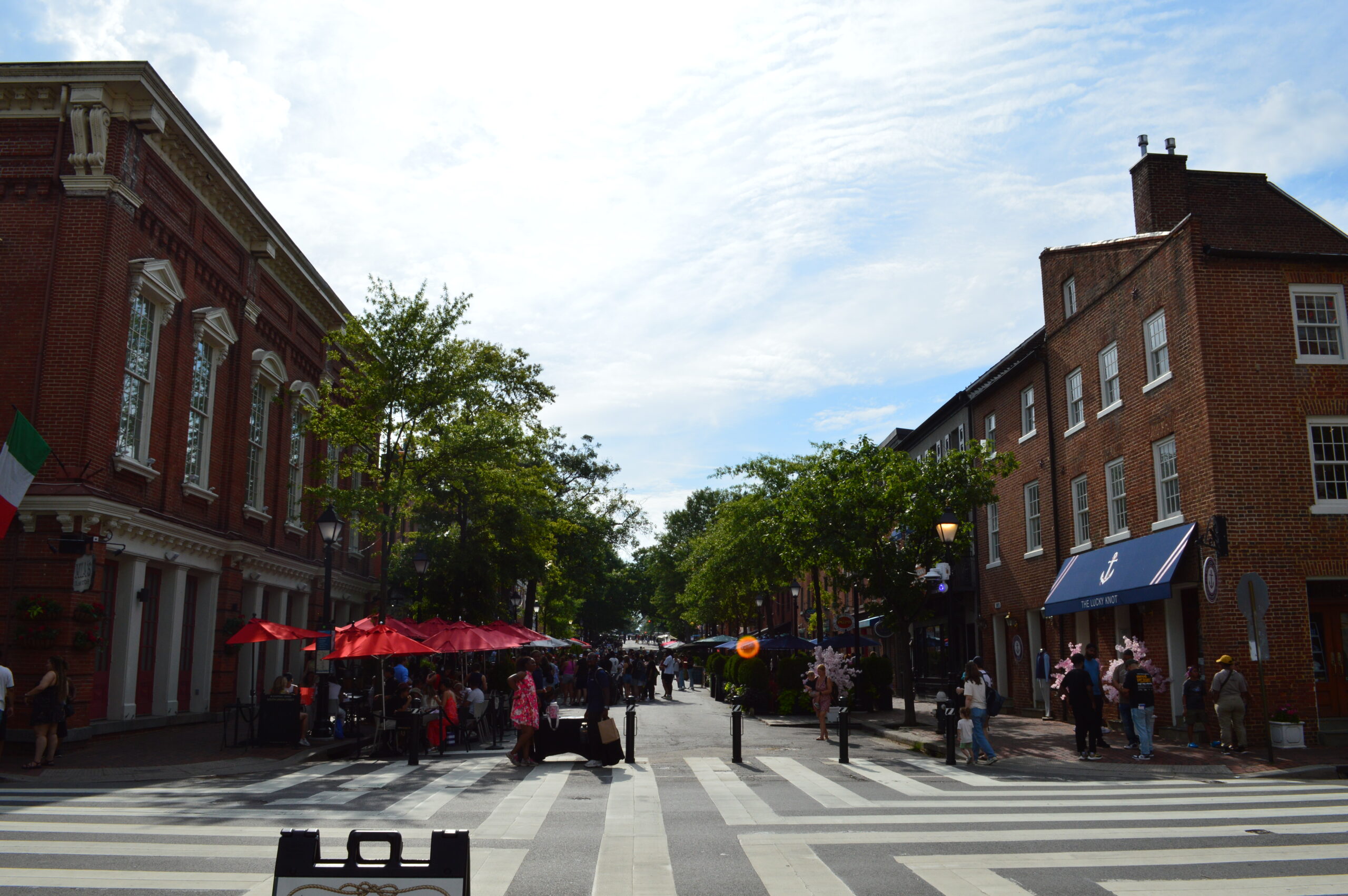
    Historic Buildings in Alexandria Virginia.
    King Street Alexandria Virginia.
    King Street Alexandria Virginia.
    Historic Houses and Trees in Alexandria Virginia.
    Historic Houses and Trees and Cobblestone Street in Alexandria Virginia.
    Historic Houses and Trees and Cobblestone Street in Alexandria Virginia.
    Street in Alexandria VA with Tree in Background.
    Historic Buildings in Alexandria.
    Historic Buildings in Alexandria.
    Historic Buildings in Alexandria.
    Historic Buildings in Alexandria.
    Historic Buildings in Alexandria.
    Historic Buildings in Alexandria with leaves in foreground.

    Now the Nature…

    Park Behind Lee-Fendall House in Alexandria Virginia.
    Park Behind Carlyle House in Alexandria Virginia.
    Park Behind Carlyle House with Gazebo in Background.
    Small trail surrounded by plants in Founders Park, Alexandria VA.
    Trees and Potomac River at Riverfront Park.

    Museums of Alexandria

    Historic Huntley Museum in Alexandria.

    Historic Huntley was built in 1824 as a summer home of the original owner. Today the interior of the house is non furnished, and one side of the building has it so visitors can see the brickwork and roof of the house. Something unusual is that the outhouse and slave quarters were brick structures, as those structures were usually made out of wood.

    Lee-Fendall House Museum in Alexandria.

    The founding father Henry “Light Horse Harry” Lee originally purchased the lot the Lee-Fendall House is located on, but his father-in-law Philip Fendell first lived in the house. Many members of the Lee family lived in the house throughout the years, but not Robert E. Lee. Later on, John L. Lewis, the president of the United Mine Workers Union lived here.

    Carlyle House Museum in Alexandria.

    It is believed that the Carlyle House inspired both Mount Vernon and George Mason’s Gunston Hall. General Edward Braddock stayed here before the French and Indian War started and was a terrible house-guest. The front stone work is a replica of the original stone, while the other three sides have the original stone walls covered in stucco.

    Stabler-Leadbeater Apothecary Museum in Alexandria.

    I recommend getting a guided tour of the Stabler-Leadbeater Apothecary Museum because I decided to do the self-guided tour and did not really find much interesting about it. The tours fill up fast so either arrive early or expect to kill time before the tour begins. On Saturdays during the summer the museum stays open till 7:00. As for the history of the building, the Apothecary opened in 1792 and stayed a family business until 1933.

    Torpedo Factory Art Center

    Torpedo Factory Art Center at Waterfront.

    Located on the waterfront is the Torpedo Factory Art Center. Thirty different artists have their own gallery where they display their artwork. It is fun place go window shopping and sightseeing even if (like me) you’re not interested in contemporary art.

    Interior of Torpedo Factory Art Center.

    Located within the Art Center is the Alexandria Archaeology Museum. While there, I learned that Alexandria’s waterfront has been expanded over the years; in fact, the land the Torpedo Factory is own was not around in 1748. I also learned that several ships were found buried under Alexandria’s waterfront.

    Waterfront Businesses with Wooden Boat in Foreground.

    Conclusion

    Overall, I highly recommend Alexandria as a day trip, or perhaps spend several days because I did not have time to visit The George Washington Masonic National Memorial, or even know about River Farm until my Historic Huntley tour guide mentioned it. If you are visiting Washington D.C, definitely schedule a day to visit Alexandria. Or, you could do what I did and make Alexandria a launching point to explore the NOVA area, such as Woodbridge.

    Here are some helpful tips. Historic Huntley is only open on Saturdays with tours at 10:30 and 12:00 between April and October. Historic Huntley is not located within downtown Alexandria, instead being about a 20-minute drive away. The other three museums are located within historic Alexandria, and the Carlyle House and Apothecary Museums are two blocks down from the Torpedo Factory Art Center. The Lee-Fendall House is a 15-minute walk from the Art center, and it’s a pleasant walk through quaint neighborhoods.

    Below is my companion YouTube video about Alexandria. If you enjoyed the video, please like and subscribe.

    Restaurants in the Greater NOVA Area

    For those wanting to travel through the Greater NOVA area, there are so many restaurants serving different all different kinds of cuisines. Listed below are the restaurants I went to on this trip in the order of closest to furthest from Alexandria.

    El Pike Bolivian Restobar Restaurant in Arlington.

    El Pike Bolivian Restobar serves (as you can probably guess) Bolivian food. I had the Falso Conejo, which is a saucy steak dish. It was conveniently opened late because when I arrived at NOVA, many of the restaurants I wanted to go to were already about to close for the night. Located in Arlington.

    Fettoosh Restaurant in Arlington.

    Fettoosh serves Moroccan Food. Moroccan food is similar to other Middle Eastern Cuisine, but there are some unique dishes like Chicken Tagine, which I ate. The parking lot is very small, so I parked at the grocery store across the street. Located in Arlington.

    Rice Culture Taiyaki & Soft Serve Restaurant in Chantilly.
    This is the Chantilly Location

    Rice Culture serves taiyaki (fish shaped Japanese pancake with filling inside) as well as soft serve ice cream. I couldn’t decide between getting a taiyaki or a pandan flavored something so I combined the two–Pandan does not have much of a taste. There are two locations, the closest one to Alexandria is located in Vienna.

    Hawk & Griffin Restaurant in Vienna, VA.

    Hawk & Griffin serves traditional British Pub food and goes all out on the pub theming. I went there to have Sticky Toffee Pudding, which was so good I didn’t mind the fruit in the pudding. I was the only person there not watching the World Cup. Located in Vienna.

    Marufuji Japanese Market in Vienna, VA.

    Marufuji Japanese Market has everything that one would need to make Japanese food. The place is definitely a must see even if you’re on vacation and really can’t buy much. I bought several ramens that I have never seen before. Located in Vienna.

    Malaysian Kopitiam Restaurant in Centreville.

    Malaysian Kopitiam serves (once again) Malaysian food, which I would describe as being a mix between Chinese, Indian, and Thai cuisine. I had the Nyonya Chicken, which was like Sweet and Sour Chicken but spicier. Located in Centreville.

    Swadi Pakistani Restaurant aka Swadi Charcoal Kabob in Sterling.

    Swadi Pakistani Kitchen serves food from Pakistan, which is similar to Indian food but with beef dishes. I had the Nihari, which is a curry with slow-cooked beef. The person who took my order actually recognized me from the nearby Dunkin Donuts I went to that morning. Located in Sterling.

    Roy Rogers Restaurants in Gainesville. VA.

    Roy Rogers restaurants are the local fast-food chain of the greater DC area. I had breakfast there, but they are known for their roast beef sandwiches and “fixin’s” bar. It was not an outstanding breakfast, but I enjoyed it nevertheless. Located all over NOVA.

  • York River State Park Review: Beautiful But Flawed

    York River State Park Review: Beautiful But Flawed

    3–4 minutes

    I first went to York River State Park in 2016, but I remembered little about it. I decided to go back to the Park this time because I overslept and missed an opportunity to travel further afield. So, what did I think of York River State Park with context now known? Keep reading to find out, and watch the accompanying YouTube video.

    Fossil Beach: The Prettiest Section

    Sign in York River State Park with pictures of fossilized shells.
    Sign Talking About What You Can Find in Fossil Beach

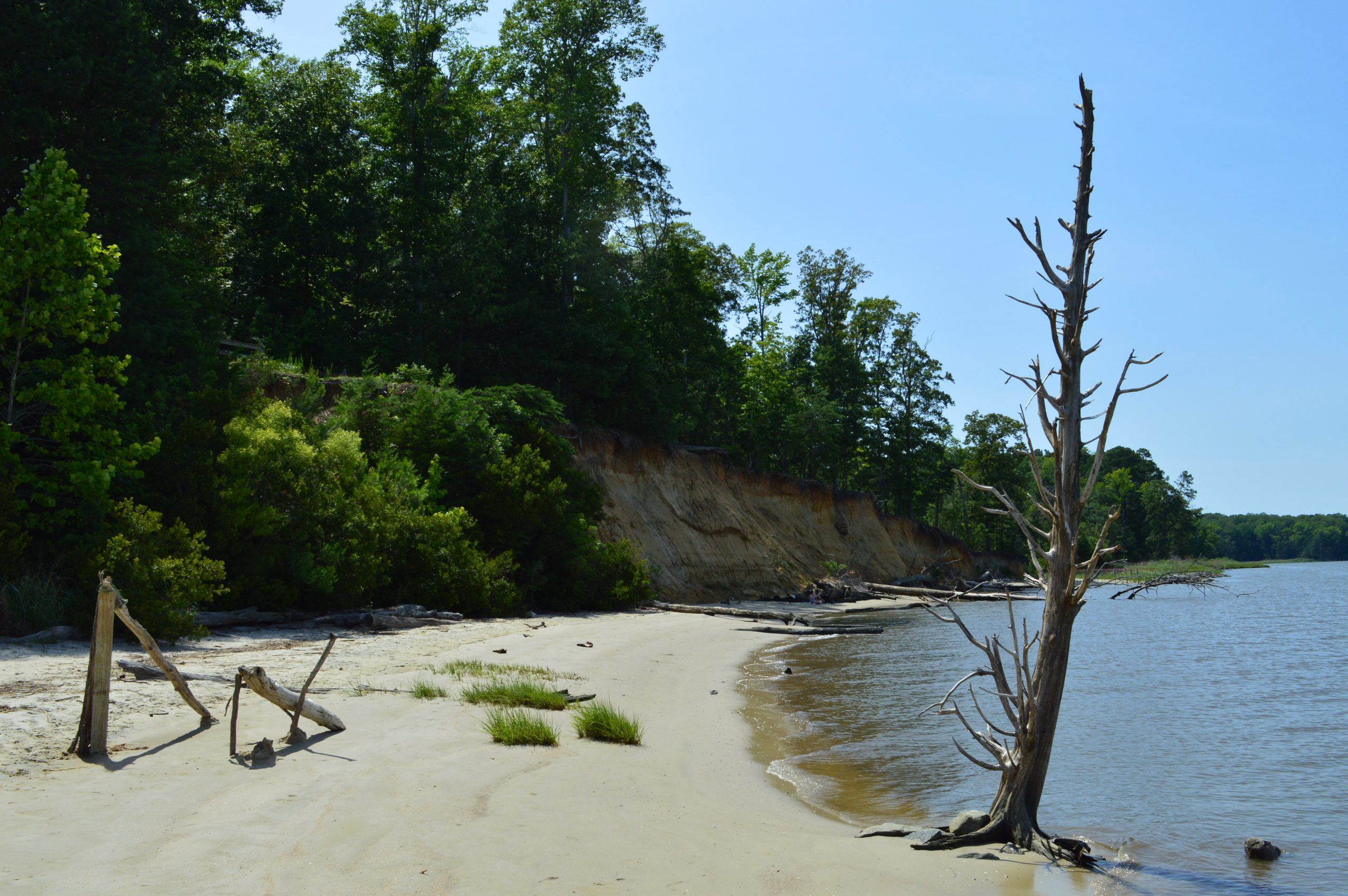
    Fossil Beach is the most beautiful and interesting section of the Park. The fossils themselves are not much, being small shells located in the sandy cliff; you would assume that these are shells that washed up on the beach without knowing the context. But I have always loved wild beaches for their quiet beauty and peaceful nature.

    Sandy Cliff in Fossil Beach at York River State Park.
    Fossilized Shells in Sandy Cliff.
    Dead Trees on Fossil Beach.
    Dead Trees on Fossil Beach with woods to the right.
    Small beach and grass in York River State Park.
    Small beach and grass in York River State Park.
    Blue Heron in Water in York River State Park.
    Looking Down on Fossil Beach.

    Other Scenic Places

    Besides Fossil Beach, York River State Park has other beaches. These beaches (like Seining Beach) are much smaller, but they are still quite nice. York River State Park also contains a pond and marshlands.

    Seining Beach in York River State Park.
    Beach with dead tree roots in York River State Park.
    Woodstock Pond in York River State Park.
    Woodstock Pond in York River State Park with bench in foreground.
    Boat Launch in Croacker Landing.
    Branches in Water in Croaker Landing.

    Besides the aforementioned beaches, pond, and marsh, York River State Park also has some specific places that are worth noting. An elevated platform stands at the end of the Pamunkey trail, allowing park-goers to see views of the York River. The trails leading up to Fossil Beach and the marsh at Croaker Landing are also lovely.

    Observation Deck Stairs with grasses and trees in background.
    Stairs Leading to the Observation Deck
    Footbridge on Mattaponi Trail in York River State Park.
    Footbridge Leading to Fossil Beach
    Two stairs leading to Croaker Landing.
    Stairs Leading to Croaker Landing

    The Woods

    Much of York River State Park is woodlands. I have become used to the woods of the Tidewater region of Virginia, which can be described as relatively flat with small hills and endless trees surrounding the trail. From this description, this does not make for interesting photographs. Still, I managed to take a few photos of the wooded areas.

    Dam and trees at York River State Park with York River in background.
    Trees with York River in background.
    Footbridge in woods at York River State Park.
    Backbone Trail with wooden fence in foreground at York River State Park.

    My real complaint about York River State Park is how confusing the maps are and how few things are labeled. There are several historic house foundations listed on the map, but they were impossible to find. I foolishly tried to figure out where I was on the Backbone Trail using the branching bike trail, but those trails went all over the place. At some point on the Backbone Trail, there was fork in the road that was (maybe) not listed on the map; I took the right one in a field thinking it would lead me somewhere, but I ended up on private property.

    Conclusion

    Overall, I feel that York River State Park has a few nice places, but it’s mostly uninspiring woodlands; the Backbone Trail in particular is a long slog to get through. My assessment might be too harsh, but York River State Park is very similar to other parks in the Tidewater region of Virginia, particularly since many of those parks are free. Perhaps I would have appreciated the Park more if I lived in a different ecosystem. Still, there is much to recommend in York River State, and those looking for outdoor recreation can find plenty to do.

    Below is my companion YouTube video about York River State Park, which has footage not found on the blog. I also have two videos from my old channel about two other State Parks in Virginia, Machicomoco State Park and High Bridge Trail State Park.

    Restaurants

    The closest major city to York River State Park is Williamsburg, which has many restaurants. Here are my recommendations from the Colonial Williamsburg post: in order from closest to furthest from the Park is Pierce’s Pitt Bar-B-Que, Maria Bonita Cantina, Anna’s Brick Oven Pizza and Pasta, Honey Butter Kitchen, the restaurants in Colonial Williamsburg, and Bonanza Social Kitchen.

  • How to Maximize Visiting Jamestown Settlement and Historic Jamestowne

    How to Maximize Visiting Jamestown Settlement and Historic Jamestowne

    4–6 minutes

    As a child I visited both Jamestown museums many times and thought I knew all there was to know. I went on this recent trip to the two Jamestowns in order to write a companion piece to my Colonial Williamsburg post. However, I ended up learning a lot of new things, so here are the recommendations on how to maximize visiting Jamestown Settlement and Historic Jamestowne. Keep reading to watch the companion YouTube video at the end.

    Historic Jamestowne

    Visitor Center to Historic Jamestowne.

    Historic Jamestowne is located on the actual 1607 Jamestown Settlement. The original James Fort is gone now, but archaeologists are working hard to uncover what remains of the first permanent English settlement in the New World. As shown in the pictures, Jamestown Island is located in swampy wetlands; one can image the difficulty the settlers had in getting fresh water.

    Swamp and trees on Jamestown Island.
    Swamp and trees on Jamestown Island.
    Portion of Tercentennial Monument Celebrating Jamestown with Eagles and Crests with branches in foreground.
    The Tercentennial Monument Celebrating Jamestown

    Historic Jamestowne is actually administered by both the National Park Service and Preservation Virginia. The National Park Service represents the New Towne, with some ruins. Meanwhile, the Preservation Virginia side represents the Old Towne, with the Archaearium Archaeology Museum as well as Confederate Earthworks, alongside more ruins.

    First New Towne…

    Wall with opening at Historic Jamestowne with ruins and signs in background.
    Bricks Ruins and trees in Historic Jamestowne.
    Ruins at Historic Jamestowne with Fence in Foreground.
    Ruins at Historic Jamestowne with Branches in Foreground.
    Ruins of Ambler House at Historic Jamestowne.
    An 18th Century Ruin, People Still Lived Here After the Abandonment of Jamestown

    Now the Old Towne…

    Barracks Site at Historic Jamestowne.
    Memorial Church in Foreground with Replica Palisade in Foreground.
    Hill with Memorial Church and Church Tower in Background.
    The 1907 Memorial Church at Historic Jamestowne.
    The 1907 Memorial Church Standing on Foundations of Original Church
    Civil War era Fort Pocahontas at Historic Jamestowne.
    Civil War Era Earthworks; Both Confederate and Union Forces Occupied Jamestown
    Archaearium Archaeology Museum with Tree in Foreground.
    The Archaeology Museum, Above the Foundations of the Statehouse

    The Archaeology Museum displays artifacts found on Jamestown Island. Something unusual on display are the skeletons of two different settlers, so if that bothers you skip that section. Another interesting thing is there are cutouts so visitors can look down on the ruins of the old Statehouse.

    Jamestown Settlement

    Quadricentennial Plaza at Jamestown Settlement.

    Five minutes away from the original Jamestown is Jamestown Settlement, a living history museum. Jamestown Settlement recreates James Fort, a Native American village, and the ships that brought settlers to the New World.

    Sign with words Following the Dragon: Chinese Ming Porcelain in Early Jamestown and drawing of fragments of dragon decoration.

    Jamestown Settlement currently has an exhibit on Chinese Ming Porcelain in Early Jamestown. It was a little odd learning so much about Chinese culture at Jamestown as they went in great detail about what each decoration meant. Still, it was fascinating learning about how some settlers had access to finer goods while struggling in the wilds of early Virginia.

    After leaving the visitor center, you first run into Paspahegh Town, a replica of a tribal village. While there I learned from an interpreter about the process of making canoes. Canoes were traditionally made by a complex process of burning a log and scrapping the embers with either stones or oyster shells. It usually takes about two to four weeks to build a canoe. All canoes made at Jamestown Settlement go on display and some actually get demonstrated on the water.

    Statues with faces in Indian Village at Jamestown Settlement.
    Homes at Paspahegh Town at Jamestown Settlement with Trees in Foreground.
    Home at Paspahegh Town at Jamestown Settlement with Canoes in Foreground.
    This Canoe Is About 90% Done
    Caone at Jamestown Settlement with Water in It.
    This Canoe Is on Display

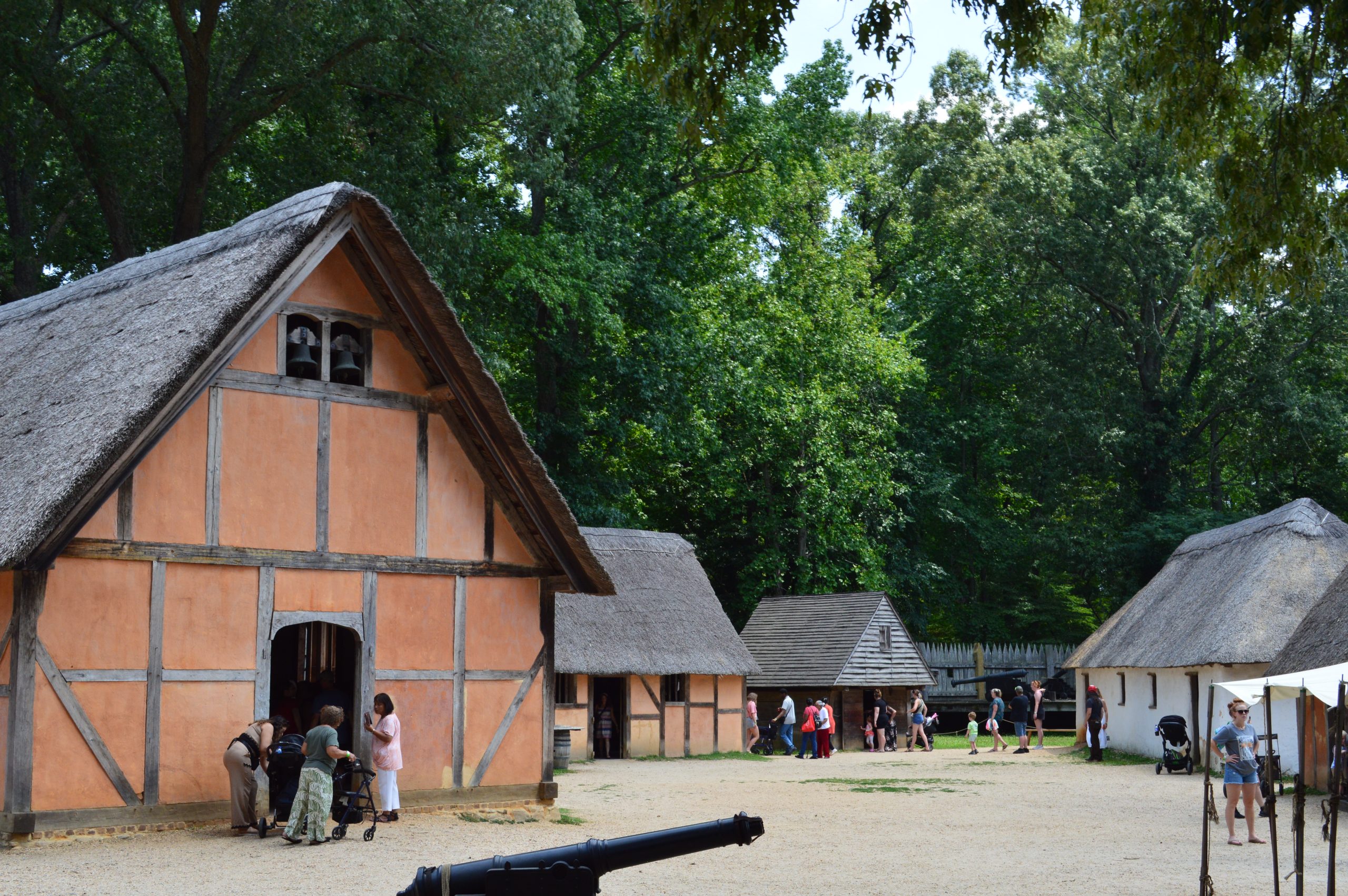
    Continuing on, you arrive at James Fort, which replicates the early Jamestown settlement. At every hour there is a matchlock musket demonstrations just outside the Fort. There were also interpreters demonstrating blacksmithing and bread-making. It was funny seeing several chickens running around; they really liked the crumbs from the bread oven demonstration.

    James Fort at Jamestown Settlement.
    Buildings at James Fort at Jamestown Settlement.
    Buildings at James Fort at Jamestown Settlement.
    Interior of Church at James Fort.
    Chicken Standing on Table at Jamestown Settlement.

    Continuing on from James Fort is a pier with the replicas of the Susan Constant, Godspeed, & Discovery. The Susan Constant was off being restored while I was there, a small sloop took its place. It’s amazing to consider the 105 people crammed on three tiny ships alongside tons of cargo.

    Discovery with Trees in Foreground.
    Poop Deck of Discovery with Godspeed in Background.
    Rigging with Godspeed in Background.
    Discovery and Sloop at Jamestown Settlement.
    Interior of Godspeed with Interpreter in Background.
    Statue of Three Sails in Front of Jamestown Settlement Visitor Center.

    Perhaps the most interesting thing I learned was at the gift shop devoted entirely to bees and honey-related items. There I learned that honeybees are not native to North America. Honeybees were actually brought over to Jamestown in 1622 for their honey and wax. The honeybees sailed across the ocean during the winter of 1621 when bees go dormant.

    Trees and Water at Jamestown Settlement with Canoe with Water in It.

    YouTube Video About Jamestown

    Here is the companion YouTube video about exploring Jamestown Settlement and Historic Jamestowne. If you enjoy the video, please like the video and subscribe to my YouTube Channel Photo Historic Travels.

    What To Know Before Going

    Historic Jamestowne: As a quirk of Historic Jamestowne being run by two organizations, there are two separate admission fees; prepare to pay $15 dollars twice to visit Jamestown Island. I recommend paying for both in order to maximize your visit.

    Jamestown Settlement: The Jamestown-Yorktown Foundation operates the Jamestown Settlement. You can buy a combo ticket to visit both Jamestown Settlement and the American Revolution Museum at Yorktown.

    Restaurants Near Jamestown

    Chopsticks Pho Grill Restaurant in Williamsburg.

    There are several restaurants in the Williamsburg Crossing strip mall, about an eight-minute drive to Jamestown Settlement. I recommend eating at Chopsticks Pho Grill if you want to try good Vietnamese food.

    The closest restaurant to the two Jamestowns is Dizzy Izzy’s by Foodatude. It serves alright food, but the place closes on Mondays and Tuesdays and only has outdoor seating. This restaurant might not be the most convenient places to eat.

    If you have more time, Jamestown is close to Williamsburg with many different food options. In order from closest to Jamestown Settlement to Furthest is Honey Butter’s Kitchen, the restaurants at Merchant’s Square in Colonial Williamsburg, Bonanza Social Kitchen, Anna’s Brick Oven Pizza-Pasta, Maria Bonita Cantina, and Pierce’s Pitt Bar-B-Que.