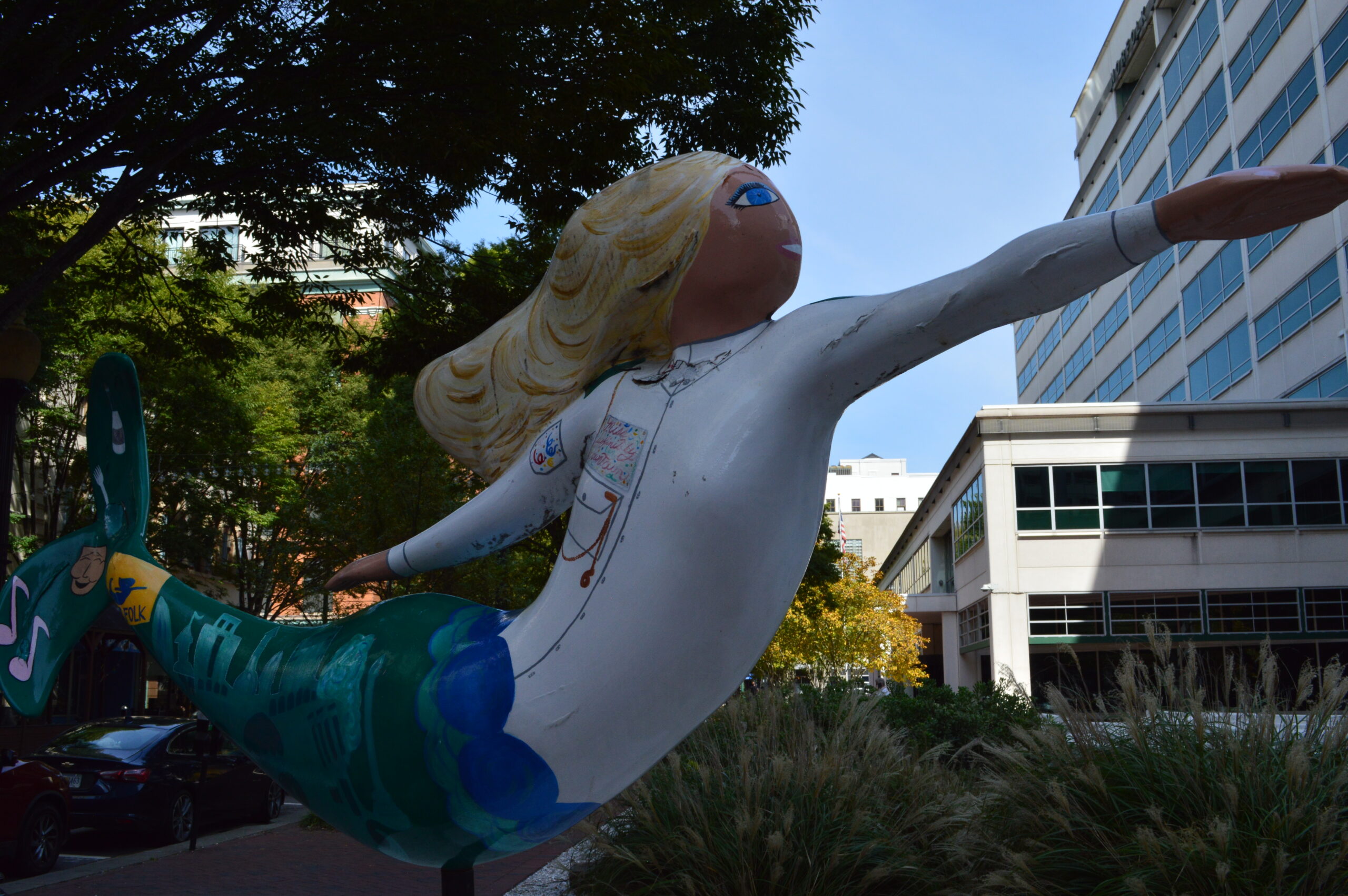
Category: Downtowns

Posts that focus on visiting downtowns, whether in small towns or big cities.

  • How To Best Experience Norfolk Virginia

    How To Best Experience Norfolk Virginia

    Norfolk plays an important role in world affairs, as it’s the home of NATO’s Strategic Command and the world’s largest Naval Base. But Norfolk offers much to entice visitors with its many attractions. Continue reading to learn about the best places in order to truly experience this city.

    5–8 minutes

    Granby Street

    Sign giving information about Granby Street in Norfolk.

    Granby Street serves as one of Norfolk’s thriving main streets. Located perpendicular to Norfolk’s Waterside District, Granby Street houses many shops and restaurants. Located on or near Granby Street are: the Wells Theatre, Circuit Social Arcade, the Nauticus, The Pagoda and Oriental Garden, the Slover Library & Selden Market, and the MacArthur Memorial.

    Granby Street Norfolk VA.
    Granby Street Norfolk VA.
    Granby Street Norfolk VA.
    Granby Street Norfolk VA.
    Close up of architectural detail on building.

    West Freemason Street Historic District

    Sign giving information about West Freemason Street Historic District in Norfolk.

    The historic West Freemason Street transports you into a different time with its tranquil old houses and cobblestone streets. Apart from the Hunter House Victorian Museum and a couple of restaurants, the area is residential. Nevertheless, definitely take time in your trip to walk through this charming area.

    West Freemason Street Norfolk VA.
    West Freemason Street Norfolk VA.
    West Freemason Street Norfolk VA.
    West Freemason Street Norfolk VA.
    Close up of Building in West Freemason Street Norfolk VA.

    Other Areas of Note in Norfolk

    While Granby Street and West Freemason Street are the highlights of Norfolk, there are other areas also worth checking out. Some notable places that I took photos of are the Waterside District, Ghent (Colley Avenue), and Highland Park.

    First the Waterfront District…

    Waterside Market in Norfolk VA.
    Downtown Norfolk.
    Fountain in Norfolk VA.

    Now Ghent (Specifically Colley Ave)…

    Businesses on Colley Ave in Norfolk VA.
    Businesses on Colley Ave covered by trees.

    Finally a picture of Highland Park.

    Elation Brewing restaurant outside dining area with mural in background.

    Museums in Norfolk

    Nauticus Museum.

    The Nauticus offers hands-on learning experiences about various topics. I learned about how sailing boats work, the importance of Norfolk’s Port, and how Norfolk changed over the years. There’s also the separate Hampton Roads Naval Museum inside the building, which focuses on the Civil and Vietnam Wars. The highlight of the Nauticus is going onboard and inside the USS Wisconsin, a World War II era battleship.

    USS Wisconsin moored in Norfolk VA.
    USS Wisconsin.
    USS Wisconsin with apartment buildings in background.
    Looking down on guns on USS Wisconsin.
    On board USS Wisconsin with downtown Norfolk in background.
    The MacArthur Memorial.

    The MacArthur Memorial honors the legacy of General Douglas MacArthur. There are two buildings, the memorial which has exhibits about his life, and the visitor center, which houses (among other things), his car. I remember learning that during the Occupation of Japan, MacArthur placed huge importance on giving Japanese women the right to vote.

    Myers House Museum.

    Associated with the Chrysler Museum is the Moses Myers House. This historic house museum tells the story of a prominent Jewish family in Norfolk’s early history. When I visited there many years ago, I remembered that wealthy city dwellers would entertain in their bedroom, compared to rural plantations owners who would not.

    Hunter House Victorian Museum.

    James Wilson Hunter built what is now the Hunter House Victorian Museum in 1894 so he could show off his newly acquired wealth. As it’s a city home, the House is only 4,000 square feet. The last surviving daughter left a will bequeathing the House to become a museum after her death. When I visited, the House was decorated for their fall exhibit on mourning customs.

    Chrysler Museum of Art.

    The Chrysler Museum is a premier art museum, with art ranging from Ancient Egypt to works by contemporary artists. The highlight of the Chrysler Museum is the live demonstrations of glass-blowing. Make sure to keep your noontime free (except Mondays) to attend.

    Glass Workshop with Chrysler Museum of Art.
    The Chrysler Museum’s Glass Studio

    The current Fort Norfolk dates from 1810, built on a previous fort attempt from the Revolutionary War. The fort changed ownership and uses over the years. I will be honest and say there is little to do or see in Fort Norfolk, especially since you need to show an I.D. to enter. One of the buildings looked to house a museum, but the door was locked. Only come here if you have several minutes to spare.

    The Hermitage.

    The Sloane family originally built the Hermitage House as a small retreat in 1908, but the house grew within 30 years. When Mrs. Sloane decided to turn the home into Museum, she re-orientated many rooms, including rotating the Great Hall 90 degrees. The Hermitage House now serves as an art museum, primarily focusing on Asian Art. Or you’re free to just wander the beautiful garden.

    Gardens of Hermitage Museum.
    Brick Wall, Door and Leaves at the Hermitage.

    Other Attractions in Norfolk

    Circuit Social Arcade Bar Social on Granby Street.

    The Circuit Social provides arcades, pinball machines, and duckpins bowling. This is more of an adult place, as guests under 18 must have a guardian, plus they have adult only hours after 9:00 P.M. I would recommend this as a fun place with a group of people.

    The Slover Library.

    The Slover Library originally built in 1889, serving as a government building until being turned into a library in 2009. Construction on the new section of the library began in 2012 and completed in 2015. I would check out this Library in order to see the unique mix of old and new.

    Interior of Slover Library.
    Interior of Slover Library.
    Interior of Slover Library.
    Selden Market in Norfolk.

    Next door to the Slover Library is Selden Market, located inside a historic building. Selden Market offers up and coming small businesses the opportunity to start their business with retail space. Definitely stop by to support local businesses. Check out what’s available here.

    Entrance to Pagoda & Oriental Garden in Norfolk.

    The Pagoda & Oriental Garden is a small but beautiful park located on the waterfront. The Pagoda was a gift from Taiwan, and is built on top of an old molasses tank. It appears to be a hidden gem, as my Dad who worked in the city for many years never heard about it.

    Pagoda in Norfolk VA.
    Pagoda in Norfolk VA.
    Inside covered patio of Pagoda.
    Pagoda with USS Wisconsin in background.
    Oriental Garden with building in background.
    Oriental Garden with building in background.
    Catnip Cat Cafe on Colley Ave.

    Catnip Cat Cafe offers guests an opportunity to spend time with cats. You have the opportunity to spend either 30 minutes or an hour with the cats. I managed to get a couple of cats to eat out of the palm of my hand, but otherwise the cats weren’t very playful. If you love cats definitely come visit here, and don’t pick the 6:30 time like I did.

    Decorative Covered Entrance at Norfolk Botanical Garden.

    The Norfolk Botanical Garden offers 155 acres of gardens. The Botanical Garden began its life in the late 1930s as a Works Progress Administration project. The Garden predates the next-door Airport by several years.

    Roof Garden at Norfolk Botanical Garden.
    Looking down on Rose Garden at Norfolk Botanical Garden.
    Looking down from NATO tower.
    Canal with Fence in foreground.
    Canal with statue in background.
    Pond and Terraced Garden.
    Plastic balls with lights hanging from trees.

    There is also the Norfolk Zoo that I did not visit. Norfolk also has many theaters, concert venues, and music venues, but I am saving those for another time.

    Conclusion

    In my opinion, Norfolk is one of the best mid-sized cities in American in terms of touristic appeal. With all the attractions in Norfolk, one could spend days here and never get bored. Norfolk is a must-see destination, and should be placed on your bucket list.

    For further adventures, you are closest to Portsmouth, Chesapeake, Virginia Beach, and the Great Dismal Swamp. You could also cross the Hampton Roads Bridge Tunnel to visit the Lower Peninsula towns of Hampton, Newport News, Yorktown, and Williamsburg, but plan for rush hour traffic on your trip. Another option is to go west to visit the small Hampton Roads towns of Suffolk, Smithfield, and Surry. Finally, you could go up the Chesapeake Bay Bridge Tunnel to explore the Eastern Shore.

    For a more complete look of the best things to do and see in Norfolk, check out my companion YouTube video.

    Restaurants in Norfolk

    As a major city Norfolk has plenty of restaurants serving all sorts of food. Here are some that my family and I recommend. For some bizarre reason, many restaurants in Norfolk aren’t open on Sundays, so I will label those restaurants NS. I will group them by the district they are in.

    Granby Street: The restaurants I recommend in this area are The Grilled Cheese Bistro and Luce (NS). The Grilled Cheese Bistro is a lunch place. Luce only serves incredibly fancy dinners; you must make reservations weeks in advance to get a good time.

    W 21st Street & Colley Avenue: The restaurants I recommend in this area are Alkaline Ramen, Redwood Smoke Shack (NS), No Frills Bar & Grill, and Pendulum Fine Meats (NS).

    Old Dominion University: The restaurants I recommend in this area are Perfectly Franks and Del Vecchios.

    Elsewhere: The restaurants I recommend elsewhere in the city are Chelsea Bakehouse (several locations) and Biscuit Belly (intersection of Hampton Boulevard & W 24th Street).
  • Hampton Virginia: Interesting Things To Do

    Hampton Virginia: Interesting Things To Do

    Hampton Virginia is the oldest permanent English Settlement in the United States, and has played a large role in American history. As such, Hampton offers visitors plenty of opportunities to learn about four hundred years of history. Continue reading to learn all the interesting way to maximize your time in Hampton.

    5–8 minutes

    Downtown Hampton

    There are two areas of interests in Hampton VA, downtown Hampton and Phoebus. Leaving Phoebus for later, downtown Hampton is a nice area with museums, businesses, and restaurants. Check out the Hampton Carousel, a restored antique wooden merry-go-round located inside a pavilion on the city’s downtown waterfront. The Carousel still works today, so consider going if you have small children.

    East Queen Street in Downtown Hampton Virginia.
    Port of Hampton Virginia.
    Sidewalk with Crape Myrtle in Downtown Hampton.

    Museums in Downtown Hampton

    Virginia Air and Space Science Center Museum.

    Located in downtown Hampton is the Virginia Air and Space Science Center. The Museum holds (among other things) the Apollo 12 Command Module Yankee Clipper, as well as the Mercury and Gemini capsules. They also show science documentaries on an IMAX™ screen. The Air and Space Center frequently has large crowds of children, so keep that in mind.

    Hampton History Museum & Visitor Center.

    Also located in downtown Hampton is the Hampton History Museum. Originally Hampton consisted of a fort and a small village, but in 1691 land was purchased for building a larger town. The name changed from Kecoughtan to Hampton in 1706. The Museum had a large section dedicated to Katherine Johnson and the other African American female computers, where I learned that NASA original acronym was NACA. I am not usually a fan of local history museums, but this museum is very well done.

    Phoebus

    Phoebus (pronounced fee-bus) is a historic district located less than 10-minutes from Hampton’s downtown. Once an independent town, Phoebus retains its charming nature with several restaurants and shops. There’s also the tiny Phoebus Waterfront Park if you’re looking for a place to launch a kayak. For a more complete look at Phoebus, check out my old YouTube video.

    Phoebus Historic District in Hampton VA.
    Close Up of Buildings in Phoebus.
    The American Theatre in Phoebus.

    Located in Phoebus is the American Theatre; a theater built in 1908 that now serves as a performing arts center. When I was there, the American Theatre hosted Tibetan Buddhist monks building a mandala (see photo below). The audience can actually get up close to see the monks sculpt a mandala out of millions of grains of sand. But the Theatre hosts plenty of other events, so check if they are having a show when you’re in the area.

    Poster Displaying Mandala Construction Process.
    Lobby of the American Theatre.
    Auditorium on American Theatre, with Tibetan Monks and audience in background.

    Fort Monroe

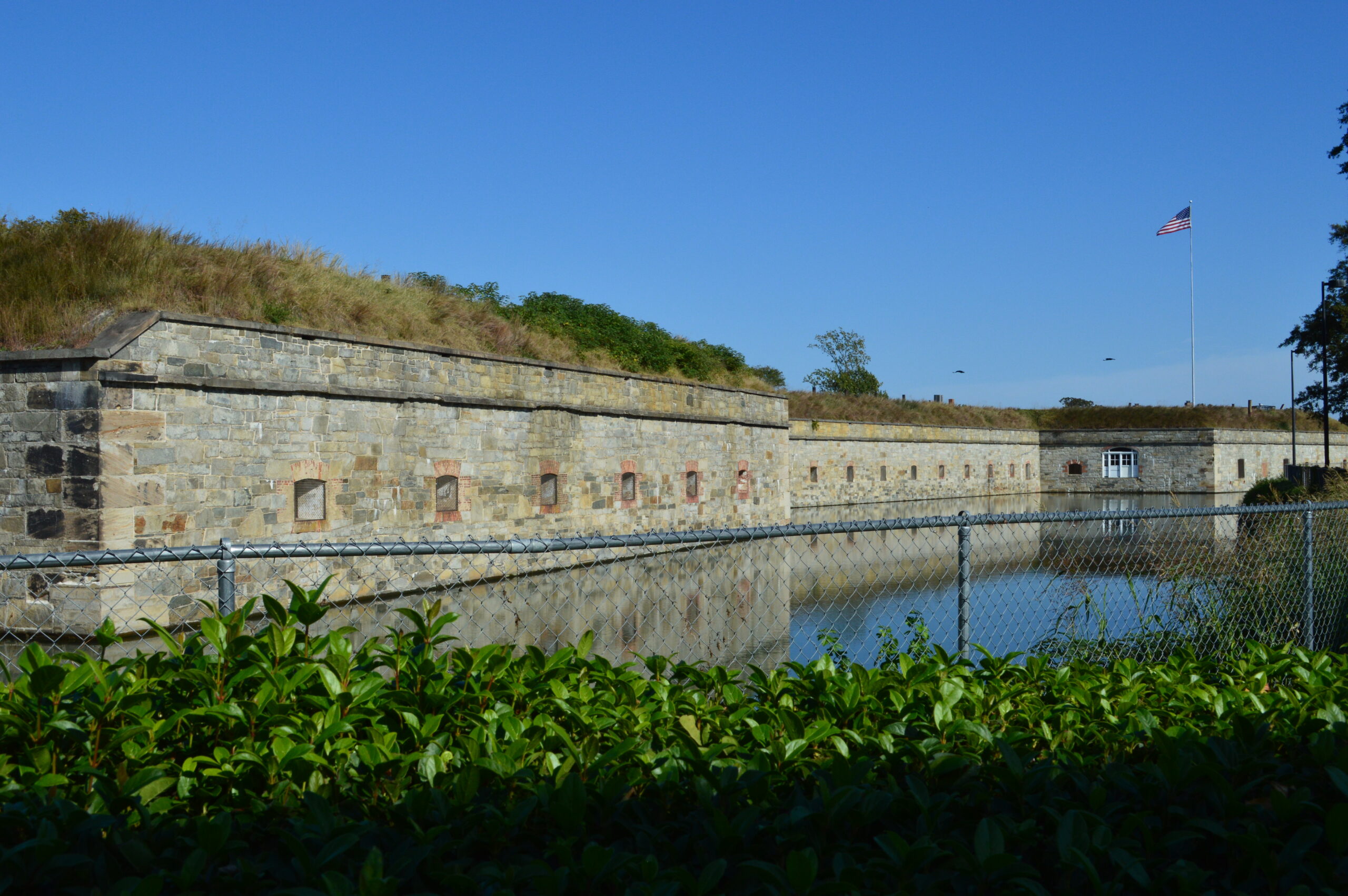
    Just outside Phoebus is Fort Monroe, a deactivated military fort that now houses museums, parks, a brewery, several restaurants, and a beach. Fort Monroe is 63 acres, making it the largest masonry fort in America. One can also wander around and look at all the private houses, many of which are quite grand. One of the strangest things is that Fort Monroe housed several different luxury hotels throughout its history; the most recent former hotel is now a retirement community. One could spend the entire day just exploring all of Fort Monroe.

    Looking down on Fort Monroe Casement.
    Bent Tree Limb with Cannon in background.
    Statue of First Africans in America at African Landing Memorial in Fort Monroe.
    Abandoned Battery in Fort Monroe Virginia.

    Museums in Fort Monroe

    Fort Monroe Visitor & Education Center.

    Located in Fort Monroe is the Fort Monroe Visitor & Education Center. The Visitor Center focuses primarily on the African American history of Fort Monroe. The first Africans to arrive in British North America arrived at what became Fort Monroe in 1619. One surprising fact was that Harriet Tubman briefly served as a matron for the contraband hospital. I also learned that the Commonwealth of Virginia deeded land for the US Army to build Fort Monroe; when they deactivated the Fort, the land returned to Virginia.

    Casemate Museum in Fort Monroe.

    Located inside the Fort is the Casemate Museum, which tells the story of Fort Monroe’s history. Fort Monroe was built after the War of 1812 in a wave of coastal defense improvements. The Fort became the home of many people, most notably Edger Allen Poe, Robert E. Lee, and Jefferson Davis. The Fortress remained in Union hands throughout the Civil War, where self-emancipated slaves sought freedom after Benjamin Butler declared them contraband of war. Before you go: you must get your free ticket at the Fort Monroe Visitor Center in 15-minute increments. I recommend going all the way to the very back of the museum and working your way towards the entrance to learn history in a chronological order. And be careful of the low ceilings.

    Other Things To Do

    Two-story observation tower at Sandy Bottom Nature Park in Hampton VA.
    Two-Story Observation Tower at Sandy Bottom Nature Park (Taken in 2021)

    While the Downtown, Phoebus, and Fort Monroe constitute the touristic side of Hampton, there are other places in the city worth checking out. First off, there’s the Air Power Park, a small museum that shows early USAF jets & launch vehicles outside and model planes inside. There is also the Hampton University Museum, which displays art by African Americans.

    There are several parks in Hampton that while small, are worth visiting. They are Bluebird Gap Farm, Sandy Bottom Nature Park, Buckroe Beach, and Grandview Nature Preserve. I have personally never been to Bluebird Gap Farm, but it’s a 60-acre farm park with plenty of farm animals to see. Grandview Nature Preserve has a large beach and wetland, but be aware there the Preserve is next to a neighborhood, so there is practically no parking.

    Another thing worth mentioning is the Hampton Coliseum, a major arena that showcases many different types of events. Check if they have an event happening when you’re in the area.

    Conclusion

    Overall, Hampton is an interesting city with lots to do. You could visit the many museums, spend time at Fort Monroe’s beach, and catch a show at the American Theatre all in one day. I would suggest at least a day to explore Hampton, or perhaps two if you wanted to really spend time at Fort Monroe. Definitely stop at Hampton when visiting the Hampton Roads area.

    For further explorations, the closest city is Newport News, a younger city with more museums and parks to visit. You could also drive up to the historic towns of Yorktown and Williamsburg. Another idea is crossing the Hampton Roads Bridge tunnel to see Norfolk or Virginia Beach, but beware of terrible traffic during rush hour. For further away adventures, you could go up to see the towns of the Middle Peninsula.

    I have decided to limit the numbers of pictures I show on this website because I’m worried about space. However, I have no problems with space on YouTube, so check out the companion video to see more of each destination.

    Restaurants

    Hampton has many restaurants located all over the city. There are several restaurants in downtown Hampton and Phoebus, but there are a lot more at places such as Peninsula Town Center.

    Stuft Restaurant in Phoebus.

    Stuft serves Mexican street food with unusual twists. I enjoyed the food the several times I’ve eaten here. Located in Phoebus.

    Glazed Doughnuts in Downtown Hampton.

    Glazed Doughnuts serves giant, incredibly sweet donuts. They are open Wednesdays-Sundays from 7:00-12:00. Located in Downtown Hampton.

    Best of British Store in Downtown Hampton.

    Best of British is a shop that sells food from the United Kingdom. I enjoy getting candies from the store. Located in Downtown Hampton.

    If you wanted to explore more of Hampton, I can recommend many different restaurants. In order from closest to furthest from downtown Hampton/Phoebus are: CM Chicken (Korean Fried Chicken), La Parrilla Mexican Grill (Mexican), Jade Bowl (Vietnamese), and Bubba-N-Franks (BBQ).

  • Best Things To Do In Beautiful Yorktown VA

    Best Things To Do In Beautiful Yorktown VA

    Yorktown Virginia is the place where America won its independence. Today’s Yorktown still retains its historical nature, and its charming downtown provides both interesting museums and relaxing beaches. Continue reading to watch my YouTube video about Yorktown.

    5–7 minutes

    Yorktown

    The charming town of Yorktown offers three areas of interests for visitors: Water Street, Main Street, and the surrounding battlefields. Skipping the battlefields for later, the two streets offer different experiences. Water Street has the beach and plenty of shopping and dining options. By contrast, the historic buildings of Main Street quietly sit beside pretty nature and the Yorktown Victory Monument.

    First Riverwalk Landing on Water Street…

    Riverwalk Landing in Yorktown VA.
    Riverwalk Landing in with fountain.
    Business on Riverwalk Landing.
    Business on Riverwalk Landing.
    Shadows on Brick Building in Yorktown VA.
    Sailing Boat in Harbor in Yorktown VA.

    Now Main Street…

    Building on Main Street, Yorktown VA.
    Historic Home on Main Street.
    Historic Home on Main Street.
    Close Up of Historic Brick Building.
    Field on Main Street in Yorktown VA.

    On Main Street is the Yorktown Victory Monument…

    Yorktown Victory Monument.
    Column of Yorktown Victory Monument.
    Inscription on Yorktown Victory Monument half lighted half shadowed.
    Silhouette of Yorktown Victory Monument.

    Finally, Yorktown Beach…

    Cronwallis' Cave in Yorktown Virginia.
    Cornwallis’ Cave
    Yorktown Beach with historic building in background.
    Yorktown Beach plants with surfboards.
    People on Yorktown beach at sunset.
    Yorktown Beach with Tree Branches in Foreground.

    Museums About The Battle of Yorktown

    Yorktown has two museums dedicated to the Battle of Yorktown, located on opposite sides of the historic core of Yorktown. They are the American Revolution Museum at Yorktown, owned by the Commonwealth of Virginia, and the Yorktown Battlefield, owned by the National Parks Service. Definitely visit both museums to get the full picture of the American Revolution.

    American Revolution Museum at Yorktown.

    The American Revolution Museum focuses on the history of the Revolutionary War. Despite having been here several times before, I still learned a few things. First, I learned that France sent military supplies and extended credit to the Americans even before the official alliance. About 15%-20% percent of the North American population were loyalists, while others kept themselves neutral. Pennsylvania was the only state to pass a law abolishing slavery during the War. One interesting little exhibit had photographs of people who lived during the American Revolution. Make sure to check out the reconstruction of a Continental Army encampment and a Revolutionary-Era farm.

    Reenactment tents at American Revolution Museum.
    Interior of Officer tent at American Revolution Museum.
    Revolution Era Farm at American Revolution Museum with Fence in Foreground.
    Colonal National Historical Park Yorktown Battlefield Visitor Center in Yorktown.

    The Yorktown Battlefield Visitor Center focuses exclusively on the Battle of Yorktown. Some interesting facts are that the Battle of Yorktown was actually a three-week siege. While more battles happened after Yorktown, the defeat at Yorktown made the British lose the will to continue fighting. Yorktown was a prosperous town in the Colonial Era , but the Battle destroyed the town and the population shrank. Yorktown also had an interesting Civil War History, as the town was the location of another siege in 1862. After the Confederates retreated, refugee African Americans settled and built a community called Slabtown on the former battlefields. Slabtown became a thriving community until the 1970s when the NPS demolished it to preserve more battlefield land. Make sure to check out the Moore House once it opens back up.

    Tobacco Road Sign with Tobacco Road in background.
    Yorktown Battlefield Fence.
    Close Up of Earthworks Plants in Yorktown Battlefield.
    Yorktown National Cemetary brick fence and plants.

    Other Museums in Yorktown

    Watermen's Museum in Yorktown Virginia.

    If you’re not through with learning yet, head to the Watermen’s Museum located on Water Street. The Museum honors the lives of the watermen, the men who fished, crabbed, and oystered on the Chesapeake Bay. The term Watermen dates back from the time of Henry VIII. Watermen could be white or black, as at one point in history 4 out of 5 watermen in York County were black. One room is devoted to the Betsy, a British ship scuttled during the Battle of Yorktown, as well as the efforts to study and salvage the wreck in the 1980s. The Museum closes from January through March.

    Boat on display outside Watermen's Museum.

    The Watermen’s Museum’s building itself has a fascinating history. The building was once a home built in the 1930s across the water in Gloucester. Raleigh Tavern in Williamsburg inspired the design of the building. In the 1980s, the new owners of the land sold the house to the Museum and sent it across the water. While being towed, the building got stuck in a sandbar for six weeks before finally being placed on its current location.

    Gallery at York Hall.

    For a final stop, head to the Gallery at York Hall located on Main Street. The basement houses the York County Historical Museum, which tells the story of York County before and after the Battle. It’s interesting learning about how York County changed over the years. York Hall also has a large gift shop on the first floor. Every so often, York Hall hosts a history lecture, so check if they have one during your visit.

    Other Things To Do In York County

    Crape Myrtles in Yorktown.

    While Yorktown is the tourism destination of York Country, there are a couple other places worth mentioning. York County has three small nature parks that while unspectacular, offer peaceful serenity. In order from closest to furthest from downtown Yorktown are Back Creek Park (12 minutes), Harwood’s Mill Park (15 minutes) and New Quarter Park (26 minutes). With regards to New Quarter Park, although it’s technically in York County, it’s actually closer to Colonial Williamsburg.

    Funnily enough, the two closest parks to downtown Yorktown are actually across the bridge in Gloucester Point. For more beach opportunities, you could go to Gloucester Point Beach Park, located on the VIMS property. Or you could learn more history at Tyndall Point Park, a place of Colonial and Civil War fortifications. A bit further ahead on the Middle Peninsula is Machicomoco State Park, which has much to see and do.

    Conclusion

    In my opinion, Yorktown is one of the best small towns in Virginia. I think one day is enough to really experience this historic and beautiful town. Yorktown makes an excellent opportunity to combine learning about history with relaxing on the beach. If you like, you could also check out my old videos about Yorktown and the Battlefield.

    For further adventures, you could go drive on the bridge to visit the towns of the Middle Peninsula. Another perfect travel opportunity is Williamsburg, with the living history museums of Colonial Williamsburg and Jamestown. Or you could drive south to visit the cities of Newport News and Hampton. Finally, you could cross the Hampton Roads Bridge Tunnel to visit the cities of Norfolk and Virginia Beach.

    For a more complete look at Yorktown, please watch the companion YouTube video.

    Restaurants

    Coastal Thirst Beach Deli Restaurant.

    There are at least eight restaurants in downtown Yorktown. One of these restaurants is Coastal Thirst Beach Deli, a breakfast and lunch place which serves tacos and sandwiches. They also have a plethora of baked goods and other desserts, so come hungry. Located on Water Street.

    Little York Confectionary Shop in Yorktown Virginia.

    For more sweet treats, head to Little York Confectionery. They sell chocolates, candies, and ice cream. They have outdoor seating, so you could bask in the history. Located on Main Street.

    If you wanted to explore more of York County, I can recommend many different restaurants. In order from closest to furthest from downtown Yorktown are: 3 Amigos (Mexican), Plaza Azteca (Mexican), Joe & Mimma’s Italian Pizza (Italian), Cinco de Mayo (Mexican), Toscana Restorante Italiano & Pizza (Italian), Vinny’s Pizza and Pasta (Italian), 1631 Burgers Bourbon & Brew (Burgers), and Anna’s Pizza and Italian Restaurant (Italian). You would also be relatively close to dining options in Williamsburg and Newport News.

  • Lexington Virginia: Interesting Things To Do

    Lexington Virginia: Interesting Things To Do

    For many years I desired to visit Lexington primarily to cross the Stonewall Jackson House off my museum bucket list. Many different websites also promoted Lexington as one of the most beautiful small towns in Virginia. Also, I wished to see spectacular nature that one cannot find in the Tidewater region. Find out about my opinion on downtown Lexington, and keep reading to watch the accompanying YouTube video.

    3–5 minutes

    Downtown Lexington

    Lexington Virginia is definitely a beautiful town, but I was expecting something more unique from the pictures I’ve seen. Contrary to expectations, Lexington is similar to other towns in Virginia with historic main streets. Nevertheless, it’s worth wandering around Lexington’s lovely downtown to soak up the historic ambiance.

    Downtown Lexington Virginia.
    Downtown Lexington Virginia.
    Downtown Lexington Virginia.
    Downtown Lexington Virginia.
    Buildings in Courtyard in Downtown Lexington Virginia.
    Buildings with Entablatures In Downtown Lexington Virginia.
    Three Buildings and Tree in Downtown Lexington Virginia.
    Leaves and Streetlamp With Fire Downtown Lexington Virginia.
    Hanging Flowers with Window Reflecting Brick Building In Downtown Lexington Virginia.
    Parabola with Roof with Trees and Brick Building in Background In Downtown Lexington Virginia.
    Building with Spider-Man Statue in Downtown Lexington Virginia.
    Yes, That Is Spider-Man On That Building
    Close-Up of Decorative Bricks on Ground in Downtown Lexington Virginia.
    I Have Never Seen These Decorated Bricks Anywhere Else

    The Jackson House Museum

    The Jackson House Museum in Downtown Lexington Virginia.
    The Jackson House Museum

    While I was in downtown Lexington, I went to visit The Jackson House Museum, the second museum about Thomas “Stonewall” Jackson I visited this year. The house was built in 1801, but Stonewall Jackson bought the house in 1858. Thomas and Anna Jackson only lived in the house for several years. After his death, Anna and their daughter moved to North Carolina and never returned to Lexington. The house remained vacant for fifty years until Anna sold the house in 1906, where it became a hospital for half a century. I learned that Thomas’ sister was a staunch Unionist while at the Visitor Center.

    Backyard of The Jackson House Museum in Downtown Lexington Virginia.

    Boxerwood Nature Center

    At the edge of Lexington is the Boxerwood Nature Center & Woodland Garden. The vibes of Boxerwood could only be described as whimsical utilitarianism. Before you go, the park might be $5, but I saw nothing except for a donation box where you would pay. Also, there is nothing stopping you from wandering onto neighboring properties.

    Children's Area of Boxerwood Nature Center & Woodland Gardens.
    Tree-house Structure at Boxerwood Nature Center & Woodland Gardens.
    Black Cat at Boxerwood Nature Center & Woodland Gardens.
    Structure at Boxerwood Nature Center & Woodland Gardens.
    Trail at Boxerwood Nature Center & Woodland Gardens shaded by trees.

    Natural Bridge State Park

    Natural Bridge in Natural Bridge State Park.

    About a 20-minute drive from Lexington is the Natural Bridge State Park. This park has an interesting history, as the land was once owned by Thomas Jefferson. As Jefferson was a busy man, he hired Patrick Henry, a free black man with no relations to the Founding Father. Both Jefferson and Henry would show the Natural Bridge to guests, beginning its long history as a tourist attraction. Despite being a major destination for several hundred years, it only became a part of Virginia’s State Park system in 2016.

    Natural Bridge in Natural Bridge State Park.
    Underneath Natural Bridge in Natural Bridge State Park.

    The Natural Bridge is truly spectacular, standing 200 feet tall, making it taller than the Statue of Liberty and Niagara Falls. Amazingly, there’s a road on top of the Natural Bridge that cars can drive on, but not stop at. Reportedly George Washington carved his initials on the Natural Bridge, but there much doubt about it veracity-I couldn’t find it anyway. The rest of the park is very beautiful, with small caves, a distant waterfall, and a river flowing lazily by.

    Stairway at Natural Bridge State Park with Tree Leaning to Side.
    Trees Growing Sideways on Cliff at Natural Bridge State Park.
    Entrance to Cave at Natural Bridge State Park.
    River at Natural Bridge State Park with Trees in Foreground.
    Lace Falls at Natural Bridge State Park.

    Conclusion

    Overall, I highly recommend visiting Lexington Virginia. One could spend the entire day just exploring downtown Lexington, as I never went to the VMI Museum, the Washington & Lee University Chapel & Gallery, or the Miller House Museum. Visiting both downtown Lexington and the surrounding area makes for a fun weekend trip. But however long you spend here, Lexington makes the perfect stop to experience history and nature in the Blue Ridge Mountains.

    For further explorations, Lexington is relatively close to the Alleghany Highland towns of Clifton Forge and Covington. Lexington is also 43-minutes from Staunton, about an hour from both Lynchburg & Roanoke, and about 75-minutes away from Charlottesville. For more natural experiences, Saint Mary’s Wilderness is 30-minutes away heading north, while the Devil’s Marbleyard, Peaks of Otter, and Roaring Run are all over a 30-minute drive south in different directions.

    Below is the companion YouTube video that shows more of downtown Lexington, the Boxerwood Nature Center, and the Natural Bridge State Park.

    Restaurants

    Pure Eats Restaurant in Lexington Virginia.

    I first had lunch at Pure Eats, which serve beef tallow fries. They also serve regular fries, so specify which type of fry you want. To compare the two, beef tallow fries are a lighter color than the regular fries served here, and the taste varies between slightly beefy and (modern) McDonald’s™ fries. The restaurant also serves donuts and milkshakes.

    Pronto Caffe and Gelateria Restaurant in Lexington Virginia.

    For a dessert I went to Pronto Caffe & Gelateria, which serves good gelato. The cafe also serves coffee, pastries, and sandwiches.

  • Virginia’s River Realm: Exploring The Best Middle Peninsula Towns

    Virginia’s River Realm: Exploring The Best Middle Peninsula Towns

    Several years ago, I discovered the Virginia’s River Realm tourism website while waiting for my car inspection. While I visited several of the towns before, I wanted to fully immerse myself in the region. This blog post discusses the charming towns of Gloucester, Mathews, Deltaville, and Urbanna. This blog post serves as the final part of my River Realm series, following Warsaw/Tappahannock and the Northern Neck towns.

    4–6 minutes

    River Realm

    Before discussing the towns themselves, let me briefly summarize the River Realm region from my previous posts. Virginia’s River Realm refers to a collection of towns in Tidewater Virginia surrounding the Rappahannock River, split between the Northern Neck and the Middle Peninsula. The primary attraction of the River Realm relates to the region’s long history on the water, but the area also has a boutique element. However, I focus on the vibes of the region’s small towns, alongside the museums and historical sites. Final note: Gloucester and Mathews are technically not in the River Realm, but all four towns are close together.

    Gloucester

    Gloucester has the biggest downtown of all the towns I’ve been to on this exploration of Tidewater Virginia. At one end of Gloucester’s downtown is Gloucester Historic Court Circle, a collection of small government buildings from the 18th and 19th century inside a circular walled green. Throughout the town there are various statutes that must get changed frequently, as a couple of statues from my last visit to Gloucester weren’t there anymore.

    Gloucester Historic Court Circle in Gloucester Virginia.
    Gloucester Historic Court Circle in Gloucester Virginia.
    Gloucester Historic Court Circle with Downtown Gloucester In Background.
    Building in Downtown Gloucester VA.
    Building and Covered Walkway in Downtown Gloucester VA.
    Shadows of Crape Myrtle on Abandoned Building in Gloucester VA.
    Buildings in Downtown Gloucester VA with column in foreground.
    Statue of Blue Stick Figure Fishing With House in Background in Gloucester VA.
    Statue of American Gothic with Brick Building in Background in Gloucester VA.
    Statue of Fisherman with Downtown Gloucester in Background.
    Restored Gas Station in Gloucester VA.
    Mural Depicting Revolutionary War Troops, Slaves Harvesting Tobacco, and Watermen in Gloucester VA.

    Also in Gloucester is Machicomoco State Park. Check my video from my old YouTube Channel here.

    Mathews

    Mathews is most known for being the home of Sally Louisa Tompkins, who operated a hospital in Richmond during the Civil War and became the only female commissioned officer of the Confederacy. Although her home can be visited, it’s only open on Saturdays from April through October. But Mathews is still worth a visit even without visiting the Museum due to its small but pretty downtown. Also worth seeing is Put In Creek Park, a tiny park with a pavilion and boat ramp, located just two blocks away from Main Street. For a more detailed look at Mathews, check out my old video here.

    Downtown Mathews with Awning in Foreground.
    Buildings and Confederate Statue in Mathews Virginia.
    Covered Walkway and buildings in Mathews VA.
    Reflections of Buildings with Part of Mural in Mathews VA.
    Covered Walkway and Building in Downtown Mathews VA.
    Closeup of Tompkins Cottage Museum in Mathews VA.
    Put In Creek Pavilion with Pier and Boat Launch in Mathews VA,
    Pier and Boat Launch in Mathews VA,
    Pier and Boat Launch with Downtown  Mathews Virginia in Background,

    Deltaville

    Deltaville, located in the River Realm, is unique because it has no downtown; instead, Deltaville is a succession of small detached buildings that stretch out on General Puller Hwy. Let’s discuss Deltaville’s main attraction (besides boating), the Deltaville Maritime Museum & Holly Point Nature Park. The Museum celebrates the local shipbuilding and fishing industry, as well as some general local history. On the grounds of the Park is a replica of John Smith’s barge and the restored F. D. Crocket, as well as a workshop where men built wooden ships.

    Deltaville Maritime Museum in River Realm.
    Restored John Smith Barge with Pavilion Roof at Deltaville Maritime Museum in River Realm Region.
    Oyster Tongs with Building in Background at Deltaville Maritime Museum in River Realm.
    Fountain with LOVE in Background at Deltaville Maritime Museum in River Realm.
    Boat Shop at Deltaville Maritime Museum in River Realm Region.
    Interior of Boat Shop at Deltaville Maritime Museum in River Realm.
    Buyboat F. D. Crocket with house in background at Deltaville Maritime Museum in River Realm.
    Several Restored Boats and Pier at Deltaville Maritime Museum in River Realm.
    Perabola and Statue of Bird at Deltaville Maritime Museum in River Realm.
    Statue of Birds in Park of Deltaville Maritime Museum in River Realm Region.

    Urbanna

    Urbanna, also located in the River Realm, was once a large tobacco port, but now is an enchanting small town. Located in Urbanna is the James Mills Scottish Factor Store, aka the Town of Urbanna Visitor Center Museum. Whatever you call it, the Museum is only open on Fridays through Sundays, hopefully I can come back there when its open to the public.

    Downtown Urbanna Virginia in River Realm Region.
    Downtown Urbanna Virginia in River Realm Region.
    Close Up Of Brick Building in Urbanna VA in River Realm Region.
    Church with leaves in foreground in Urbanna in River Realm Region.
    Close Up of Church in Urbanna in River Realm Region.
    James Mills Scottish Factor Store in Urbanna in River Realm.
    James Mills Scottish Factor Store in Urbanna in River Realm.
    Yachts in Dry Dock in Urbanna in River Realm Region.
    Grass Growing in Water with Yacht and Barn in Background in Urbanna in the River Realm Region.

    Conclusion

    Gloucester, Mathews, Deltaville, and Urbanna are close to one another and could easily be visited in a single day, or you could do what I did and visit two towns per day. Visit Gloucester for food and its lovely downtown, Mathews for its blend of small-town charm and natural beauty, Deltaville to learn about regional history, and Urbanna for its historic past. Overall, the towns of the Middle Peninsula are definitely worth a visit.

    For further adventures, you could visit the other towns of the River Realm, such as the Northern Neck or Warsaw & Tappahannock. You could also continue on the Northern Neck to see Colonial Beach. Another idea is going down to Hampton Roads, especially Yorktown and Williamsburg.

    For a more detailed look at Gloucester, Mathews, Deltaville, and Urbanna, please watch my companion YouTube video below.

    Restaurants

    Ware Neck Produce Store in Gloucester Virginia.

    Check out Ware Neck Produce for fresh produce and other goods. I felt bad about not buying anything there after taking photos of the place, but any item I bought would have sat in a hot car for hours. Located on Gloucester’s Main Street

    Short Lane Ice Cream in Gloucester Virginia.

    Inside an restored 1937 building is Short Lane Ice Cream. The store is two stories tall with tables on both floors, as well as outdoor seating. It serves delicious ice cream that has become a favorite of my family. Located in a couple minutes away from downtown Gloucester.

    Scoot's BBQ Restaurant in Gloucester Point Virginia.

    Another family favorite is Scoot’s BBQ. Scoot’s serves good barbecue, as well as some other home-cooking items. The restaurant has a large patio where you can eat among the trees. Located in Gloucester Point, about a 16 minute drive away from downtown Gloucester.

    Richardson's Cafe Restaurant in Mathews Virginia.

    Richardson’s Cafe is a small diner that serves (among other things) ice cream and milkshakes. I accomplished a small goal of dining at a lunch counter. Although I only ordered a milkshake, you could have a meal here. Located on Mathews’ Main Street.

    The workers at the Deltaville Maritime Museum gave me many papers, including a directory of various businesses in Deltaville. I decided to share some of them below.

    Directory of Restaurants in Deltaville Virginia in River Realm Region.
    Directory of Accommodations, Pet Care, and Fishing Charters  in Deltaville Virginia in River Realm Region.
    Directory of Stores in Deltaville Virginia in River Realm Region.
  • Virginia’s River Realm: Exploring The Best Northern Neck Towns

    Virginia’s River Realm: Exploring The Best Northern Neck Towns

    Several years ago, I discovered the Virginia’s River Realm tourism website while waiting for my car inspection. While I visited several of the towns before, I wanted to fully immerse myself in the region. This blog post discusses the charming towns of Irvington, Kilmarnock, and White Stone on the Northern Neck. The towns of the lower Northern Neck serve as the second of a three-part series about the River Realm. Please read my previous post about Warsaw/Tappahannock and look forward for the final post about the towns of the Middle Peninsula.

    4–6 minutes

    River Realm

    Before discussing the towns of White Stone, Kilmarnock, and Irvington themselves, let me briefly summarize the River Realm region from my previous post. Virginia’s River Realm refers to a collection of towns surrounding the Rappahannock River, split between the Northern Neck and the Middle Peninsula. The primary attraction of the River Realm relates to the region’s long history on the water, but the area also has a boutique element. However, I focus on the vibes of the region’s small towns, alongside the museums and historical sites.

    White Stone

    As the first town on the Northern Neck, visitors might pass by White Stone on the way to Irvington, Kilmarnock, and Reedsville. White Stone itself is rather tiny, perhaps the smallest downtown I went to on the Northern Neck. But the town is still worth a stop to check out the charming stores.

    Mural saying Welcome to White Stone with Heron, Steamboat on the Waves, and Setting Sun.
    Downtown White Stone in River Realm Virginia.
    Downtown White Stone in River Realm Virginia.
    Fence and Plants with Building in the Background of White Stone.

    Kilmarnock

    Kilmarnock has perhaps the biggest downtown on the Northern Neck. Although three different websites ranked Kilmarnock as one of Virginia’s best small towns, I personally think a nearby town deserves that honor. Still, Kilmarnock is worth a stop, as it has the most in terms of amenities. Unfortunately, it rained during my time there, so I was limited to what could be shot under awnings. For a look at Kilmarnock on a sunny day, check my old video here.

    Courtyard of Kilmarnock Inn in Kilmarnock in River Realm Virginia.
    Columns with Building in Background in Kilmarnock Virginia, River Realm Region.
    Building in Kilmarnock Virginia in the River Realm.
    Display of Art Pieces with Downtown Kilmarnock in Background.
    Painting of Northern Neck Ginger Ale in Kilmarnock VA.
    A Defunct Soda Brand I Never Got To Try
    Front Porch Coffee House Coffee Shop in Kilmarnock VA in the River Realm Region.

    For dessert I stopped at Front Porch Coffee House. The restaurant must have once been a house because there are multiple rooms and an upstairs. I recommend having your drink in the sun room with its many comfortable chairs. Or, you could go outside to see the many statues and the Kugel Ball.

    Statue of Children Playing in Kilmarnock VA.
    Kugel Ball with Brick Wall in Background in Kilmarnock VA.

    Irvington

    I decided to save the best for last. Irvington is the town I recommend the most in the River Realm. Not only is it the most charming town on the Northern Neck, it also has the most to do in terms of attractions.

    Downtown Irvington in River Realm Region Virginia.
    Restaurants and Umbrellas in Downtown Irvington, Virginia in the River Realm.
    Hope and Glory Inn with Tent and Vineyard in Foreground in Irvington VA.
    Metal Statue of Easel with Building in Background in Irvington VA.
    Statue of Fork, Spoon, Knife with Column Shaped Like Toothbrush in Background.
    Yes, That Is A Toothbrush Shaped Column
    The Local Restaurant in Irvington in the River Realm Region.

    For lunch I ate at The Local, a small coffee shop that serves breakfast and lunch. Besides coffee, the restaurant also serves sandwiches and smoothies. I enjoyed the panini that I had.

    Best Things To Do In Irvington

    The Steamboat Era Museum in Irvington VA in the River Realm Region.

    The Steamboat Era Museum is located in downtown Irvington. The Museum tells the story of the steamboats that sailed the Chesapeake Bay. Visitors can step inside the pilot house of the steamship Potomac, which is the largest remaining piece of a Chesapeake Bay steamboat. The Museum had an exhibit dedicated to the many small amusement parks and resorts along the Chesapeake Bay in the late 19th and early 20th century. What surprised me the most was that several of the resorts were built for African-Americans in the middle of the Jim Crow South. Check the Museum often because some things I remember from my last visit of the Museum were no longer there. Museum open on Friday, Saturday, and Monday.

    Display of Amusement Park in The Steamboat Era Museum in Irvington VA.
    Model Of Early Amusement Park
    Historic Christ Church & Museum in Irvington VA in the River Realm Region.

    Just outside of Irvington is the Historic Christ Church & Museum, which tells the history of this historic church. Robert King Carter built the Church on his private lands. I learned during the tour that Anglican worship during the Colonial Era focused more on sermons rather than rituals, thus the builders focused more on perfect acoustics than actually seeing the priest. The Church spent the 19th Century under neglect and decay. Through the course of the 20th Century the Church got restored and still functions as a place of worship today. Much of the original structure survived, including the high-backed pews. Museum open May-October on Thursdays through Mondays, April and November on Friday through Sunday, and closed between December and March.

    Close Up of Historic Christ Church & Museum in Irvington VA.
    Historic Christ Church & Museum with Branch in Foreground.
    Historic Christ Church & Museum in Irvington VA.

    The Tides Inn is the premier hotel on the River Realm, and perhaps the entire Tidewater region. Although I’ve never stayed there, my brief visit of the grounds many years left me wanting more. Enjoy these pictures from my visit there in 2021.

    Beach of The Tides Inn in Irvington in the River Realm Region.
    Beach of The Tides Inn with Houses in Background.
    Grass Growing on Beach at The Tides Inn in Irvington.

    Conclusion

    White Stone, Kilmarnock, and Irvington are close to one another and could easily be visited in a single day. I would recommend stopping at White Stone first, then Irvington to visit the museums, and finally ending the day in Kilmarnock for the food and shopping opportunities. Overall, the lower Northern Neck is definitely worth a visit.

    For more travel suggestions, you could continue the Northern Neck to Warsaw or Colonial Beach. Conversely, you could cross the bridge to visit the River Realm towns on the Middle Peninsula. For further adventures, you could visit the Hampton Roads area, especially Yorktown and Williamsburg. Or, depending on the time of year, go up to Reedsville and take the ferry to Tangier Island.

    For a more detailed look at Irvington, Kilmarnock, and White Stone, please watch the companion YouTube video below.

  • Virginia’s River Realm: Exploring Beautiful Warsaw and Tappahannock

    Virginia’s River Realm: Exploring Beautiful Warsaw and Tappahannock

    Several years ago, I discovered the Virginia’s River Realm tourism website while waiting for my car inspection. While I visited several of the town before, I wanted to fully immerse myself in the region. I decided to dedicate several free days to completely explore the River Realm. I’ve decided to start my three-part series on the River Realm with Warsaw and Tappahannock. Be on the lookout for future blog posts about towns of the lower Northern Neck and the towns of the Middle Peninsula.

    3–5 minutes

    Virginia’s River Realm

    Before delving into Warsaw and Tappahannock, I should explain what the River Realm is. Virginia’s River Realm refers to a collection of towns surrounding the Rappahannock River. The Rappahannock divides the region between the Northern Neck Peninsula and the Middle Peninsula. The River Realms appears to be a relatively recent invention, as the area used to only be referred to as the Northern Neck.

    The primary attractions of the River Realm relate to the region’s long history on the water. Many towns offer the opportunity to charter or rent a boat. Furthermore, the region offers boating excursions lead by watermen, who make their living fishing, crabbing, and oystering. The region also has a boutique element, with plenty of B&B, seafood restaurants, and chic stores.

    I focused on different things during my time in the River Realm. The following blog posts are dedicated to the vibes of the small towns themselves, as well as discovering the museums and historical sites in the region. Think of my three blog posts as a different look at the region. It would have been fun to go on the water with watermen, but I didn’t have enough time to schedule a tour. And personally, I’m disgusted by seafood.

    Warsaw

    Warsaw is located on the Northern Neck Peninsula, which is the uppermost peninsula in Virginia’s Tidewater region. The River Realm website does not include Warsaw, but it’s close to the other towns on the Northern Neck. Warsaw’s downtown, while charming, is very small, a trend I noticed when exploring the towns of the River Realm.

    Downtown Warsaw VA with Sign Saying Warsaw.
    Downtown Warsaw VA.
    Buildings in Downtown Warsaw VA with reflecting window in foreground.
    Two buildings in Warsaw VA.
    Historic government buildings in Warsaw VA.

    For lunch I ate at Egg-Spresso Cafe, which serves breakfast and lunch. I had the French Dip, which was served on a croissant. The restaurant closes at 3:00 P.M.

    Egg-Spresso Cafe Restaurant in Warsaw Virginia.

    Tappahannock

    Tappahannock, included as part of the River Realm, is located on the Middle Peninsula, and a short 10-minute drive from Warsaw. Queen Street and Prince Street are the two streets of note in Tappahannock. Queen Street is the street that leads to the bridge connecting the two Peninsulas. In contrast, Prince Street serves as Tappahannock’s main thoroughfare and is the most scenic street.

    Mural with Tappahannock and Animals and Plants in River Realm Region.
    Essex County Court House in Tappahannock VA in River Realm Region.
    Close up of Essex County Court House in Tappahannock in River Realm Region.
    Government Buildings in Tappahannock in River Realm Region.
    Buildings and Park in Tappahannock in River Realm Region.
    Park Benches and Interpretive Sign in Tappahannock in River Realm region.
    Arches with Memorial in background in Tappahannock River Realm region.
    Brick Arch with Trees in Background in Tappahannock, River Realm region.

    For dessert I ate at Matinee Ice Cream, which has a colorful carnival theme. The restaurant primarily serves ice cream, but it also sells hot dogs and nachos. Matinee Ice Cream is a theoretically a 10-minute walk from downtown, but consider driving instead.

    Matinee Ice Cream Parlor aka Acme Ice Cream Parlor in Tappahannock.

    Menokin

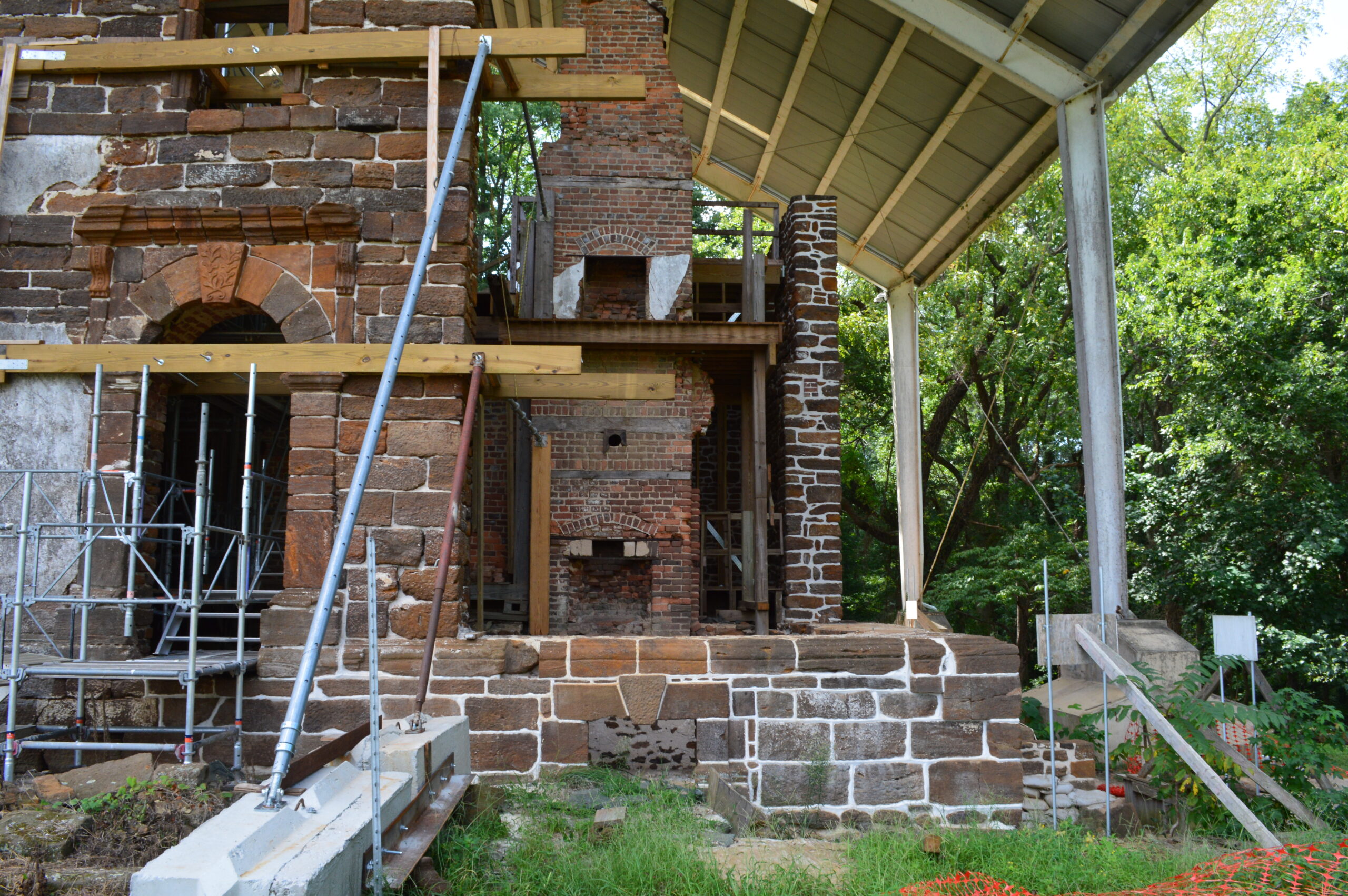
    Near Warsaw is Menokin, the ruins of an old plantation home. The goal of the Menokin Foundation to stabilize the remaining portions of the house while ultimately enclosing the missing portions of the house with glass. The tour guide gives you a hard hat so visitors can actually go inside the ruins.

    Menokin Ruins in Warsaw Virginia.
    Menokin Ruins in Warsaw Virginia.
    Basement of Menokin Ruins in Warsaw Virginia.
    Fireplace and doorway in Menokin Ruins in Warsaw Virginia.

    Now for the history of Menokin, another home of the Lee Family. Francis Lightfoot Lee built Menokin upon his marriage to Rebecca Tayloe. Menokin was built on the dower lands of the Tayloe’s, so when Francis and Rebecca died without children the house returned to the Tayloe family. Several different families lived at Menokin up until the 1930’s. By the 1970s, the once grand mansion laid in ruins. People of the surrounding community scavenged the ruins for parts; many pieces of the house have been returned. One interesting fact I learned while on the tour is that many Africans oftentimes smuggled seeds with them on the slave ships, bring African crops to the new world.

    Remembrance Structure at Menokin, Warsaw VA.
    Remembrance Structure Honoring The Lives of the Enslaved Community At Menokin

    Conclusion

    I combined both Warsaw and Tappahannock because both towns are close to each other. By contrast, both towns are further away from the other towns in their respective peninsulas. If I had to choose one as a favorite, I would pick Warsaw due to Menokin. Nevertheless, both towns are worth stopping at to experience small town charms.

    For more adventures, choose to explore the other towns in the River Realm region. But for other trip ideas, I recommend visiting Colonial Beach, with the historic homes in Westmoreland County. For more distant destinations, the closest major city to both towns is Fredericksburg, while Richmond is an about an hour away from Tappahannock. Finally, you could drive south to the Hampton Roads area, in particular Yorktown and Williamsburg.

    Below is the companion video about Warsaw, Tappahannock, and Menokin. This video offers viewers more glimpses at each place, so please watch if that would interest you.

  • Visiting Hopewell VA and Beautiful Henricus Historical Park

    Visiting Hopewell VA and Beautiful Henricus Historical Park

    Many people might be familiar with Jamestown Settlement, the first permanent English settlement in the New World. But few might be familiar with the second permanent English settlement, Henricus. Although Henricus only lasted a short time, it still provided many historical firsts to what would become the United States. I also went to see Weston Manor and the Hopewell Riverwalk in nearby Hopewell. Keep reading to learn about other places to visit in the greater area to maximize your time.

    3–5 minutes

    Henricus Historical Park

    Henricus Historical Park.

    Sir Thomas Dale founded Henricus in 1611 alongside 300 settlers for the purpose of finding a less swampy settlement. The settlement lasted a short time due primarily to tobacco, which caused the population to spread out. What remained of Henricus burned down during the second Anglo-Powhatan War in 1622.

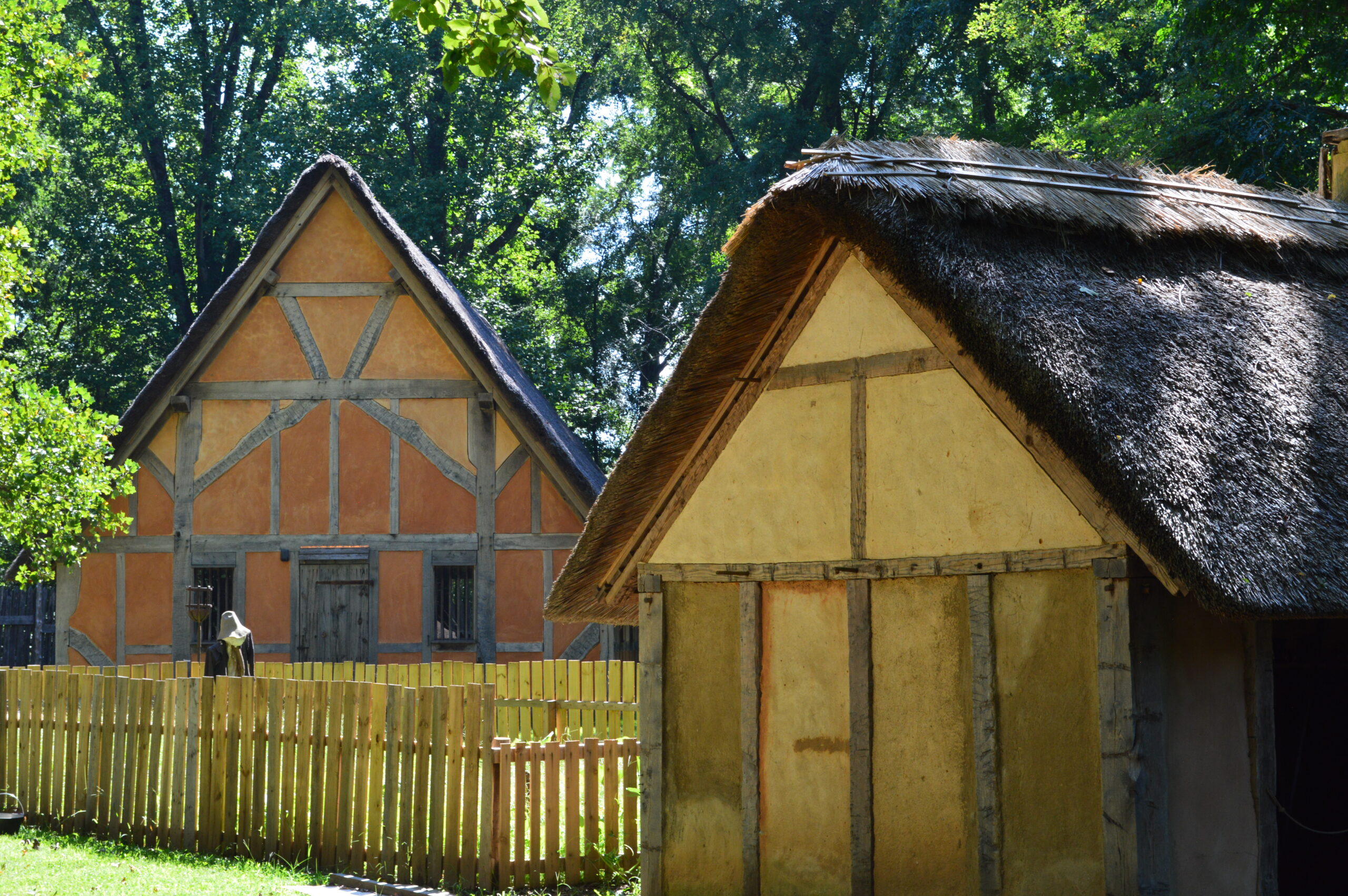
    Powhatan Village at Henricus Historical Park.
    Buildings and fenced-in area in Henricus Historical Park.
    Building in Henricus Historical Park with leaves in foreground.
    Henricus Historical Park with sunlight and shadow.
    Tobacco Shed and Replica building in background.
    Thatched Roof and Fence at Henricus Historical Park.
    Close up of window and wooden slab walls.

    Several important things happened during Henricus’ brief time. The minister of the church Alexander Whitaker educated Pocahontas to read & write in English, as well as oversaw her religious education. The first hospital and college in British North America were founded in Henricus, but the college was never completed.

    Henricus Historical Park with family and interpreter in background and objects in foreground.
    Costumed interpreter by doorway.
    Interior of house at Henricus Historical Park.
    Ceiling of Replica Church at Henricus Historical Park.
    Costumed interpreter inside replica church.
    Interior of bedroom inside replica house.
    Don’t Let The Picture Fool You, It Was Incredibly Dark Inside

    Long after the settlers abandoned Henricus, the site still played an important role in American history. During the Civil War, Union troops under General Benjamin Butler dug a canal on the land to contain Confederate Land Batteries. The channel was completed after the war, turning part of the land into an island. Henricus Historical Park now serves as an open-air history museum, with costumed interpreters and demonstrations.

    Goat inside pen at Henricus Historical Park.
    Blue and White Chickens at Henricus Historical Park.
    Cat lying on covered thing at Henricus Historical Park.

    Right next door to Henricus Historical Park is the Dutch Gap Conservation Area. Dutch Gap consists of one long trail going around a lagoon. I recommend the Conservation Area only if you want to experience the great outdoors, otherwise there’s nothing particularly noteworthy about the place.

    Dock and fallen tree in river.
    Wooded Trails at Dutch Gap Conservation Area.
    Trees and Swamp at Dutch Gap Conservation Area.
    Plants and reflection of trees in water.
    Abandoned Mechanical Objects on Trail.
    Rusted Car and tall plants at Dutch Gap Conservation Area.
    Bridge and Leaves at Dutch Gap Conservation Area.

    Before you go: Henricus Historical Park is only opened from Thursday through Sunday from 10-4. Admission is Free.

    Hopewell, Virginia

    A 23-minute drive from Henricus Historical Park is Hopewell, a small city on the James River. Hopewell does not have the best reputation, and at first glance there’s nothing spectacular about the city. But look a little deeper and you’ll find some hidden gems.

    E Broadway Street Hopewell VA.
    Buildings in Downtown Hopewell.
    Two Buildings in Downtown Hopewell.
    Building in Downtown Hopewell with branches in foreground.

    Located in Hopewell City Park is the Riverwalk, which reminded me of the Neabsco Creek Boardwalk but with city views. It’s a lovely place to stroll, but keep in mind there’s barely any shade on the Riverwalk. Also in Hopewell is the Old City Point Waterfront Park, but I was unable to make it there.

    Hopewell City Park Riverwalk.
    Pier at Hopewell City Park.
    Turtle on log at Hopewell City Park.

    Further away from the downtown is Weston Manor, an old plantation home. The house was originally built by William Gilliam, who we know little about because of multiple courthouse fires. During the Civil War, a different family rented the property, and a daughter of the family later published her Civil War diary. The post-Civil War owner originated from Ireland; he intended on entering the priesthood, but on the ship heading to America he saw a beautiful woman. One interesting thing about the house is that it has the second oldest dumbwaiter in America, which still survives. My tour guide gave the offer to touch the replica mattress in order to feel what they were like back in the day. Weston Manor opened every day except Monday; on Sunday the house is only open in the afternoon.

    Weston Plantation at Hopewell VA.

    For lunch I ate at the City Point Ice Cream and Burgers. It serves basic hamburgers, but the main attraction are the crazy shakes. Located on the small downtown street.

    City Point Ice Cream and Burgers Restaurant in Hopewell VA.

    Conclusion

    Overall, I enjoyed my time visiting the under-the-radar Henricus Historical Park and Hopewell Virginia. Visiting both the Historical Park and the attractions of Hopewell makes for a fun day out. For further adventures, you could visit nearby Chester/Chesterfield, Petersburg or Richmond, all around a 30-minute drive from Hopewell. Or you could head the opposite direction to Charles City County to visit the historic plantations of Shirley, Berkeley, and Sherwood Forest. And if you wanted to see more colonial history, Colonial Williamsburg and the Jamestown Settlement are both about 75-minutes away.

    Here is the companion YouTube video about Henricus Historical Park and the things to do in Hopewell. Please let me know if you enjoyed the video or not.

  • Best Things to Do In and Near Colonial Beach

    Best Things to Do In and Near Colonial Beach

    Originally, I went to the Northern Neck peninsula in the Tidewater region of Virginia to see three historic sites; my plans did not include visiting Colonial Beach. However, I had to pivot topics because I severely underestimated how much time I would need to visit all three historic houses. Instead, this blog post talks about my opinion of Colonial Beach and what to do in the greater Westmoreland County area. Keep reading to watch my YouTube video about Colonial Beach and the nearby historic homes.

    4–6 minutes

    Colonial Beach

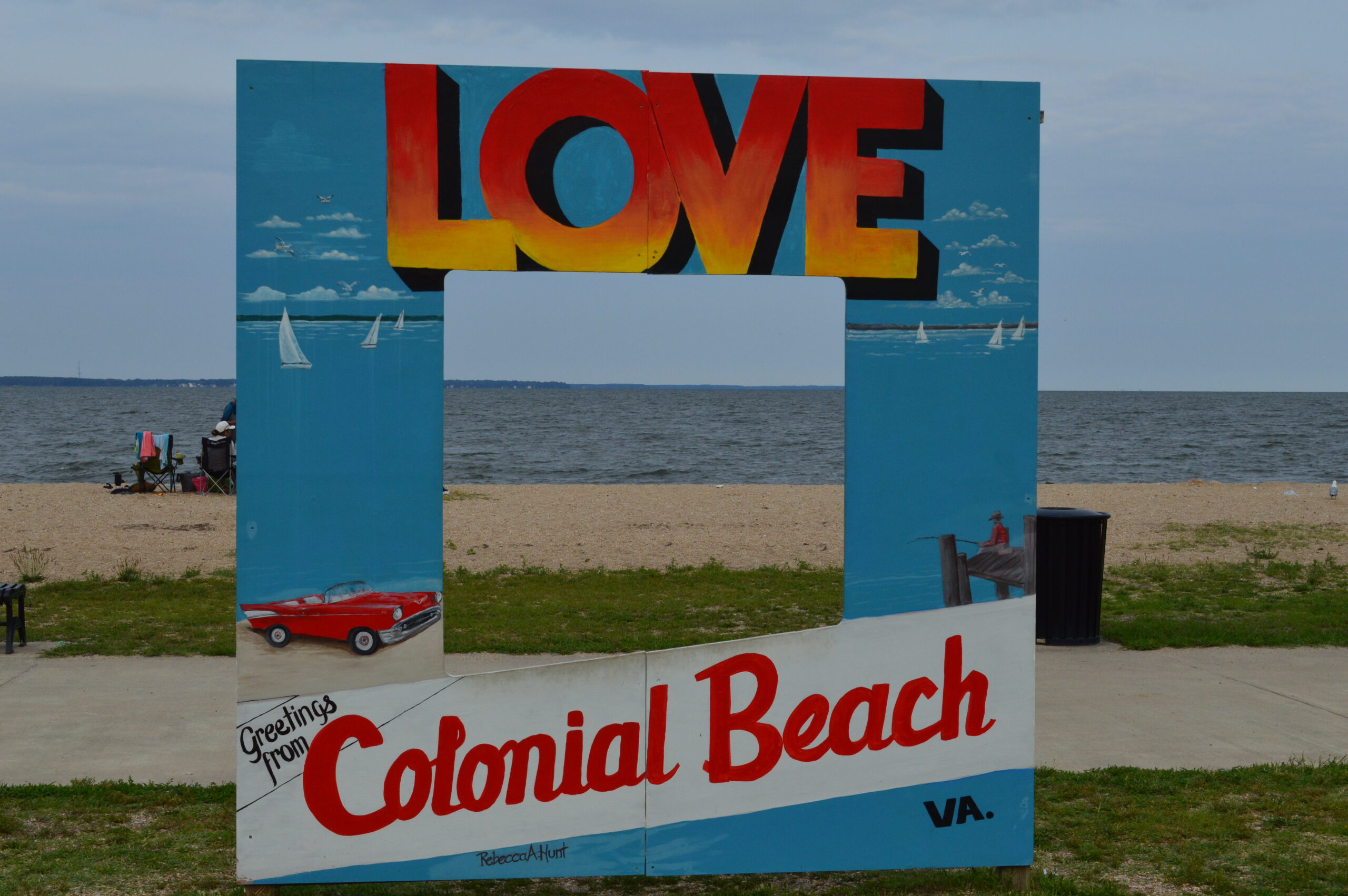
    Despite living in Virginia for most of my life, I knew little about Colonial Beach except that it retained much of its historical nature. Colonial Beach consists of three parts. The first part is the beach, which resembles a miniature Virginia Beach minus the skyscrapers. The second part is the unimpressive main street called Washington Avenue literally a block away from the beach. The quiet and peaceful beach cottages make up the third part of Colonial Beach. The highlight of this area is seeing the (privately-owned) Alexander Graham Bell summer house.

    View of a Boardwalk with Railing of Pavilion in Foreground in Colonial Beach.
    Trail next to beach in Colonial Beach.
    Downtown Colonial Beach.
    Downtown Colonial Beach with leaves in foreground.
    Parabola and tables next to building in Colonial Beach.
    Pavilion with Sunflowers in Foreground in Colonial Beach.
    Business in Colonial Beach with plants in foreground.
    Alexander Graham Bell Summer Home in Colonial Beach.
    Alexander Graham Bell Summer Home
    Orchid Thai Cuisine in Colonial Beach.

    For dining in the Westmoreland County, your only two options are eating in Colonial Beach or Montross, the county seat. If you do eat in Colonial Beach, plan for an earlier dinner, as many of the places that weren’t already closed by 6:00 close between 8:00 and 9:00. I picked Orchid Thai Cuisine because it was the first place from my quick perusal of Google Maps to still be open when I arrived at 5:30. Orchid Thai Cuisine was pretty popular and served good Thai food.

    Historic Homes in Westmoreland County

    The James Monroe Birthplace & Boyhood Home

    James Monroe Birthplace and Boyhood Home.

    The James Monroe Birthplace & Boyhood Home is a replica of the long-gone original home. The tour guide described the reconstructed house as being 95% accurate. Originally, the front door would have faced Monroe Creek, but the replica house’s front door faces the road. I learned that the Monroe’s were a middle-class family, and would not have entertained much. Nevertheless, James Monroe’s father had some political clout as he signed the Leedstown Resolutions alongside the Washingtons and Lees. There is also a park and trail associated with the site, but I could not explore it because I needed to head to the next historic house.

    Trail at the James Monroe Birthplace and Boyhood Home.

    Before you go: The James Monroe Birthplace and Boyhood Home house itself is only open on weekends between April and October. The accompanying park is open all year-round during daylight hours.

    Stratford Hall Historic Preserve

    Stratford Hall Historic Preserve.

    Stratford Hall is the third place I’ve been to associated with the Lee family this year after the Lee-Fendall House and Sully Historic Site. As fitting of the Lee’s status, Stratford Hall is a grand mansion with luxurious interiors. It’s also an odd structure because while it appears to be a two-story house, the second floor is actually the first floor, and the first floor is actually an above-ground basement. Stratford Hall was the highlight of this trip.

    Stratford Hall with Brick wall and trees.
    Stratford Hall at a great distance.
    Cabin of former enslaved person at Stratford Hall.
    Close up of down on Cabin.
    Interior of Cabin with set table and window.

    While at Stratford Hall, I learned some interesting things. First, the Lees were so rich that they were one of the few places in the colonies that served chocolate. Despite being the elite of Virginia society and having hundreds of enslaved workers, the Lee children were still expected to do chores to run the plantation. I also learned that plantation overseers were usually under contract for a year, and that there was frequent turnover. One interesting human touch is that Robert E. Lee would dig up prehistoric sharks’ teeth from the nearby beach as a child.

    Brick wall opening with trees in background.
    Garden at Stratford Hall.
    Close up of statue with crape myrtle in background.
    Path in gardens leading to Lees tomb.
    Cliff of Westmoreland State Park.
    Beach at Stratford Hall with wooden dividers.

    Before you go: Stratford Hall only does audio tours, but you have five options with different focuses. I did the basic information one, which gives a comprehensive overview of the house and the people who lived and worked there. I suppose you could spend the day going through all five audio tours. The only downside is they did not perfectly explain where I was to go next. There were several times where I would be listening to the tour in the wrong room. On a different topic, there are some cabins for rent on the property.

    Table with screen depicting Lees playing cards and discussing revolt against Stamp Act.

    Other Places in Westmoreland County

    The most famous historic house in Westmoreland County is the George Washington Birthplace National Monument. I went there as a little kid and remember it fondly, but perhaps I should make another visit sometime soon. Westmoreland State Park is for nature-lovers and located next to Stratford Hall. Menokin, while in Richmond County, is close enough that you could visit on the same day. However, this is the place I ended up missing, so either plan better or make it a separate trip.

    Conclusion

    Overall, I would recommend Colonial Beach only if you just want to spend a day on the beach. Those who hate the beach or want a place with more pizazz could probably skip Colonial Beach itself. Colonial Beach could also be used as a stopping ground to explore the Northern Neck area. Stratford Hall is a must-see destination, while the James Monroe Birthplace and Boyhood Home is for presidential homes completionists like myself. You could also use Westmoreland County to explore nearby Fredericksburg or go further down in the Northern Neck to see the River Realm area, such as Warsaw & Tappahannock.

    Below is the companion YouTube video about exploring Colonial Beach and museums of Westmoreland County. If you enjoyed the video, please like and subscribe for more.

  • Best Historical Things To Do in New Bern

    Best Historical Things To Do in New Bern

    New Bern was founded in 1710, making it the second oldest city in North Carolina. Thus, New Bern has many historical things to do and see. This blog post about visiting New Bern completes the first bucket list item from my About page. Keep reading to watch the accompanying YouTube video.

    3–4 minutes

    Downtown New Bern

    After finishing the attractions listed below, I walked around New Bern’s charming downtown. The mascot of the city is the bear as bern is the old Germanic word for bear. As such, there are many fiberglass sculptures of bears throughout the city with all sorts of crazy designs. New Bern has pockets of green space throughout the downtown which adds a nice balance to the historic buildings. New Bern proved to be teeming with activity and life on a Friday night, most notably with a Footloose on the Neuse concert.

    First the historic downtown…

    Downtown New Bern North Carolina.
    Downtown New Bern North Carolina.
    Closeup of buildings in downtown New Bern with sign in foreground.
    Downtown New Bern North Carolina with awning in foreground.
    Downtown New Bern North Carolina.
    Scaffolding shield with downtown New Bern in background.
    Closeup of brick building in New Bern.
    New Bern Civic Theatre and Tree.
    Church building and tree.
    New Bern Academy.

    Now the parks/nature…

    Park with Downtown New Bern in background.
    Park with Downtown New Bern in background.
    Downtown New Bern with Spanish Moss in Foreground.
    Downtown New Bern with replica outside church in foreground.
    Old Church and trees with Swan water fountain in foreground.
    Pier and wetlands in New Bern.
    Close up of Crape Myrtle and Spanish Moss.

    And finally two of the bear sculptures…

    Fiberglass bear sculpture decorated like a farmer.
    Fiberglass bear sculpture decorated like a taxi.

    Tryon Palace

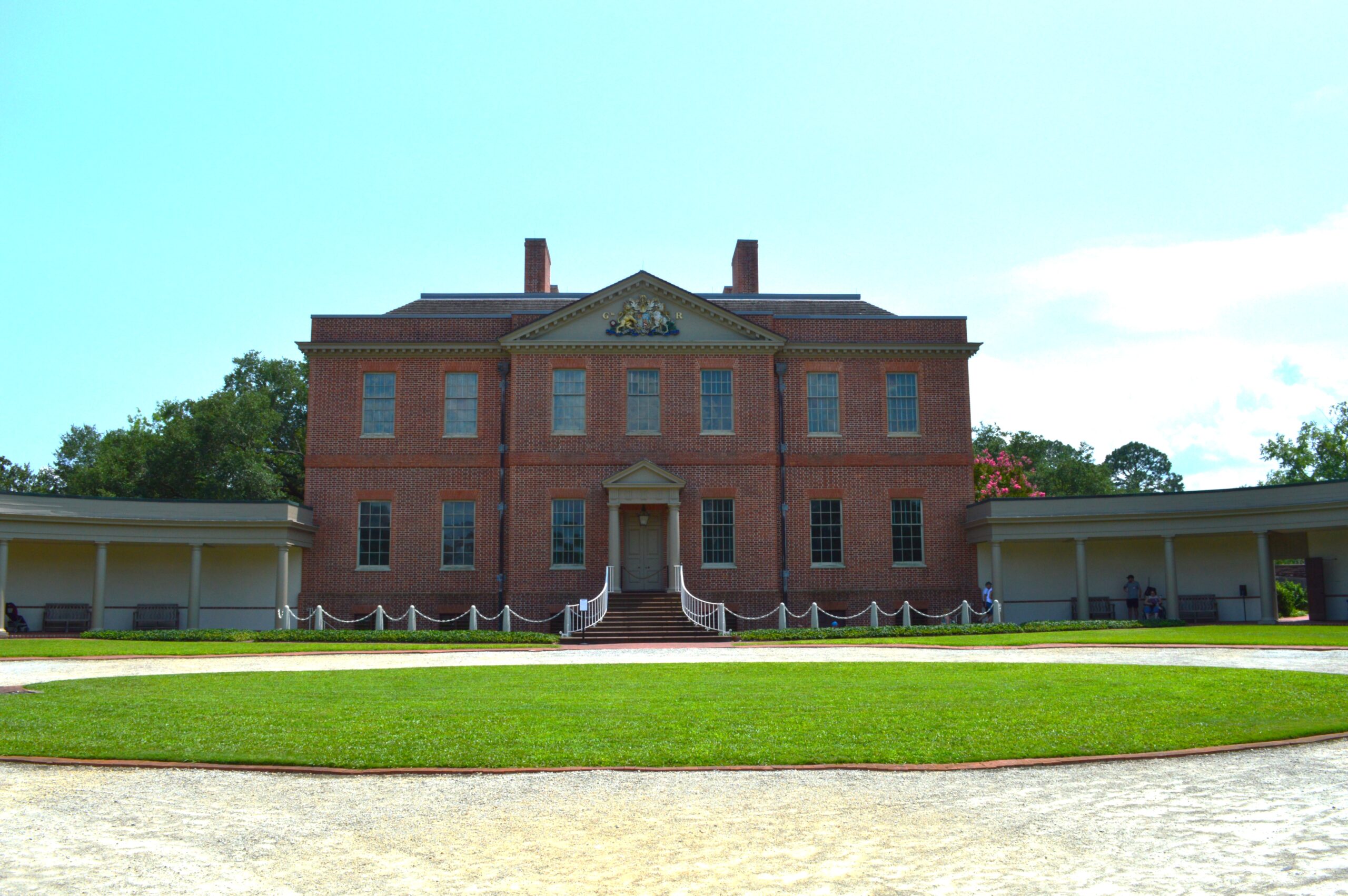
    My main reason for putting New Bern on my bucket list was to see Tryon Palace, and it did not disappoint. The Palace was built by and named after William Tryon, the Royal Governor of North Carolina. William Tryon turned New Bern from a small town to the capital of North Carolina in the early 1770s. Tryon Palace’s heyday only lasted a short time, as the town lost its status as a capital city in the early 1790s. In 1798, Tryon Palace burned down, and for many years the plot of land was subdivided into housing. Nevertheless, the foundations survived the fire, and after a complete reconstruction of the building and grounds, Tryon Places opened to the public in 1959.

    Crape Myrtle with Tyron Palace in background.
    Tryon Palace Gardens with side buildings in background.
    Walled garden on Tyron Palce with iron wrought gate.
    Walled garden at Tyron Palace with water fountain and plants.
    Walled garden at Tyron Palace with hedge maze and statues.
    Small pavilion at Tyron Palace.
    North Carolina History Center.

    A few steps away from Tryon Palace is the North Carolina History Center, which oftentimes felt more like a general history of the 19th century rather than a specific history of coastal North Carolina. However, I did learn that there were several failed attempts by the Spanish to colonize North Carolina. I also learned that turpentine comes from a tree. One unique exhibit was on the history of Pepsi, which is not something one normally finds in a local history museum. Which leads me to…

    Birthplace of Pepsi Cola

    Birthplace of Pepsi Cola in Downtown New Bern.

    The Birthplace of Pepsi Cola is nothing like the World of Coca-Cola in Atlanta, or even the Dr. Pepper Museum in Waco as my sister described it. Instead, it’s a gift shop and soda fountain that offers a couple of Pepsi products and popcorn. Unless you’re a big Pepsi fanatic, I only recommend coming here to grab a snack and beat the heat.

    Conclusion

    Overall, I enjoyed my time in New Bern, even if did not become one of my favorite small towns. I think one day is enough to explore all New Bern has to offer. However, you could use New Bern as a launching point to explore more of North Carolina, such as the Croatan National Forest located next door. For other away trips, I recommend visiting Edenton, Manteo, and the Outer Banks. And if you want to see Virginia’s colonial capital, Williamsburg is a nearly 4-hour drive away.

    Below is my companion video about exploring New Bern and Tryon Palace. If you enjoyed the video, please like and subscribe.

    Restaurants

    Savage's Wood Burning Pizza restaurant in New Bern.

    There are quite a few restaurants in downtown New Bern. However, if you wanted to eat somewhere close to Tryon Palace, I suggest Savage’s Wood Burning Pizza, which is a six-minute walk to the North Carolina History Center. The restaurant not only serves pizza, but also pasta and subs.