Category: History

Places that focus on history.

  • One More Thing to Do in Alexandria

    One More Thing to Do in Alexandria

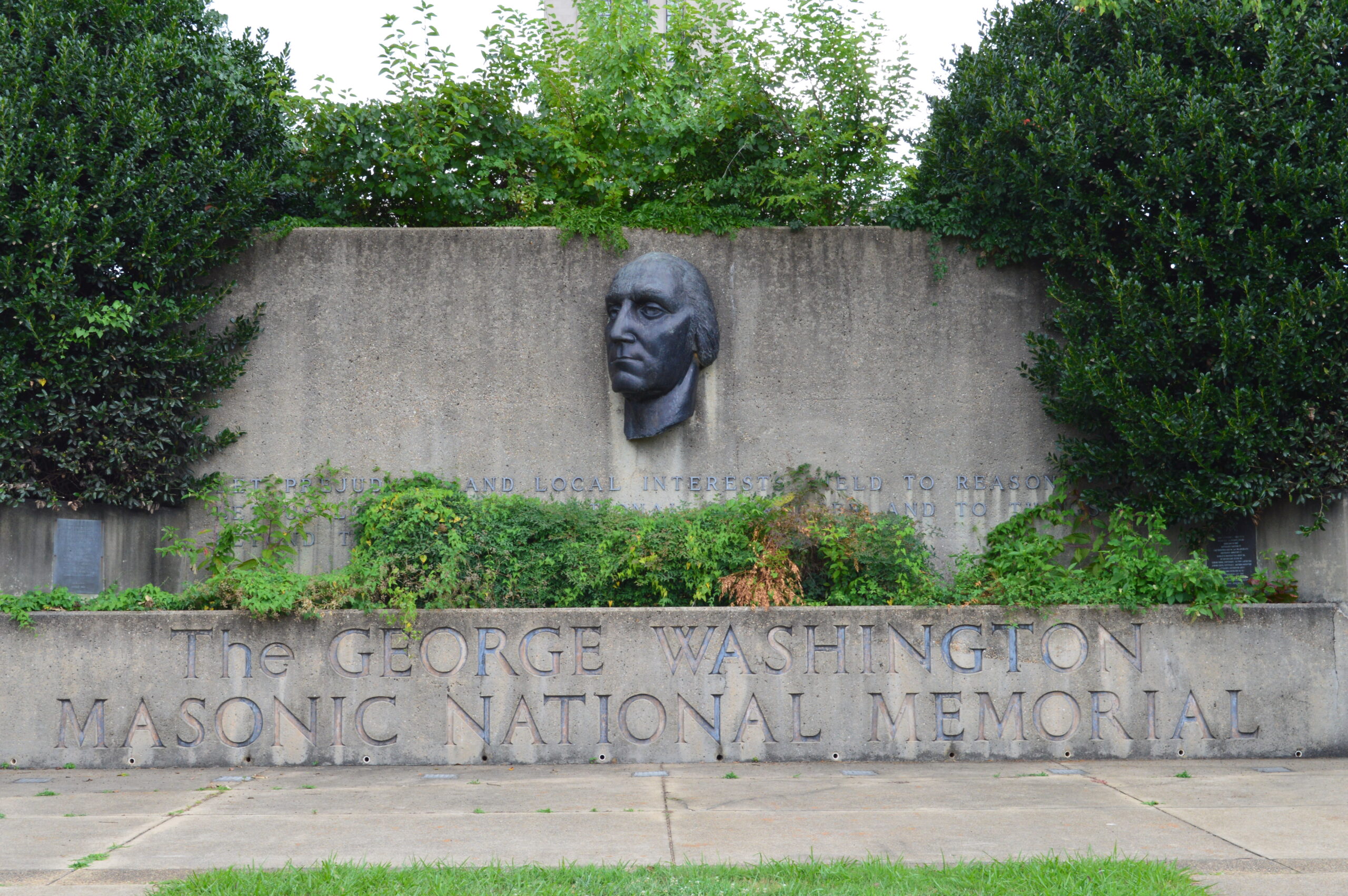
    Several blog posts ago I mentioned that I did not complete everything there is to do in Alexandria. Recently, I returned to the Northern Virginia (NOVA) area to visit The George Washington Masonic National Memorial. This article serves a companion pieces to my Alexandria blog post. Keep reading till the end to watch my YouTube video about the Masonic Memorial.

    3–5 minutes

    The Masonic Memorial Tour

    The George Washington Masonic Memorial.

    The guided tour goes through some of the rooms of the massive obelisk. The tour begins in the Grand Hall, a massive room with 40-foot columns, two massive murals of George Washington in patriotic scenes, and a giant statue of George Washington at the far end of the Hall. Our tour guide then directed visitors to the Replica Lodge Room, which replicates Alexandria’s original Masonic meeting room. Here I learned the origins of Freemasonry, which begin in the 1600s. The term originates from the mason guilds that would grant the honorary position of “free mason” to prominent men of the community.

    The George Washington Masonic Memorial, with Freemason Logo.

    The tour makes its way up the building, stopping at two exhibit rooms. The first room talks about all the different Freemason orders. It turns out that there are many different orders including the Shriners. The next room is a two-story room with one floor devoted to the life of George Washington and the other floor talking about the history of the building. Before reaching the observation deck, you stop at the Knight Templar Chapel, the only order of Freemasonry where you must be a Christian.

    Tower of The George Washington Masonic Memorial.

    Then visitors are sent to the observation deck mentioned below. Finally, the tour goes all the way down to the first floor, where you are greeted with a gift shop. The gift shop lacked much of interest, but it’s funny that a secret organization has a gift shop. Besides the gift shop, one can glance inside a giant banquet room and look at a small exhibit about historic Masonic buildings.

    Outside Columns and Portico Ceiling of The George Washington Masonic Memorial.

    The Observation Deck

    The observation deck is 300 feet above the ground floor, as well as being on top of a hill. There are panoramic views of Alexandria and the surrounding areas. Unfortunately, the D.C. area is too far away to get great shots, and the modern office buildings completely swamp views of historic downtown Alexandria. Still, I highly recommend The George Washington Masonic Masonic Memorial just for the observation deck.

    Looking Below at Freemason Logo and Alexandria.
    Panoramic View of Alexandria.
    Panoramic View of Alexandria's suburbs.
    Panoramic View of Alexandria with Washington D.C. in Background.

    Interesting Facts About The Building

    Here are some facts about the building. First the entire building stands 333 feet tall. President Calvin Coolidge (not a Freemason) laid the building’s cornerstone in 1923. However, construction took so long that the interiors were not completed until the 1970s.

    Panoramic View of Alexandria from steps of The George Washington Masonic Memorial.

    The elevators that visitors go on to tour the building are worth a mention. As the building narrows as it gets to the top, the elevators go up in a 7.5-degree angle. The strangely shaped elevators are as a mix between a rounded square and a triangle and missing a corner. The tour guide revealed this was a purely ascetic choice, as the architect wanted to incorporate Art Deco into an otherwise Greco-Roman building.

    How You Visit The Masonic Memorial

    Here are some practical tips on visiting The George Washington Masonic National Memorial. The Memorial is open from Thursdays-Mondays, with guided tours at 9:30 a.m., 11:00 a.m., 12:30, p.m., 2:00 p.m., & 3:30 p.m. that last about an hour. You may take pictures inside the building, but no use of flash photography. You cannot film inside the building, but they were fine with me filming on the observation deck provided I did not record anyone.

    Conclusion

    I did not know that the Masonic Memorial was open to the public as a museum until recently. I enjoyed learning about the Freemasons at the Masonic Memorial as it’s a world I know nothing about. The observation deck also makes the Masonic Memorial a unique must-see destination.

    Here is my companion YouTube video about The George Washington Masonic National Memorial. This is the first time I’ve tried color grading one of my videos, so let me know if you like it or not.

    Restaurants

    Dolan Uyghur Restaurant in Chantilly.
    This Is The Chantilly Location

    The George Washington Masonic National Memorial is about 13 minutes away from Old Town Alexandria with its many attractions and restaurants; I recommend Mia’s Italian Kitchen on King Street. I also recommend Dolan Uyghur Restaurant for Uyghur cuisine (a mix of Chinese and Middle Eastern flavors); the closest location is 17 minutes away in Arlington. Read the restaurants recommendations linked above if you want more dining options that are further away.

  • How to Maximize Your Trip to Winchester Virginia

    How to Maximize Your Trip to Winchester Virginia

    4–6 minutes

    On my final full day in Northern Virginia, I actually left the NOVA area to travel to Winchester VA. Although Winchester is not considered part of NOVA, it is relatively nearby as the town was an hour away from my hotel. It was a beautiful drive to Winchester as the landscape changed from flat, urbanized land to rural mountains. This is part three of my NOVA trip, following Alexandria and Leesburg/Waterford.

    Old Town Winchester

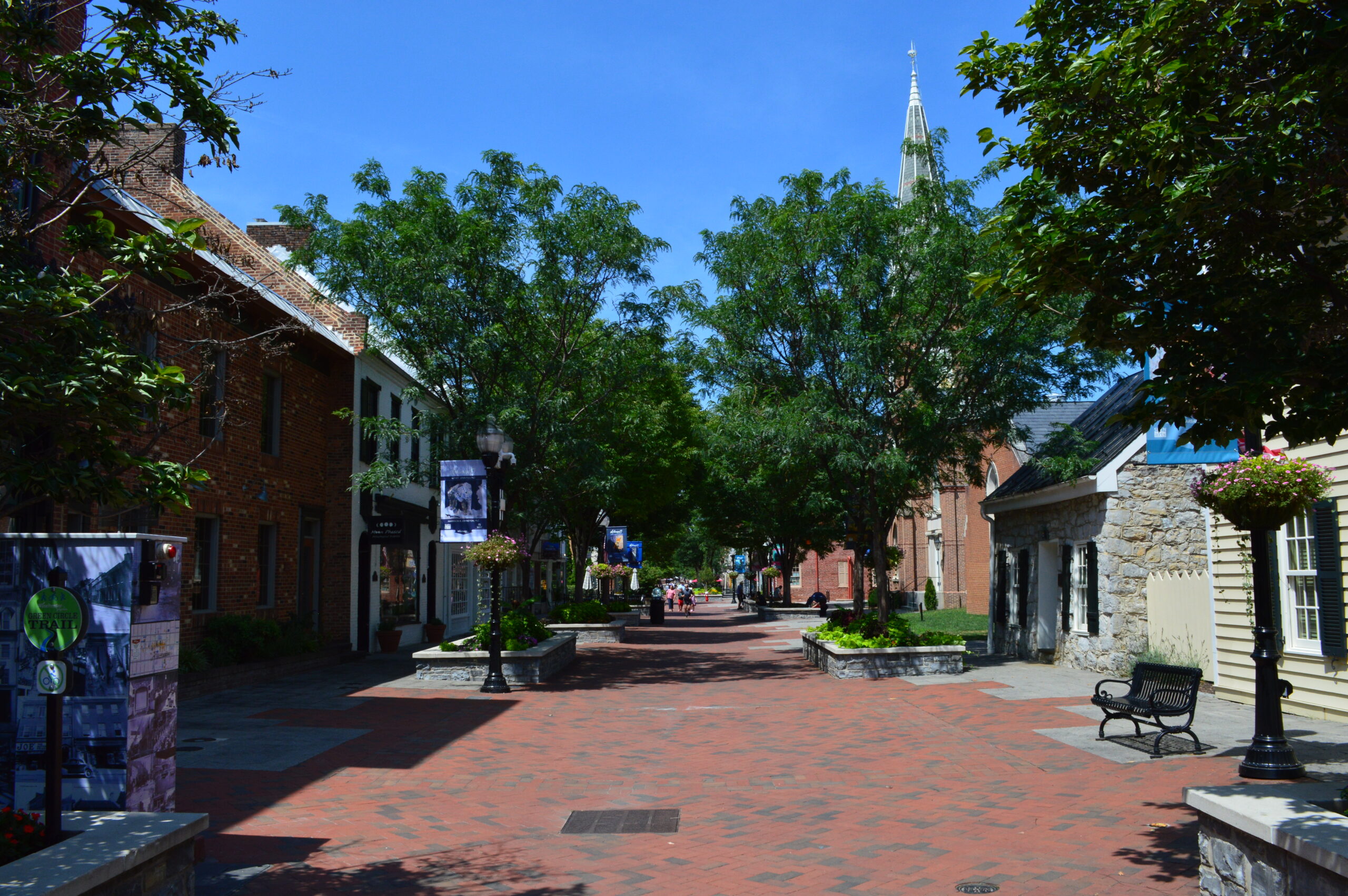
    Winchester is the most unique small town I’ve been to because the main thoroughfare has no road going through it. Instead, Old Town Winchester is an entirely pedestrian friendly walking mall that retains the original buildings. It was nice to film a charming small town without having cars and trucks constantly driving by. The rest of Downtown Winchester is more conventional with roads, but it still retains its historic nature.

    Old Town Winchester Virginia.
    Old Town Winchester Virginia.
    Old Town Winchester Virginia.
    Old Town Winchester Virginia.
    Old Town Winchester Virginia.
    Close up of Building in Old Town Winchester Virginia.
    Old Town Winchester Virginia.
    Old Town Winchester Virginia.
    Old Town Winchester Virginia.
    Buildings in Downtown Winchester VA.
    Kimberly Store in Winchester VA.
    This Building Served As Headquarters For A Union General

    There are plenty of restaurants in Winchester. I went to Benny Meloto’s Pizza which if I’m being honest was not that great of a pizza. However, it was cheap, quick, and filling (since a single slice can fit on two paper plates), so it’s an option for those who want to maximize their time in Winchester.

    Places to See in Winchester

    The Shenandoah Valley Civil War Museum.

    Located in the heart of Old Town Winchester is The Shenandoah Valley Civil War Museum, located in what was the third courthouse of Frederick County. The downstairs section talks about the courthouse’s history while the upstairs exhibit talks about the Civil War in the Shenandoah Valley. The design of the second courthouse was so controversial that part of the county broke apart and formed its own county. The Judge presiding over the John Brown trial was came from this court. Winchester changed hands 72 times during the Civil War, the most of any place in America. Graffiti from both Confederate and Union troops remains visible today. The building remained a courthouse until 1984.

    George Washington Office Museum.

    Near Old Town Winchester is the George Washington Office Museum, which delves into George Washington’s early years as a surveyor, as well as recounts Winchester’s early years. I did not know that George Washington became a burgess (member of the legislative body) for Frederick County in 1758. After George Washington left, a family lived in the office until 1908 when the city bought the property.

    Handley Regional Library.

    Also near Old Town Winchester is the Handley Regional Library. This grandiose building is still a working library, but they offer tours twice a month. Look up to marvel at the stained-glass dome.

    Sign Advertising Tours of Handley Library.
    Interior Picture of Handley Library.
    Stained-Glass Dome in Handley Library.
    Stonewall Jackson Headquarters Museum.

    A bit further away is the Stonewall Jackson Headquarters. Jackson originally headquartered at a hotel, but moved to this building when invited by Lewis T. Moore, the second owner of the house. The two men originally met during John Brown’s trial and execution. The tour guide recounted how the women of Winchester hated the Union so much that they grabbed guns and shot at Union troops. The actress Mary Tyler Moore is a descendant of Lewis T. Moore. Also, the visitor entrance seen above was not the original entrance to the house.

    Sign Saying Patsy Cline Memorial Park.

    A 15-minute walk from Old Town Winchester is the Patsy Cline Historic House and Patsy Cline Memorial Park. While I did not go to the Museum, I highly recommend visiting the Park to appreciate the unique landscaping. I recommend walking to both places, since they are located in an old suburb with minimal parking.

    Metal Statue with Old Suburb In Background.
    Mental Statue with Cutout of Patsy Cline in Background.
    Pedestrian Bridge at Patsy Cline Memorial Park.
    Pedestrian Bridge at Patsy Cline Memorial Park.
    Museum of the Shenandoah Valley.

    A several minutes’ drive from downtown Winchester is the Museum of the Shenandoah Valley. This museum is a bit odd, since it is a mix of a history and art museum, with displays of quilts and miniature houses. I noticed that the Shenandoah Valley history section had several historic kitchens on display. The Museum is built around the Glen Burnie estate, which remained in the family’s hands throughout the years; the last owner of the house was gay, which probably the first time I’ve ever been to a museum with some LGBT history.

    Glen Burnie Mansion at Museum of the Shenandoah Valley.
    The Glen Burnie Mansion, Which The Museum Was Built Around
    Plants and Metal Mesh with Silo in Backgorund.
    Kinetic Art inside Silo.
    Blue Wall with Cutout with Trees in Background.
    Interior of Pavilion with Fountain in Background.
    Interior of Chinese Pavilion with Chinese Garden in Background.
    Chinese Garden with Ornamental Footbridge in Foreground.
    Close up of Small Waterfall.
    Parabola and Trees.
    Small Elf Building with Trees in Background.
    Long Branch Historic House and Farm.

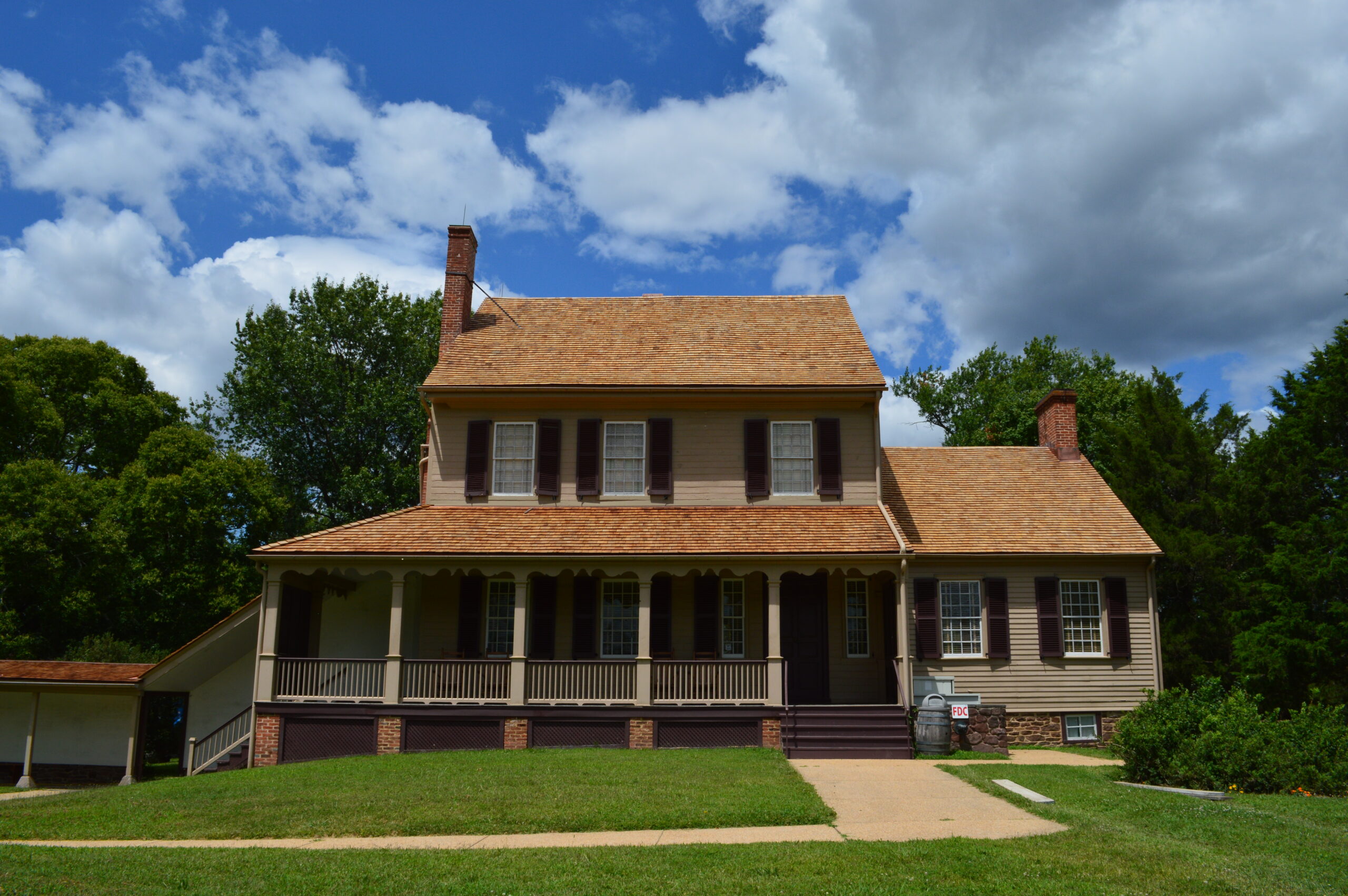
    About a 24-minute drive away from downtown Winchester is the Long Branch Historic House & Farm. The original builder of the mansion died in the War of 1812, and thus never lived in the house. After the Civil War, the widowed wife of the new owner lost the house, but ended up buying back the house and land in auction. The last private owner of the house owned successful racehorses, and modified the mansion to what it is today.

    Field with Cows with Tree Branch in Foreground.
    Tiny Garden with Field in Background.
    Barn Building with Mountains in Background.
    Flowers with Lake in Background.
    Lake with Mountains in Background.
    Lake with Weeping Willow in Foreground.
    Lake with Bench in Foreground.

    Conclusion

    Those looking for a charming small town with plenty to do should look no further than Winchester, VA. You should spend at least two days exploring Winchester and the surrounding area, because I did not visit the Patsy Cline Historic House, Abram’s Delight, or explore the nearby Sky Meadows State Park. Winchester is definitely worth a stop if one is in the Washington D.C./NOVA area, and is close to both Harpers Ferry or Shenandoah National Park.

    Some important information: The Museum of the Shenandoah Valley is closed on Monday, while the Patsy Cline Historic House is closed on Tuesday. When arriving at Long Branch Historic House & Farm, ignore what Waze says and turn right to the north entrance. Once you arrive, the visitor entrance is neither the front or back door, but in a small wing to the left (in orientation of the picture above). Once you arrive, let someone know that you’re a visitor and you would like a tour of the house, as they may be in the back.

    Below is my companion YouTube video entitled Best Things to Do in Winchester Virginia. Please subscribe if you liked the video.

  • Discovering Beautiful Leesburg and Waterford

    Discovering Beautiful Leesburg and Waterford

    3–5 minutes

    The first thing that comes when thinking of Northern Virginia (NOVA) are major cities and endless suburban sprawl. However, at the furthest corner of NOVA are two small towns, Leesburg & Waterford, which retain their picturesque historic charms yet remain under the radar. These two towns are about 11 minutes apart, making them a perfect destination to spend a day or two. This blog post about Leesburg and Waterford is the second of a three-part series on my recent trip exploring NOVA following Alexandria and followed by Winchester.

    Exploring Downtown Leesburg

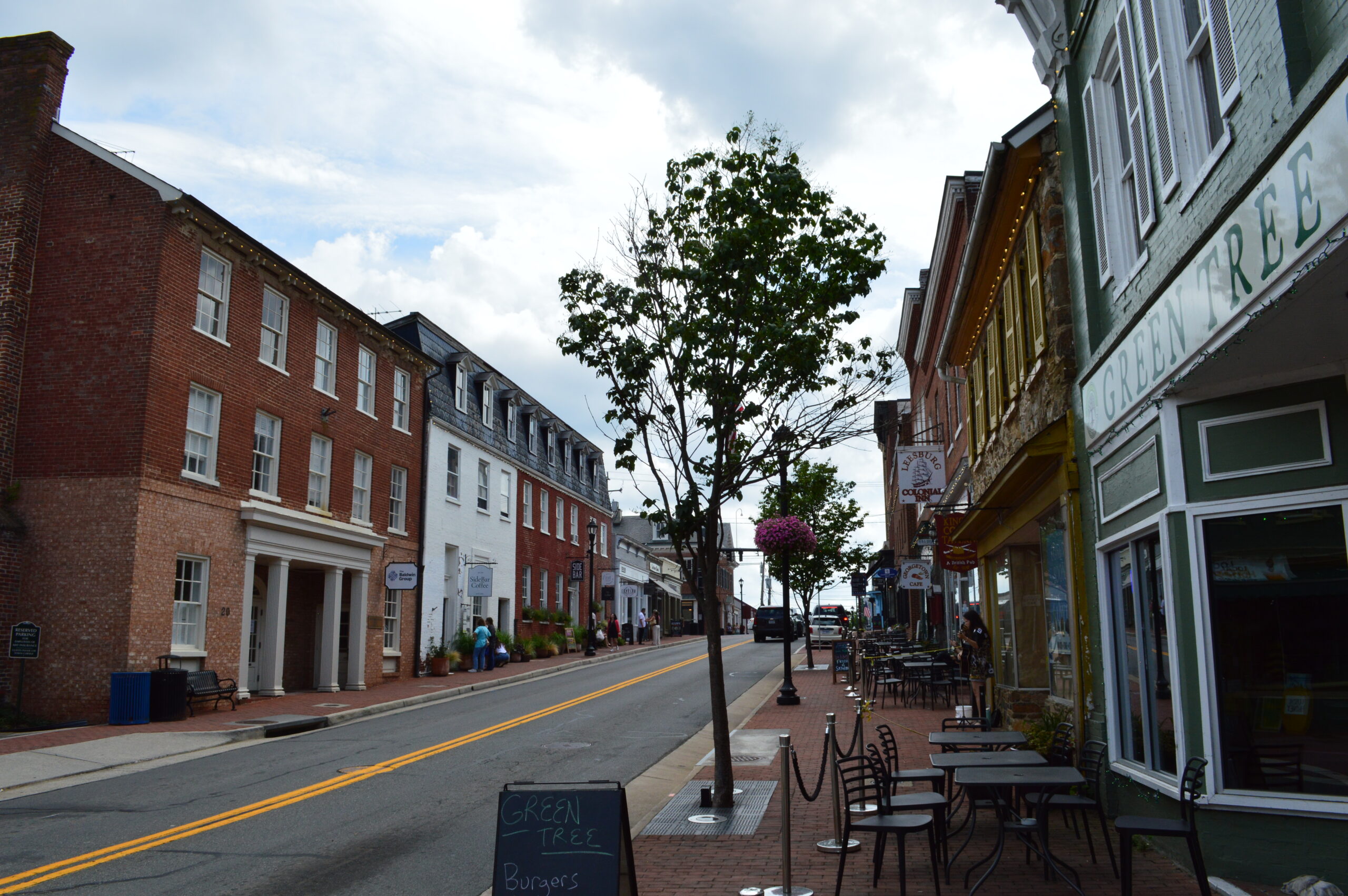
    After finishing the museums listed below, I walked around Leesburg’s charming downtown. Unlike other small towns, Leesburg’s commercial district surrounds a block rather than stretching out on the main street. A few blocks away is Market Station, a collection of shops and restaurants surrounding an old historic mill.

    First Downtown Leesburg…

    Downtown Leesburg Virginia.
    Downtown Leesburg Virginia.
    Downtown Leesburg Virginia.
    Downtown Leesburg Virginia.
    Downtown Leesburg Virginia.
    Close up of Downtown Leesburg Virginia.
    Close up of Downtown Leesburg Virginia.
    Shop in Leesburg with doorway in foreground.
    Park in Leesburg with Log Cabin in background.

    Now Market Station…

    Market Station in Leesburg VA.
    Tuscarora Mills in Market Station in Leesburg VA.
    Plaza at Market Station in Leesburg VA.
    Columns in Market Station in Leesburg VA.

    While I never got the opportunity to eat in Leesburg, I did make a fun stop at a store. Sunflower Shack sells old fashioned sweet treats and home decor items. Although I could not buy any chocolates because it was such a hot day, I did buy four sodas. The sales clerk kindly wrapped up the sodas when I told them I was from out of town; the sodas managed to survive the trip home in perfect condition.

    Sunflower Shack store in Leesburg VA.

    Museums of Leesburg

    Sign that says Oatlands land-scholarship-history Welcome.

    Oatlands Historic House and Gardens was built by George Carter, the son of Robert Carter III, whose house I saw in Williamsburg. George Carter fought his father’s decision to manumit (legally free) his slaves. The tour heavily focus on the lives of the enslaved people and what happened to them after emancipation. The tours also talked about the Eustis family, the second family who lived in the house. Oatlands also has a beautiful walled garden just steps from the mansion.

    Oatlands Historic House near Leesburg.
    Entrance to Walled Garden at Oatlands.
    Walled Garden at Oatlands.
    Pond with Aquatic plants with Statue in background at Oatlands.
    Walled section of garden with flowers in foreground.
    Sign that says George C. Marshall's Dodona Manor Home and Garden.

    Dodona Manor was built in 1803, but is most associated with George C. Marshall, whose second wife bought the house in 1941. The second wife had a brief career as a Shakespearean actress in Britain, but her Kentucky accent held her back. The tour guide noted the modesty of George C. Marshall as his bedroom was small and spartan. One interesting thing on display was a television set, which is not something one normally finds in a historic house.

    Dodona Manor in Leesburg VA.

    Exploring Waterford

    On the final day of the trip, I decided to make a detour to visit Waterford, which I only discovered from watching this video last year. Waterford turned out to be a unique experience because (minus all the passing cars) the town completely retains its colonial look. Waterford’s main street is incredibly tiny and, with the exception the mill, church, post office, and corner store, has only houses rather than the standard storefronts. Waterford’s history is also interesting because it was founded by Quakers. Why Waterford remains under the radar is a complete mystery to me.

    Buildings in Waterford Virginia.
    Buildings in Waterford Virginia's Main Street.
    Buildings in Waterford Virginia's Main Street.
    Buildings in Waterford Virginia's Main Street.
    Buildings in Waterford Virginia's Main Street.
    Buildings in Waterford Virginia's Main Street with Support Beams in foreground.
    Buildings in Waterford Virginia's Main Street with greenery and American Flag in foreground.
    Back of Buildings in Waterford Virginia's surrounded by greenery.
    Old Mill in Waterford with John Wesley Church in Background.
    The Old Mill Dating From the Early 19th Century
    Rusted Water Wheel Surrounded by Greenery.
    Rusted Water Wheel, Now Detached From the Mill
    Entrance to Phillips Farms Trail in Waterford VA with two signs.
    Beginning of Trail Leading to Catocin Creek

    Conclusion

    Overall, I highly recommend visiting Leesburg and Waterford as a day trip, or perhaps a two-day trip as I did not include Morven Park, which is another place I highly recommend. One could spend several hours wandering through both Oatlands and Morven Park’s gardens. The two small towns are conveniently located a little over an hour away from Washington D.C., as well as being relatively near Harpers Ferry and Antietam National Battlefield.

    Here are some helpful tips. While Oatlands grounds are open every day, guided tours of the house are only available from Thursdays through Sundays at 11:00, 1:00 and 3:00. Oatlands is not located in Leesburg, instead being 14-minute drive away. George C. Marshall’s Dodona Manor located several blocks away from downtown Leesburg, and is only open on Friday through Sunday. Keep in mind that the entrance to Dodona Manor is on Edwards Ferry Road, not E Market Street; also, they have a tiny parking lot, so those with time and the ability to walk could park downtown and take an 11-minute walk to the house. Waterford is most known for the Waterford Fair, which happens in early October.

    Below is my companion YouTube video about Leesburg and Waterford. If you enjoyed the video, please like and subscribe.

    Restaurants in the Greater NOVA Area

    There are plenty places to eat in Leesburg (not so much Waterford), either in the downtown area, Market Station, or the strip malls at the edge of town. If you want more dining options, try some restaurants in the greater NOVA area, such as those listed on my Alexandria blog post. In order from closest to furthest to Leesburg: Swadi Pakistani Kitchen, Rice Culture (Chantilly location), Malaysian Kopitiam, Marufuji Japanese Market, Hawk & Griffin, Fettosh, and El Pike Bolivian Restobar. There are also two Roy Rogers fast food restaurants located within Leesburg.

  • Best Things to Do in Alexandria

    Best Things to Do in Alexandria

    I always wanted to see Alexandria and experience the beautiful historic old town. The hour-long glimpse of Alexandria I got several years before only served to whet my appetite for more. Finally, I got extra days off work, so I decided to explore more of what Travel & Leisure calls one of the best cities in the U.S. This blog post about Alexandria is the first of a three-part series of my recent trip exploring Northern Virginia (NOVA), followed by Leesburg/Waterford and Winchester.

    5–8 minutes

    Exploring Historic Alexandria District

    Homes in Alexandria Virginia with Sign Saying Old & Historic Alexandria District.

    After arriving in downtown Alexandria, I first had lunch at Mia’s Italian Kitchen. The restaurant is located in the pedestrian friendly section of King Street. The restaurant is three stories tall, but I forgot to see the second and third floor. I had the Bucatini Cacio e Pepe, which was perhaps my favorite meal of the trip. There are plenty of other restaurants nearby is you want a different option.

    Mia's Italian Kitchen Restaurant in Alexandria VA.

    Historic Alexandria is definitely a must-see destination. There is so much to do and see within downtown Alexandria, as well as admire the old buildings. Some roads were made out of cobblestone, which added to the ambience of Alexandria’s historic nature. There were also several small parks located on the waterfront conveniently located near downtown.

    First the Architecture and History…

    Glass protecting Ruins of Ice Well.
    Ruins of Ice Well That Could Store Up To 62 Tons of Ice For Local Tavern
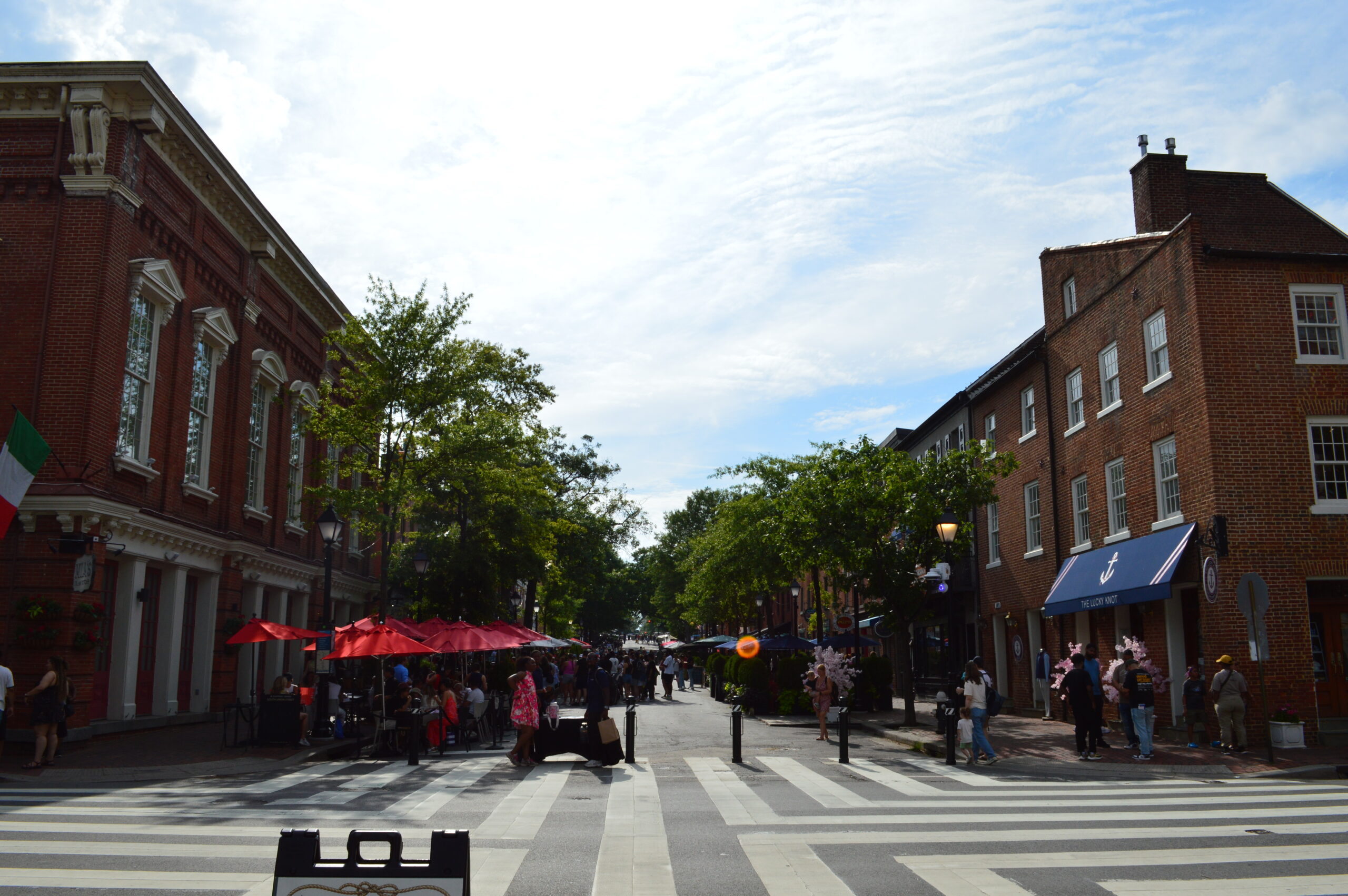
    Historic Buildings in Alexandria Virginia.
    King Street Alexandria Virginia.
    King Street Alexandria Virginia.
    Historic Houses and Trees in Alexandria Virginia.
    Historic Houses and Trees and Cobblestone Street in Alexandria Virginia.
    Historic Houses and Trees and Cobblestone Street in Alexandria Virginia.
    Street in Alexandria VA with Tree in Background.
    Historic Buildings in Alexandria.
    Historic Buildings in Alexandria.
    Historic Buildings in Alexandria.
    Historic Buildings in Alexandria.
    Historic Buildings in Alexandria.
    Historic Buildings in Alexandria with leaves in foreground.

    Now the Nature…

    Park Behind Lee-Fendall House in Alexandria Virginia.
    Park Behind Carlyle House in Alexandria Virginia.
    Park Behind Carlyle House with Gazebo in Background.
    Small trail surrounded by plants in Founders Park, Alexandria VA.
    Trees and Potomac River at Riverfront Park.

    Museums of Alexandria

    Historic Huntley Museum in Alexandria.

    Historic Huntley was built in 1824 as a summer home of the original owner. Today the interior of the house is non furnished, and one side of the building has it so visitors can see the brickwork and roof of the house. Something unusual is that the outhouse and slave quarters were brick structures, as those structures were usually made out of wood.

    Lee-Fendall House Museum in Alexandria.

    The founding father Henry “Light Horse Harry” Lee originally purchased the lot the Lee-Fendall House is located on, but his father-in-law Philip Fendell first lived in the house. Many members of the Lee family lived in the house throughout the years, but not Robert E. Lee. Later on, John L. Lewis, the president of the United Mine Workers Union lived here.

    Carlyle House Museum in Alexandria.

    It is believed that the Carlyle House inspired both Mount Vernon and George Mason’s Gunston Hall. General Edward Braddock stayed here before the French and Indian War started and was a terrible house-guest. The front stone work is a replica of the original stone, while the other three sides have the original stone walls covered in stucco.

    Stabler-Leadbeater Apothecary Museum in Alexandria.

    I recommend getting a guided tour of the Stabler-Leadbeater Apothecary Museum because I decided to do the self-guided tour and did not really find much interesting about it. The tours fill up fast so either arrive early or expect to kill time before the tour begins. On Saturdays during the summer the museum stays open till 7:00. As for the history of the building, the Apothecary opened in 1792 and stayed a family business until 1933.

    Torpedo Factory Art Center

    Torpedo Factory Art Center at Waterfront.

    Located on the waterfront is the Torpedo Factory Art Center. Thirty different artists have their own gallery where they display their artwork. It is fun place go window shopping and sightseeing even if (like me) you’re not interested in contemporary art.

    Interior of Torpedo Factory Art Center.

    Located within the Art Center is the Alexandria Archaeology Museum. While there, I learned that Alexandria’s waterfront has been expanded over the years; in fact, the land the Torpedo Factory is own was not around in 1748. I also learned that several ships were found buried under Alexandria’s waterfront.

    Waterfront Businesses with Wooden Boat in Foreground.

    Conclusion

    Overall, I highly recommend Alexandria as a day trip, or perhaps spend several days because I did not have time to visit The George Washington Masonic National Memorial, or even know about River Farm until my Historic Huntley tour guide mentioned it. If you are visiting Washington D.C, definitely schedule a day to visit Alexandria. Or, you could do what I did and make Alexandria a launching point to explore the NOVA area, such as Woodbridge.

    Here are some helpful tips. Historic Huntley is only open on Saturdays with tours at 10:30 and 12:00 between April and October. Historic Huntley is not located within downtown Alexandria, instead being about a 20-minute drive away. The other three museums are located within historic Alexandria, and the Carlyle House and Apothecary Museums are two blocks down from the Torpedo Factory Art Center. The Lee-Fendall House is a 15-minute walk from the Art center, and it’s a pleasant walk through quaint neighborhoods.

    Below is my companion YouTube video about Alexandria. If you enjoyed the video, please like and subscribe.

    Restaurants in the Greater NOVA Area

    For those wanting to travel through the Greater NOVA area, there are so many restaurants serving different all different kinds of cuisines. Listed below are the restaurants I went to on this trip in the order of closest to furthest from Alexandria.

    El Pike Bolivian Restobar Restaurant in Arlington.

    El Pike Bolivian Restobar serves (as you can probably guess) Bolivian food. I had the Falso Conejo, which is a saucy steak dish. It was conveniently opened late because when I arrived at NOVA, many of the restaurants I wanted to go to were already about to close for the night. Located in Arlington.

    Fettoosh Restaurant in Arlington.

    Fettoosh serves Moroccan Food. Moroccan food is similar to other Middle Eastern Cuisine, but there are some unique dishes like Chicken Tagine, which I ate. The parking lot is very small, so I parked at the grocery store across the street. Located in Arlington.

    Rice Culture Taiyaki & Soft Serve Restaurant in Chantilly.
    This is the Chantilly Location

    Rice Culture serves taiyaki (fish shaped Japanese pancake with filling inside) as well as soft serve ice cream. I couldn’t decide between getting a taiyaki or a pandan flavored something so I combined the two–Pandan does not have much of a taste. There are two locations, the closest one to Alexandria is located in Vienna.

    Hawk & Griffin Restaurant in Vienna, VA.

    Hawk & Griffin serves traditional British Pub food and goes all out on the pub theming. I went there to have Sticky Toffee Pudding, which was so good I didn’t mind the fruit in the pudding. I was the only person there not watching the World Cup. Located in Vienna.

    Marufuji Japanese Market in Vienna, VA.

    Marufuji Japanese Market has everything that one would need to make Japanese food. The place is definitely a must see even if you’re on vacation and really can’t buy much. I bought several ramens that I have never seen before. Located in Vienna.

    Malaysian Kopitiam Restaurant in Centreville.

    Malaysian Kopitiam serves (once again) Malaysian food, which I would describe as being a mix between Chinese, Indian, and Thai cuisine. I had the Nyonya Chicken, which was like Sweet and Sour Chicken but spicier. Located in Centreville.

    Swadi Pakistani Restaurant aka Swadi Charcoal Kabob in Sterling.

    Swadi Pakistani Kitchen serves food from Pakistan, which is similar to Indian food but with beef dishes. I had the Nihari, which is a curry with slow-cooked beef. The person who took my order actually recognized me from the nearby Dunkin Donuts I went to that morning. Located in Sterling.

    Roy Rogers Restaurants in Gainesville. VA.

    Roy Rogers restaurants are the local fast-food chain of the greater DC area. I had breakfast there, but they are known for their roast beef sandwiches and “fixin’s” bar. It was not an outstanding breakfast, but I enjoyed it nevertheless. Located all over NOVA.

  • How to Maximize Visiting Jamestown Settlement and Historic Jamestowne

    How to Maximize Visiting Jamestown Settlement and Historic Jamestowne

    4–6 minutes

    As a child I visited both Jamestown museums many times and thought I knew all there was to know. I went on this recent trip to the two Jamestowns in order to write a companion piece to my Colonial Williamsburg post. However, I ended up learning a lot of new things, so here are the recommendations on how to maximize visiting Jamestown Settlement and Historic Jamestowne. Keep reading to watch the companion YouTube video at the end.

    Historic Jamestowne

    Visitor Center to Historic Jamestowne.

    Historic Jamestowne is located on the actual 1607 Jamestown Settlement. The original James Fort is gone now, but archaeologists are working hard to uncover what remains of the first permanent English settlement in the New World. As shown in the pictures, Jamestown Island is located in swampy wetlands; one can image the difficulty the settlers had in getting fresh water.

    Swamp and trees on Jamestown Island.
    Swamp and trees on Jamestown Island.
    Portion of Tercentennial Monument Celebrating Jamestown with Eagles and Crests with branches in foreground.
    The Tercentennial Monument Celebrating Jamestown

    Historic Jamestowne is actually administered by both the National Park Service and Preservation Virginia. The National Park Service represents the New Towne, with some ruins. Meanwhile, the Preservation Virginia side represents the Old Towne, with the Archaearium Archaeology Museum as well as Confederate Earthworks, alongside more ruins.

    First New Towne…

    Wall with opening at Historic Jamestowne with ruins and signs in background.
    Bricks Ruins and trees in Historic Jamestowne.
    Ruins at Historic Jamestowne with Fence in Foreground.
    Ruins at Historic Jamestowne with Branches in Foreground.
    Ruins of Ambler House at Historic Jamestowne.
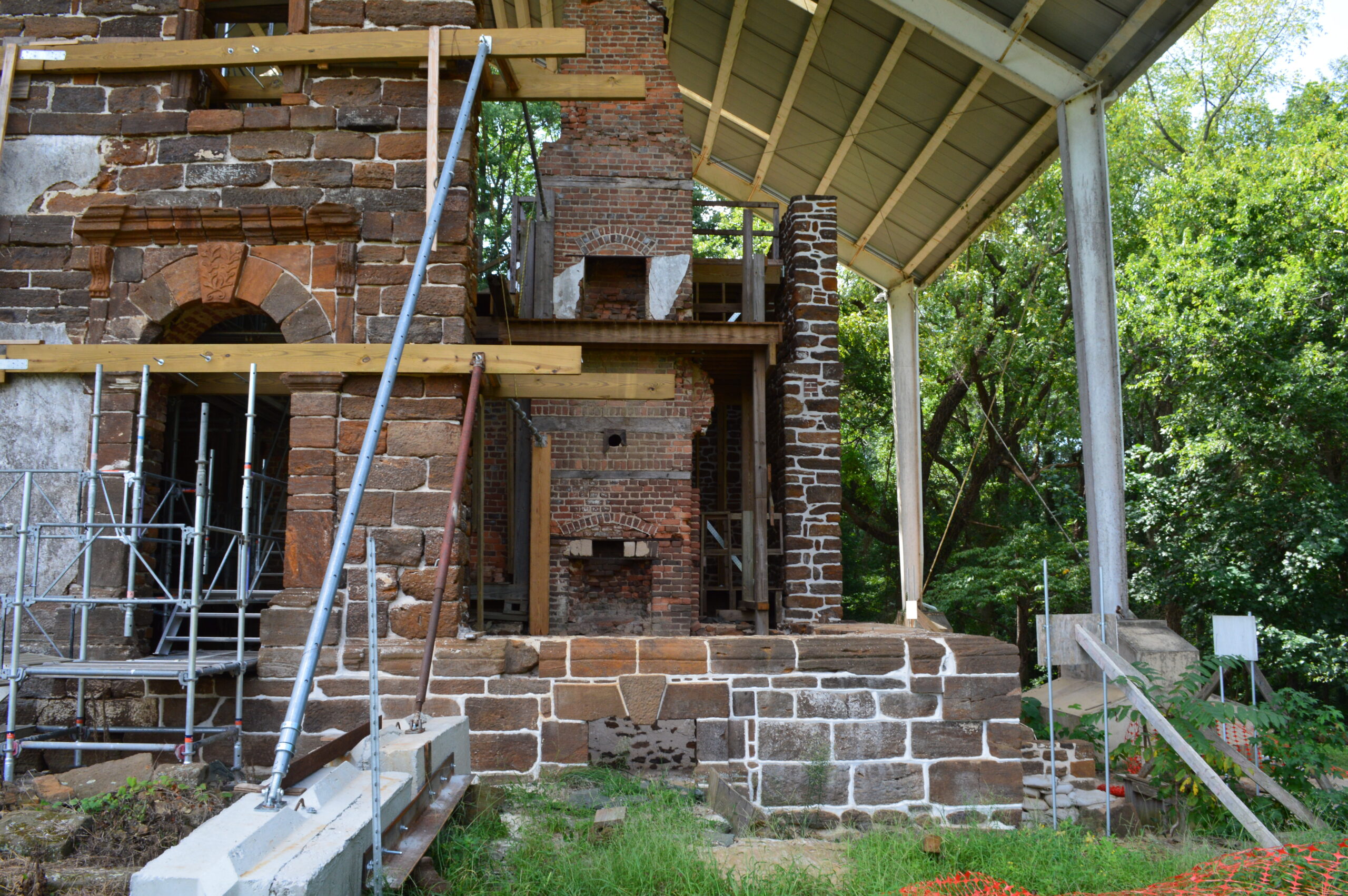
    An 18th Century Ruin, People Still Lived Here After the Abandonment of Jamestown

    Now the Old Towne…

    Barracks Site at Historic Jamestowne.
    Memorial Church in Foreground with Replica Palisade in Foreground.
    Hill with Memorial Church and Church Tower in Background.
    The 1907 Memorial Church at Historic Jamestowne.
    The 1907 Memorial Church Standing on Foundations of Original Church
    Civil War era Fort Pocahontas at Historic Jamestowne.
    Civil War Era Earthworks; Both Confederate and Union Forces Occupied Jamestown
    Archaearium Archaeology Museum with Tree in Foreground.
    The Archaeology Museum, Above the Foundations of the Statehouse

    The Archaeology Museum displays artifacts found on Jamestown Island. Something unusual on display are the skeletons of two different settlers, so if that bothers you skip that section. Another interesting thing is there are cutouts so visitors can look down on the ruins of the old Statehouse.

    Jamestown Settlement

    Quadricentennial Plaza at Jamestown Settlement.

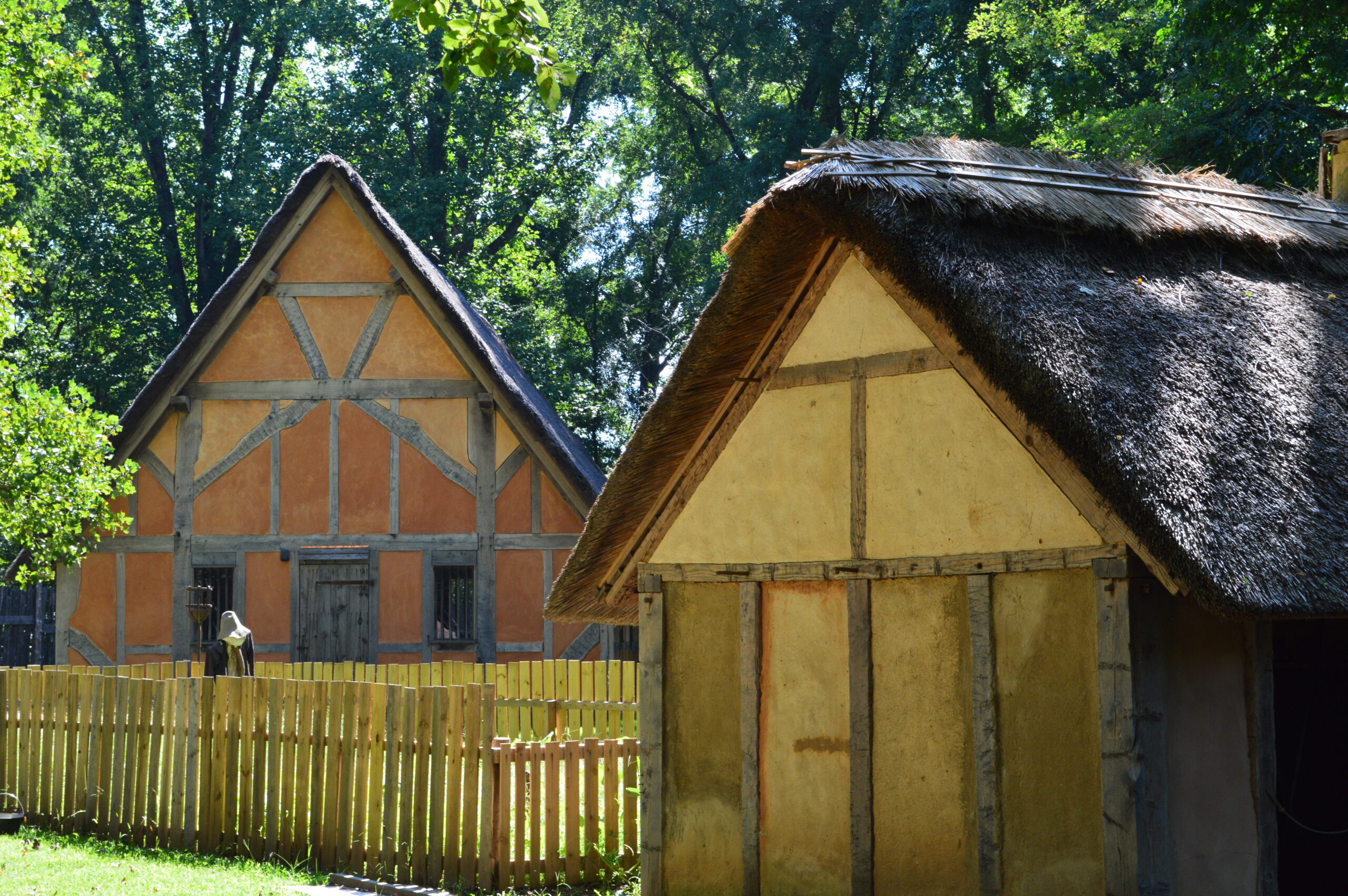
    Five minutes away from the original Jamestown is Jamestown Settlement, a living history museum. Jamestown Settlement recreates James Fort, a Native American village, and the ships that brought settlers to the New World.

    Sign with words Following the Dragon: Chinese Ming Porcelain in Early Jamestown and drawing of fragments of dragon decoration.

    Jamestown Settlement currently has an exhibit on Chinese Ming Porcelain in Early Jamestown. It was a little odd learning so much about Chinese culture at Jamestown as they went in great detail about what each decoration meant. Still, it was fascinating learning about how some settlers had access to finer goods while struggling in the wilds of early Virginia.

    After leaving the visitor center, you first run into Paspahegh Town, a replica of a tribal village. While there I learned from an interpreter about the process of making canoes. Canoes were traditionally made by a complex process of burning a log and scrapping the embers with either stones or oyster shells. It usually takes about two to four weeks to build a canoe. All canoes made at Jamestown Settlement go on display and some actually get demonstrated on the water.

    Statues with faces in Indian Village at Jamestown Settlement.
    Homes at Paspahegh Town at Jamestown Settlement with Trees in Foreground.
    Home at Paspahegh Town at Jamestown Settlement with Canoes in Foreground.
    This Canoe Is About 90% Done
    Caone at Jamestown Settlement with Water in It.
    This Canoe Is on Display

    Continuing on, you arrive at James Fort, which replicates the early Jamestown settlement. At every hour there is a matchlock musket demonstrations just outside the Fort. There were also interpreters demonstrating blacksmithing and bread-making. It was funny seeing several chickens running around; they really liked the crumbs from the bread oven demonstration.

    James Fort at Jamestown Settlement.
    Buildings at James Fort at Jamestown Settlement.
    Buildings at James Fort at Jamestown Settlement.
    Interior of Church at James Fort.
    Chicken Standing on Table at Jamestown Settlement.

    Continuing on from James Fort is a pier with the replicas of the Susan Constant, Godspeed, & Discovery. The Susan Constant was off being restored while I was there, a small sloop took its place. It’s amazing to consider the 105 people crammed on three tiny ships alongside tons of cargo.

    Discovery with Trees in Foreground.
    Poop Deck of Discovery with Godspeed in Background.
    Rigging with Godspeed in Background.
    Discovery and Sloop at Jamestown Settlement.
    Interior of Godspeed with Interpreter in Background.
    Statue of Three Sails in Front of Jamestown Settlement Visitor Center.

    Perhaps the most interesting thing I learned was at the gift shop devoted entirely to bees and honey-related items. There I learned that honeybees are not native to North America. Honeybees were actually brought over to Jamestown in 1622 for their honey and wax. The honeybees sailed across the ocean during the winter of 1621 when bees go dormant.

    Trees and Water at Jamestown Settlement with Canoe with Water in It.

    YouTube Video About Jamestown

    Here is the companion YouTube video about exploring Jamestown Settlement and Historic Jamestowne. If you enjoy the video, please like the video and subscribe to my YouTube Channel Photo Historic Travels.

    What To Know Before Going

    Historic Jamestowne: As a quirk of Historic Jamestowne being run by two organizations, there are two separate admission fees; prepare to pay $15 dollars twice to visit Jamestown Island. I recommend paying for both in order to maximize your visit.

    Jamestown Settlement: The Jamestown-Yorktown Foundation operates the Jamestown Settlement. You can buy a combo ticket to visit both Jamestown Settlement and the American Revolution Museum at Yorktown.

    Restaurants Near Jamestown

    Chopsticks Pho Grill Restaurant in Williamsburg.

    There are several restaurants in the Williamsburg Crossing strip mall, about an eight-minute drive to Jamestown Settlement. I recommend eating at Chopsticks Pho Grill if you want to try good Vietnamese food.

    The closest restaurant to the two Jamestowns is Dizzy Izzy’s by Foodatude. It serves alright food, but the place closes on Mondays and Tuesdays and only has outdoor seating. This restaurant might not be the most convenient places to eat.

    If you have more time, Jamestown is close to Williamsburg with many different food options. In order from closest to Jamestown Settlement to Furthest is Honey Butter’s Kitchen, the restaurants at Merchant’s Square in Colonial Williamsburg, Bonanza Social Kitchen, Anna’s Brick Oven Pizza-Pasta, Maria Bonita Cantina, and Pierce’s Pitt Bar-B-Que.

  • Best Places to Discover Southwest Virginia: Unique Things To Do

    Best Places to Discover Southwest Virginia: Unique Things To Do

    7–10 minutes

    I have lived in Virginia for most of my life, and yet Southwest Virginia had always remained a mystery to me. I had never even heard about Breaks Interstate Park or the Great Channels of Virginia until my adulthood. For someone living in Coastal Virginia, Southwest Virginia (or SWVA) is around a six-hour drive, and for certain destinations even longer. Finally, I received time off from work so I took the opportunity to finally explore what Southwest Virginia had to offer. Keep reading to watch my companion YouTube video.

    Abingdon

    Barter Theatre Abingdon Virginia.
    The Barter Theatre

    I chose Abingdon as my headquarters for this Southwest Virginia trip because it is consistently ranked as the prettiest small town in SWVA. While I would personally rank Damascus (discussed below) as more beautiful overall, Abingdon is still a very charming small town with many historic buildings.

    Buildings in Abingdon Virginia.
    Buildings in Abingdon Virginia.
    Main Street Buildings in Abingdon Virginia.
    Statue in Abingdon Virginia with Church in Background.
    Statue Fountain in Abingdon Virginia with Love in Background.
    Mural Thing in Abingdon Virginia.
    Mural of Bikers in Abingdon Virginia with Bushes in Foreground.
    Rural Scene in Abingdon Virginia.
    This Was Right Next To My Hotel

    On our first night there, my Dad and I ate at The Tavern, located in the oldest building in Abingdon. I recommend dining at the restaurant for its atmosphere. We ate outside because the forecast said rain for most of my trip, but I would have been equally happy eating in one of the many historic rooms.

    Sign telling information about the Tavern Restaurant in Abingdon.
    The History Of The Building
    Historic Dining Room in The Tavern Abingdon.

    A little bit outside the city is the Southwest Virginia Cultural Center and Marketplace, which serves as a welcome center and sells handiwork by local artisans. There were also exhibits about local history but some of them were covered-up by items for sale. The place is worth a quick stop to check everything out, about 15 minutes at most unless you intend on buying something.

    Southwest Virginia Cultural Center and Marketplace.

    The Channels Natural Area Preserve

    On Monday I went to The Channels Natural Area Preserve and Breaks Interstate Park (discussed below). These two places were the highlight of my trip. It seems so strange that these two places are not frequently advertised in the best of Virginia.

    First, information about The Channels, also known as the Great Channels of Virginia: there are only 10 parking spots and they fill up pretty quickly so arrive early. We arrived at around 7:30 on a Monday to find an already half full parking lot. Although the climb only takes about three hours round-trip, be prepared for an seemingly endless amount of uphill climbing. The first three images provide important information about hiking the Channels, and more practical information can be found here.

    Beginning of Trail at the Channels.
    This Is Where The Trail Begins
    Sign noting Brumley Mountain Trail at the Channels.
    The Name Of The Trail And Important Information
    Fork in the Trail at the Channels.
    Turn Left On This Fork On The Trail, The Right Leads To Private Property

    I couldn’t find any information about how The Channels were formed, either on site or on the internet. Still, definitely a unique experience exploring the unique rock formations. Below show what you can expect to see hiking the Brumley Mountain Trail and the otherworldly beauty of The Channels.

    Trail at the Channels.
    Trail at the Channels with Rock Formation.
    Trail at the Channels with Rhododendrons.
    Entrance to the Channels Slot Canyon.
    The Channels Slot Canyon.
    The Channels Slot Canyon with Tree.
    The Channels Slot Canyon.

    Breaks Interstate Park

    Afterwards, we drove through winding mountain roads to get to Breaks Interstate Park, a massive park that borders Virginia and Kentucky. There was much to do in the park (including a water park), but the highlight is definitely the canyons.

    Canyon at Breaks Interstate Park.

    The Breaks is frequently referred to as “the Grand Canyon of the South” and it’s easy to see why with views like this. The Breaks is the largest canyon east of the Mississippi River. Once again, it’s so strange that this natural wonder remains under the radar.

    Sign telling why the Breaks received it's name.
    Sign That Explains The Meaning Of The Name

    While the park is massive, you can drive through much of it. Most of the scenic spots have short trails, if any, and it’s convenient to park your car up to any place you wish to stop. Do keep in mind that the Tower Overlook and the Tower Tunnel Overlook are two different places.

    Canyon at Breaks Interstate Park.
    Canyon at Breaks Interstate Park.
    Canyon at Breaks Interstate Park with Ledge in Foreground.
    Canyon at Breaks Interstate Park.
    Canyon at Breaks Interstate Park.

    Cleveland Town Park

    Between The Channels and The Breaks, there is a small town called Cleveland, which has a small community park. But this park is unique because it has a suspension bridge over a river. I highly recommend stopping here to take in views of the river.

    Frame of Cleveland Town Park with ramp to swinging bridge in background.

    Bristol

    Famous Sign of Bristol Tennessee Virginia.

    On Tuesday, we went to Bristol Virginia/Tennessee. Bristol is the largest city in the far west of SWVA. The border between Virginia and Tennessee sits right in the middle of Bristol’s main thoroughfare, State Street. One could easily have dinner in one state and catch a show in the other state.

    State Street in Bristol Virginia.
    The Virginia Side Of The Street
    State Street in Bristol Tennessee.
    The Tennessee Side Of The Street

    Bristol prides itself on being the birthplace of country music. On the Virginia side of the city is the Birthplace of Country Music Museum. This museum documents the historic 1927 Bristol sessions, as well as country music’s Appalachian background. Overall, an fascinating look on a topic that I am not necessarily interested in.

    Birthplace of Country Music Museum in Bristol Virginia.
    Mural depicting country music signers saying Birthplace of Country Music.
    Apache Attack Helicopter on display in Bristol Virginia park.

    Chilhowie Bluegrass JAM-Boree

    Lion's Club Building in Chilhowie.
    Parking Was Chaotic, We Parked Next To A Ditch Across The Street

    To continue with the Country Music theme, we went to Chilhowie to see the Bluegrass JAM-Boree. The JAM-Boree happens every Tuesday starting at 6:30, located at the Chilhowie Lions Club. I only recommend going if you are fond of Bluegrass or Mountain Music, if not you could probably skip it. However it was intriguing seeing a world different from my own, and I was mesmerized watching the people doing buck dancing.

    Interior of Lion's Club Building in Chilhowie with Bluegrass band playing.

    Big Stone Gap

    Painting of Tree and Mountain with Big Stone Gap.

    On Wednesday, we went to Big Stone Gap to see the Southwest Virginia Museum Historic State Park. The town of Big Stone Gap is small but completely surrounded by the mountains giving it grand views. There’s also a river that runs through the town adding to its loveliness.

    Main Street of Big Stone Gap.
    Ivy Covered Building in Downtown Big Stone Gap.
    Bridge and River in Big Stone Gap.
    Clouds and Mountains near Big Stone Gap.

    The Museum itself is actually run by the Virginia State Parks systems, making it the smallest state park in Virginia. The Museum itself is organized a bit awkwardly, with the first floor dedicated to the town’s mining boom years, the second floor dedicated to the mansion’s former owners, and the third floor dedicated to the lives of the early settlers. Still, it’s an interesting overview of the regional history.

    Southwest Virginia Museum Historic State Park.
    Stairway with wooden carvings of Southwest Virginia Museum Historic State Park.

    Damascus

    Main Street Damascus Virginia.

    After lunch, we drove to Damascus, which ended up being my favorite of the small towns. While Abingdon’s buildings were nicer, charming Damascus won out with its rivers and nature. Damascus is actually an important stop on the Virginia Creeper Trail, but unfortunately the trestle was closed while we were there.

    Building in Damascus Virginia with string of light bulbs in foreground.
    Shed with arts and crafts in Damascus Virginia.
    Man made waterfall with deck and dining table in foreground and Love sign in background.
    Views From The Damascus Old Mill Inn

    Wytheville

    Logo of Downtown Wytheville.

    On our final day, we went to Wytheville to see the Edith Bolling Wilson Birthplace Museum. The town is a typical nice small town, with many nice historic buildings. The most notable thing about Wytheville is the giant pencil suspended from a building.

    Tile showing Main Street Scene of Downtown Wytheville in 1950s.
    Edith Bolling Wilson Birthplace Museum.

    The Museum itself shows an entertaining look at Edith Bolling Wilson’s girlhood in Wytheville and her time as First Lady of the United States. The upstairs was undergoing renovations when were there, but they provide a video explaining the history behind each room. Renovations should be complete in late 2026.

    Conclusion on Southwest Virginia Vacation

    I accomplished a decade long (if not longer) dream of exploring Southwest Virginia. Although I did so much, there are still places I didn’t get to visit (like The Devil’s Bathtub and the Natural Bridge State Park), making SWVA a perfect vacation opportunity. I feel SWVA has much to offer for travelers wishing to discover an little known Virginia with unique landscapes and a different history.

    Below is the companion YouTube Video for this blog. My video has much more footage of each destination. If you like what you see, please consider subscribing to my channel.

    Restaurants In Southwest Virginia

    Listed below are the restaurants I ate at on the trip that I recommend. I will go in Alphabetical Order.

    Damascus Old Mill Inn Restaurant.

    Damascus Old Mill Inn: This hotel has a restaurant on the first floor. I recommend eating here for the views of the river and little waterfall. Located in Damascus.

    GoodTimes Coal Fired Pizza & Pub Restaurant.

    GoodTimes Coal Fired Pizza & Pub: If you’re wondering about coal fired pizza, they use anthracite coal (different from the coal used for powering trains) found only in Pennsylvania, which emits high heat and low emissions as noted by our waitress. All this leads to a great pizza. Located in Big Stone Gap.

    Jack's 128 Pecan Restaurant.

    Jack’s 128 Pecan: This place must have been a former house, because they were many rooms all decorated differently. They had the best food of all the semi-fancy restaurants we ate on our trip.

    Pal's Sudden Service Restaurant with cars at Drive-Thru.

    Pal’s Sudden Service: For those looking for local color, Pal’s is the local fast-food chain of choice. With its gaudy buildings and commanding pylon signs (the message the day we went said “Respect Is Earned”), Pal’s is definitely an experience. Keep in mind it’s drive-thru only. Located all over SWVA.

    Skeeter's World Famous Hotdogs Restaurant.

    Skeeter’s World Famous Hotdogs: Only two doors down from the Edith Bolling Wilson Museum is Skeeter’s, which has been open since 1925. Definitely come here if you love hot dogs, because there was only one non-hot dog thing on the menu; I had the BBQ sandwich. Located in Wytheville.

    The Tavern Restaurant.

    The Tavern: I’ve already talked about The Tavern above, but here’s some more about the restaurant. It serves a mix of New American and German food. I recommend eating here to absorb the historical ambiance. Located in Abingdon.

  • A Fun Day Out in Underrated Woodbridge Virginia

    A Fun Day Out in Underrated Woodbridge Virginia

    Woodbridge is not the first place one thinks of when thinking of major travel destinations in Virginia. Much of the discourse around Woodbridge online revolves around its suburban character; the Prince William County Tourism Website proclaims Woodbridge as having Virginia’s largest outlet mall. But I believe that there are hidden gems in the most seemingly mundane places that are worth a day trip. So here is my suggestions for a fun day out in underrated Woodbridge Virginia. Keep reading for YouTube Videos about other places in Prince William County.

    Estimated reading time: 9 minutes

    Restaurant in Woodbridge, VA

    Dhansiri Bangladeshi Restaurant located in strip mall in Woodbridge VA.
    A Good Unique Dining Option

    The deciding factor for me to go to Woodbridge was trying Bangladeshi food at Dhansiri Restaurant. Bangladeshi food bares some similarity to Indian food, but more beef oriented. I ordered Beef Bhuna, which was tasty, but even after asking for the mild it still had heat, so I would suggest eating elsewhere if you can’t handle spice.

    Rippon Lodge Historic Site

    Sign with word Welcome to Rippon Lodge Historic Site Circa 1747.

    After lunch, I drove to Rippon Lodge Historic Site, which is the second oldest house in Prince William County. Rippon Lodge has seen many changes over the years; it was once a small house built around 1745-1747 by Richard Blackburn, whose son Thomas Blackburn fought in the Revolutionary War under George Washington. The Blackburns and Washingtons grew closer when Thomas’ daughter married George Washington’s nephew.

    Black and White Photograph of Rippon Lodge as it appeared in circa 1921.
    Rippon Lodge As It Looked Before 1924

    Eventually, the Blackburns lost the property and Rippon Lodge changed hands several times until 1924, when Wade H. Ellis and his wife drastically changed the shape of the house to its current appearance. A descendant of the Blackburn family bought the house in 1952 and owned it for half a century. Prince William County acquired the property in 2000 and opened the house for tours in 2007.

    RIppon Lodge with Well in Foreground.

    I received a self-guided tour with a pamphlet providing information about the house (which is where the above information came from). The employee led me from the admission room to the opposite side of the house. He gave me a basic overview of the house before leaving me on my own. Although I was expecting a guided tour, it was nice to be able to go on my own pace.

    One thing Rippon Lodge did that I like is showing what the house looked like throughout the years, rather than focusing on one specific era. I always felt that many historic house museums should focus on a more comprehensive look at the site’s history, especially if no one particularly noteworthy owned the house. The house also revealed the many architectural changes it went through, such as how they moved the chimneys and altered rooms.

    Grounds of Rippon Lodge with Flowers in Foreground and Well in Background.

    The grounds of Rippon Lodge are very beautiful. The pergola covered with roses particularly struck my eye. There’s also a well, some outbuildings, and a family cemetery located on one of the trails.

    Rose Covered Wooden Pergola at Rippon Lodge Historic Site.
    Inside Rose Covered Pergola with Hedges in Foreground and Rippon Lodge in Background.
    Close Up of Roses Growing on Pergola.

    Neabsco Creek Boardwalk

    Sign with words Neabsco Regional Park 15125 Blackburn Road Prince William Parks, Recreation & Tourism.
    Neabsco Regional Park Is Also Known As Rippon Landing Park on Google Maps

    After Rippon Lodge, I went right across the street to visit Neabsco Regional Park, which is particularly notable for the Neabsco Creek Boardwalk. The Boardwalk is a winding 3,300 feet long (or .625 miles) trail that goes above the marshy Neabsco Creek. The 90-degree heat made the mostly treeless boardwalk a slog, but the views and seeing a beaver building a dam made it all worth it.

    Sign of Neabsco Creek Boardwalk with Neabsco Creek and Trees in Background.
    Shadows being cast from fancy gate in Neabsco Creek Boardwalk.
    Neabsco Creek Boardwalk as it winds through the marsh.
    Neabsco Creek Boardwalk and Small Waterfall.
    Neabsco Creek Boardwalk with Trees in Foreground.
    Neabsco Creek Boardwalk from Far Away.
    Close Up of Neabsco Creek Boardwalk with Shadow and Pussy-willow.
    Multistory observation tower at Neabsco Regional Park.
    Neabsco Creek.
    Neabsco Creek with Boardwalk in background.
    End of Neabsco Creek Boardwalk with Neabsco Creek in Background.
    Neabscro Creek Marsh with Trees.

    At some point, the Boardwalk abruptly ends and turns into a narrow wooden trail that goes deep into the woods. It turns out that the boardwalk is the only connection between the two different sections of Neabsco Regional Park. I only found that out after getting lost in an unmaintained section of the park.

    Boardwalk Trail through Neabsco Regional Park.
    Boardwalk Trail through Neabsco Regional Park.
    Boardwalk Trail through Neabsco Regional Park.
    Poorly Maintained Boardwalk Trail through Neabsco Regional Park.

    Conclusion

    I enjoyed exploring the things to do in Woodbridge. I hope this blog post allows people to view Woodbridge through different eyes. So next time one is looking for a fun day out, consider Woodbridge and Prince William County in Northern Virginia.

    The grounds of Rippon Lodge Historic Site are open every day from dawn to dusk, but the house itself is only open from Friday-Monday from 10:00-4:00. Guided tours are supposedly at 11:00 and 2:00, but I arrived at 1:40ish and the employee only gave me the self-guided option, so keep that in mind. More information about the Neabsco Creek Boardwalk found here.

    Below is the companion YouTube video, which show in greater detail Rippon Lodge Historic Site and Neabsco Creek Boardwalk.

    Other Towns in Prince William County

    If one wanted to make a full weekend (or weekday) vacation to Prince William County, I have two videos from my old YouTube channel about Occoquan and Manassas (links in name). Occoquan Historic District consistently ranked as one of Virginia’s most beautiful small towns. Old Town Manassas is the County Seat of Prince William County and played an important role during the Civil War.

    If you want to explore more of the NOVA area, read my blog post about Alexandria.

  • Things to Do in Beautiful Colonial Williamsburg

    Things to Do in Beautiful Colonial Williamsburg

    Estimated reading time: 10 minutes

    I made two nonconsecutive trips to Colonial Williamsburg, Virginia; living close to Williamsburg does have its benefits. The first trip focused on seeing historic homes normally closed to the public as part of Virginia’s Historic Garden Week, while the second trip focused on seeing the remaining historic house museum that I had never been to before. Both visits work together to give an overview of what to do in Colonial Williamsburg, VA. At the end, I showcase the natural beauty of College Landing Park to complete your Williamsburg Virginia tour. This blog will serve as a companion to my first YouTube video so keep reading to the end.

    The Governor's Palace in Colonial Williamsburg Virginia.
    The Governor’s Palace

    Historic Houses in Colonial Williamsburg

    Virginia’s Historic Garden Week was the reason for my first trip to Colonial Williamsburg. The two houses I managed to get a rare glimpse into were the Ludwell-Paradise house and the Coke-Garrett house. These two house are private homes that are normally closed to the public, but were opened for one day for this event. The Ludwell-Paradise house once was the home of the Ludwell family, of which several of its member converted to Eastern Orthodoxy. The Coke-Garrett house serves as the home of the Presidents of the Colonial Williamsburg Foundation, and had just finished a restoration only a couple of days before the event. I have no pictures of the insides, but it was interesting seeing modern kitchens inside 18th century buildings.

    Colonial Style Wawa near Colonial Williamsburg Virginia.
    Have a Colonial Style Convenience Store Instead

    I also went to Bassett Hall, which was the home of the John D. and Abby Aldrich Rockefeller. This House is usually only open to the public on Thursdays-Saturdays, so I took a rare opportunity to visit. I also went to the Bray School, where enslaved children received an education in order to accept their lot in life.

    Garden of St. Mary Chapel on Duke of Gloucester Street.
    Garden of St. Mary Chapel
    George Wythe House Colonial Williamsburg.
    The George Wythe House

    Several weeks later, I decided to visit the remaining historic homes I’ve yet to see. I first went to the George Wythe House located besides the Palace Green. George Wythe was a signer of the Declaration of Independence and the first law professor of the United States. It had the typical grand 18th century Georgian interiors and a very beautiful garden.

    Gardens of George Wythe House with Foxgloves.
    View of George Wythe House under Overgrown Pergola.
    Robert Carter House in Colonial Williamsburg Virginia.
    The Robert Carter House

    Next, I went right down the street to see the Carter House, an incredibly long house that I could not fit entirely within the picture. The House is entirely bare on the inside, with zero furnishings and several holes in the walls exposing the wood and brick work. Our tour guide told the fascinating story of Robert Carter III, a man who turned from a dissolute playboy to a conscientious man who manumitted more of his enslaved people than anybody prior to the Emancipation Proclamation. The house is only opened on Tuesdays-Wednesdays.

    Peyton Randolph House in Colonial Williamsburg Virginia.
    The Peyton Randolph House

    I then walked down Nicholson Street to see the Peyton Randolph House. Peyton Randolph served as President of the First and Second Continental Congress. Our tour guide delivered a personable look at the lives of the Randolph’s and their enslaved people.

    Back of Peyton Randolph House.

    Duke of Gloucester Street

    On both trips, I enjoyed strolling along to Duke of Gloucester Street, Colonial Williamsburg’s main thoroughfare. The street starts at William and Mary, goes through Merchant’s Square, and passes through 18th century Williamsburg. It turns out that Merchants Square is the oldest planned shopping center in the United States dating from 1927. The images below will show you Duke of Gloucester (DoG) Street (and accompanying side streets) in chronological order.

    Wren Building College of William and Mary.
    Wren Building College of William and Mary
    Tree dominated image of Merchants Square near Colonial Williamsburg Virginia.
    DoG Street With Merchants Square in Foreground and Capitol in Background
    Home on Palace Greens in Beautiful Colonial Williamsburg.
    House on the Palace Green, I Think a Private Residence
    Home on Duke of Gloucester Street in Beautiful Colonial Williamsburg.
    Buildings on Duke of Gloucester Street in Beautiful Colonial Williamsburg.
    Trade Sign of Golden Ball and sign that says James Craig Jeweller in Colonial Williamsburg.
    One of Several Trade Signs in Colonial Williamsburg
    Homes and Businesses on Duke of Gloucester Street in Beautiful Colonial Williamsburg.
    King's Arms Tavern Restaurant in Colonial Williamsburg Virginia.
    King’s Arms Tavern

    College Landing Park

    A five minute drive from Merchants Square is College Landing Park. It’s a riverfront park with only a fishing pier, kayak launch, boat ramp, and a hill with stairs. Although it’s a small park, it will do just fine after a long day of exploring Colonial Williamsburg.

    Reflection of Clouds in Murky Pond at College Landing Park in Williamsburg Virginia.
    Reflections in Murky Water at College Landing Park

    Conclusion

    Overall, I greatly enjoyed my two visits to Colonial Williamsburg. Although I have been there many times before, there were still so many places and things I had yet seen. So whenever you visit Colonial Williamsburg, consider all of the places I’ve mentioned alongside the Governor’s Palace and Capitol building. Perhaps you could even visit the two private homes the next time Historic Garden Week happens in mid-April.

    While it’s “free” to walk around Colonial Williamsburg (you need to pay for parking on an app), you would need to purchase a ticket to enter into many of the buildings. Single-day Tickets go for $33.75 online or $37.50 at site for people 13 and up; Multi-day Tickets go for $55.00 for people 13 and up. More information can be found here. Information about Historic Garden Week is found here.

    If you want to learn more about the early days of America, Jamestown Settlement and Historic Jamestowne are nearby. Read my blog post here.

    Below is my YouTube video about my two trips to Colonial Williamsburg. Think of it as a wordless vlog, giving you the sights and sounds of Colonial Williamsburg. The video shows much more than this blog, such as the gardens of the two private homes, Bassett Hall, the Bray School, etc.

    Colonial Williamsburg Restaurant Recommendations

    It makes sense to recommend many different restaurants as Colonial Williamsburg is an all-day destination. I will go in order from fanciest to least fanciest.

    King's Arm Tavern Sign Colonial Williamsburg.

    Colonial Williamsburg has several dining establishments the replicate the experiences of eating at a tavern during the colonial era. The King’s Arms Tavern was founded in 1772 and has the waiters dress in period attire. I chose the King’s Arms Tavern in particular because I once had my birthday meal there.

    Blue Talon Bistro Restaurant Colonial Williamsburg.

    The Blue Talon Bistro serves French cuisine, located on the parking lot behind Merchants Square. I also had a birthday meal here, and I would love to eat here again.

    The Cheese Shop Restaurant Colonial Williamsburg.

    The Cheese Shop is a local institution located on Merchants Square. Its sandwiches are a favorite with my family. Head next door to Wythe Candy and Gourmet Shop for specialty candy.

    Rick's Cheesesteak Shop Restaurant Sign Colonial Williamsburg.

    Rick’s Cheesesteak Shop is located on Prince George Street. I’ve been there once and enjoyed their cheese-steak sandwich.

    Precarious Beer Project Sign on Glass Wall in Colonial Williamsburg.

    Precarious Beer Project is located in a building on the other parking lot behind Merchants Square. They have three little restaurants located inside, of which I enjoyed the birria tacos of Electric Circus Taco. I’ve only been inside a rainy Monday lunchtime and a Tuesday afternoon, so I bet the place is much livelier at nighttime.

    If you wanted to go to explore more of the greater Williamsburg area, I can recommend many different restaurants. In order from closest to furthest from Merchants Square are: Bonanza Social Kitchen (Korean Fried Chicken), Anna’s Brick Oven Pizza-Pasta (Wood Fired Pizza), Honey Butter’s Kitchen (Breakfast Food), Maria Bonita Cantina (Mexican), and Pierce’s Pitt Bar-B-Que (a local institution). Also, I highly recommend going out of your way to get Duck Donuts, but make sure they’re open before you make the trek particularly if you go earlier in the week.