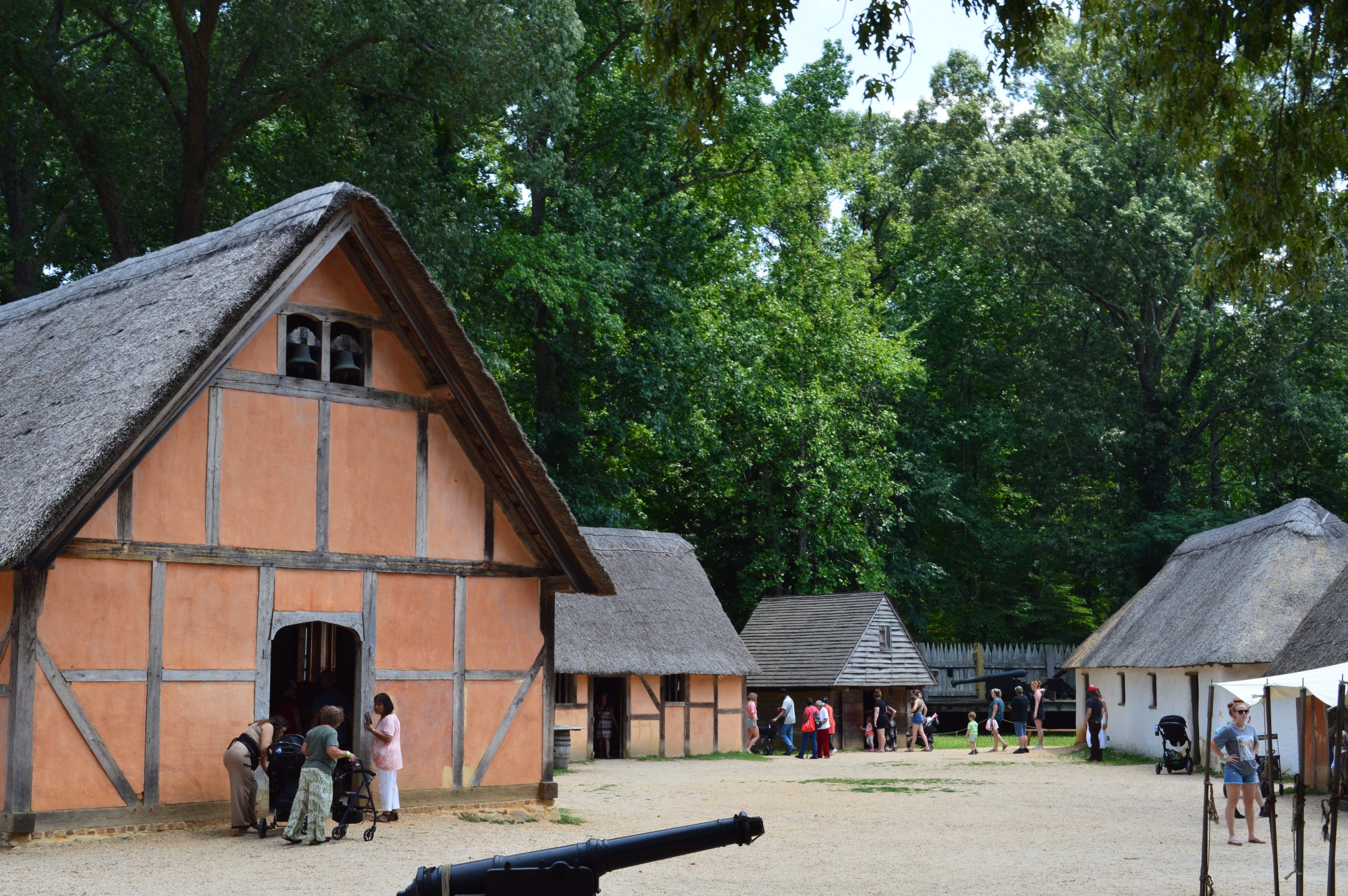
As a child I visited both Jamestown museums many times and thought I knew all there was to know. I went on this recent trip to the two Jamestowns in order to write a companion piece to my Colonial Williamsburg post. However, I ended up learning a lot of new things, so here are the recommendations on how to maximize visiting Jamestown Settlement and Historic Jamestowne. Keep reading to watch the companion YouTube video at the end.
Historic Jamestowne

Historic Jamestowne is located on the actual 1607 Jamestown Settlement. The original James Fort is gone now, but archaeologists are working hard to uncover what remains of the first permanent English settlement in the New World. As shown in the pictures, Jamestown Island is located in swampy wetlands; one can image the difficulty the settlers had in getting fresh water.


Historic Jamestowne is actually administered by both the National Park Service and Preservation Virginia. The National Park Service represents the New Towne, with some ruins. Meanwhile, the Preservation Virginia side represents the Old Towne, with the Archaearium Archaeology Museum as well as Confederate Earthworks, alongside more ruins.
First New Towne…


Now the Old Towne…


The Archaeology Museum displays artifacts found on Jamestown Island. Something unusual on display are the skeletons of two different settlers, so if that bothers you skip that section. Another interesting thing is there are cutouts so visitors can look down on the ruins of the old Statehouse.
Jamestown Settlement

Five minutes away from the original Jamestown is Jamestown Settlement, a living history museum. Jamestown Settlement recreates James Fort, a Native American village, and the ships that brought settlers to the New World.

Jamestown Settlement currently has an exhibit on Chinese Ming Porcelain in Early Jamestown. It was a little odd learning so much about Chinese culture at Jamestown as they went in great detail about what each decoration meant. Still, it was fascinating learning about how some settlers had access to finer goods while struggling in the wilds of early Virginia.
After leaving the visitor center, you first run into Paspahegh Town, a replica of a tribal village. While there I learned from an interpreter about the process of making canoes. Canoes were traditionally made by a complex process of burning a log and scrapping the embers with either stones or oyster shells. It usually takes about two to four weeks to build a canoe. All canoes made at Jamestown Settlement go on display and some actually get demonstrated on the water.


Continuing on, you arrive at James Fort, which replicates the early Jamestown settlement. At every hour there is a matchlock musket demonstrations just outside the Fort. There were also interpreters demonstrating blacksmithing and bread-making. It was funny seeing several chickens running around; they really liked the crumbs from the bread oven demonstration.


Continuing on from James Fort is a pier with the replicas of the Susan Constant, Godspeed, & Discovery. The Susan Constant was off being restored while I was there, a small sloop took its place. It’s amazing to consider the 105 people crammed on three tiny ships alongside tons of cargo.


Perhaps the most interesting thing I learned was at the gift shop devoted entirely to bees and honey-related items. There I learned that honeybees are not native to North America. Honeybees were actually brought over to Jamestown in 1622 for their honey and wax. The honeybees sailed across the ocean during the winter of 1621 when bees go dormant.

YouTube Video About Jamestown
Here is the companion YouTube video about exploring Jamestown Settlement and Historic Jamestowne. If you enjoy the video, please like the video and subscribe to my YouTube Channel Photo Historic Travels.
What To Know Before Going
Historic Jamestowne: As a quirk of Historic Jamestowne being run by two organizations, there are two separate admission fees; prepare to pay $15 dollars twice to visit Jamestown Island. I recommend paying for both in order to maximize your visit.
Jamestown Settlement: The Jamestown-Yorktown Foundation operates the Jamestown Settlement. You can buy a combo ticket to visit both Jamestown Settlement and the American Revolution Museum at Yorktown.
Restaurants Near Jamestown

There are several restaurants in the Williamsburg Crossing strip mall, about an eight-minute drive to Jamestown Settlement. I recommend eating at Chopsticks Pho Grill if you want to try good Vietnamese food.
The closest restaurant to the two Jamestowns is Dizzy Izzy’s by Foodatude. It serves alright food, but the place closes on Mondays and Tuesdays and only has outdoor seating. This restaurant might not be the most convenient places to eat.
If you have more time, Jamestown is close to Williamsburg with many different food options. In order from closest to Jamestown Settlement to Furthest is Honey Butter’s Kitchen, the restaurants at Merchant’s Square in Colonial Williamsburg, Bonanza Social Kitchen, Anna’s Brick Oven Pizza-Pasta, Maria Bonita Cantina, and Pierce’s Pitt Bar-B-Que.